
Lecture on the ‘Development Philosophy of the Government’ held at CIIT
Islamabad
COMSATS Institute of Information Technology (CIIT) invited Federal Minister for Planning, Development & Reform Professor Ahsan Iqbal here on Wednesday to deliver a lecture on the ‘Development Philosophy of the Government’ at its main campus, while other CIIT campuses were connected via video link.
CIIT Rector Dr S M Junaid Zaidi welcomed the minister and thanked him for sparing the time for sharing his views with students. Highlighting some of CIIT’s achievements, he informed that the Institute had over 1,000 Ph.Ds among its 4,000 strong faculty, who had collectively published over 1,200 last year and its student enrolment had now exceeded 40,000.
The Minister started off with a historical background of Pakistan’s development journey, when in 1960 it was predicted to become the ‘next Japan or Korea,’ but missed the boat. Subsequently, many opportunities came but could not be exploited due to political instability. He stressed that if we were to lose the current opportunity – China-Pakistan Economic Corridor (CPEC) – ‘it would be very difficult for us to get our act together for a long time to come.’
Thus, it must be underlined that political stability and continuity of policies are crucial to economic and social development of any nation.
‘Vision 2025’ has its roots in ‘Vision 2010,’ presented by the PML-N led government in 1998, when the need for transforming Pakistan into a knowledge-based economy was recognised for the first time and also backed by budgetary allocation. Only 300 Ph.Ds in science and technology existed at the time.
The minister said, even a bank does not give a small business loan without first demanding a business plan. Then how could a country be expected to function without a long term vision, he questioned. Only when our priorities are in order, we can translate individual excellence into collective competence, which is a prerequisite of development.
Professor Iqbal then dilated upon seven pillars of the strategy that ‘Vision 2025’ envisages. The first one being ‘Putting People First.’ No country could develop by ignoring its human resources. Thus, the government’s priority was to invest in programs for the youth.
The other pillars of the strategy spelled out were: creating an inclusive and sustainable economy; good public sector management / governance; overcoming the energy crisis; boosting private sector and SME-led growth; transforming sectors of the economy into ones that produced value added goods; and preparing Pakistan to reach its potential to be a hub of trade between South Asia, Central Asia and China.







-
 King Charles Takes A Major Step To Keep Horrified Prince William Out Of The Loop On Andrew: Insider
 -
 Taylor Swift Set To Make Biggest Cut From Her Wedding Guest: Blake Lively Or Ryan Reynolds
 -
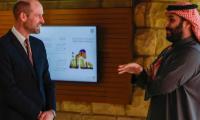 Prince William Meets Saudi Crown Prince Mohammed Bin Salman
 -
 Brooklyn Beckham Brutally Cuts Off Inner Circle Amid Feud With David, Victoria
 -
 Kaley Cuoco Reveals Why Fiance Tom Pelphrey Sleeps In Seperate Room
 -
 Ghislaine Maxwell Will Not Answer Congress Questions On Epstein
 -
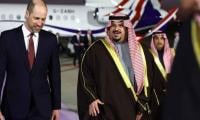 Kensington Palace Announces Prince William's Arrival In Saudi Arabia
 -
 ‘Andrew Crisis Follows King Charles Everywhere Now’
 -
 Jennifer Aniston Already Decided Her Wedding Dress?
 -
 Prince Harry, Meghan’s Hollywood Party Drama Exposes Chaotic PR Strategy
 -
 Jennifer Garner Reacts To Savannah Guthrie's Video As Search For Nancy Guthrie Continues
 -
 Bad Bunny Leaves Fans Worried With Major Move After Super Bowl Halftime Show
 -
 Captain Jason Talks Personal Hardships He Faced Ahead Of 'Below Deck' Season 4
 -
 Anti-monarchy Group Reacts To Prince William, Kate Middleton Statement On Epstein Scandal
 -
 Andrew 'must' Apologize Not Wider Royal Family For Jeffrey Epstein Links
 -
 Super Bowl 2026: Why Didn't Epstein Survivors Ad Air On TV?