
‘Teenage boy succumbed to injuries as hospitals kept refusing admission’
The boy was shifted from one hospital to another without treatment until he died
A teenage boy who had suffered serious head injuries in a road accident in Karachi a few days ago was denied treatment by three tertiary-care and a secondary hospital at least for six hours, which resulted in his miserable death, officials of the Sindh Health Department told The News while quoting an inquiry report on Monday.
“Seventeen-year-old Arif Hashim was denied treatment by the Ziauddin Hospital, Nazimabad; the Abbasi Shaheed Hospital [ASH] and the Jinnah Postgraduate Medical Centre [JPMC] after getting seriously injured in a road accident on September 12. The boy was shifted from one hospital to another without treatment until he died,” said a health department official.
Hashim was found seriously injured on the Liaquatabad bridge at around 1:10 am. Some motorists took him to a nearby privately-run Sambros Hospital in Karimabad. Since the hospital lacks an accident and trauma care facility, the boy was referred to the Ziauddin Hospital, Nazimabad.
“Instead of treating the patient, the administration of the Ziauddin Hospital put a collar around the fatally-injured boy, maintained an IV line and shifted him to the Abbasi Shaheed Hospital,” the health department official said while citing an inquiry report into the death of the teenager due to denial of treatment to him for several hours.
The official claimed that a CT scan facility was not available at ASH, while the neurosurgery department had been non-functional for the past several months, so the staff at the hospital referred the patient to the JPMC.
“The CT scan at ASH only functions between nine in the morning and nine at night. Similarly, neurosurgery facilities at ASH have not been available for the past several months, so the medical officers and staff at ASH emergency decided to move the patient to the JPMC without even touching him,” claimed the official.
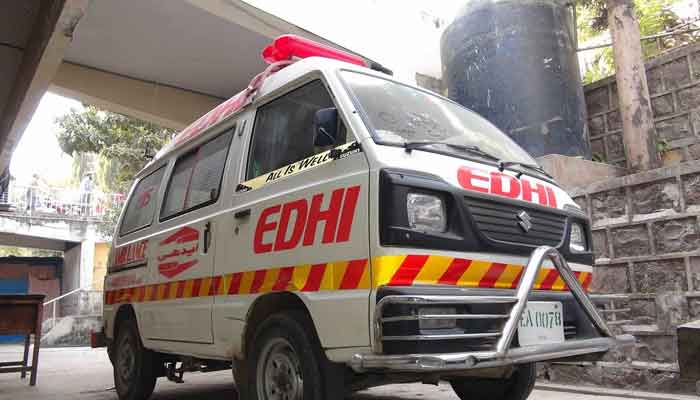
But when the injured boy was taken to the JPMC emergency department, he was refused entry into the emergency department by the JPMC emergency staff, the official further claimed. “The staff of the JPMC emergency department refused treatment to him, arguing that they can’t take in any patient without any identification and attendant accompanying the patient, so they asked the Edhi ambulance driver to take him back to the Abbasi Shaheed Hospital,” the official said while quoting the ambulance driver Muhammad Junaid.
The boy was once again taken to ASH in the Edhi ambulance without receiving any medical treatment, but at ASH he was once again denied medical treatment and he died after suffering for more than six hours without being offered any assistance, claimed the official.
A short video clip provided to The News shows the gasping boy lying on a stretcher at ASH. “The Edhi driver and staff said the patient was alive when he was taken back to ASH, but since no treatment was provided to him, he died after a few minutes,” said the health department official.
“The inquiry committee comprising some senior medical officers has recommended taking serious legal and departmental action against the incharges of the emergencies of both ASH and the JPMC, and sacking the entire teams of both the emergency departments,” said the official, adding that the inquiry was now with Sindh Health Minister Dr Azra Pechuho for consideration and action.
The official said the minister has been recommended to form a high-level inquiry board to probe into the incident, and to suggest reforms in the emergency and trauma care facilities to save precious lives following road accidents and other such incidents.
The boy’s brother-in-law, who identified himself as Zulfiqar, said they were very poor and had no connections, but they would try to register a case against the administrations of all the hospitals whose negligence had resulted in the death of their family member.
Edhi officials claimed that such incidents were now happening on a regular basis, with unidentified injured persons being denied treatment by the administrations of tertiary-care hospitals because their treatment would require some spending, so the staff of the emergencies try to get rid of such patients by referring them to other hospitals.


