
Rupee hits 10-month lows on importers’ demand
In the interbank market, the rupee closed at 165.20 per dollar, its lowest since September 30, 2020.
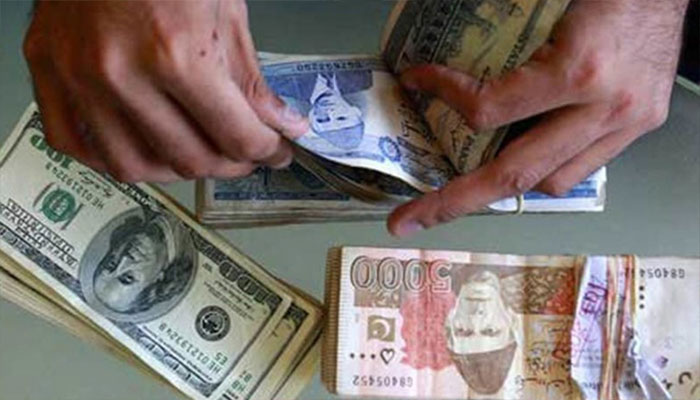
KARACHI: The rupee fell to its weakest level in nearly 10 months on Tuesday dragged by strong dollar demand from importers for payments.
In the interbank market, the rupee closed at 165.20 per dollar, its lowest since September 30, 2020. It fell by 77 paisas or 0.47 percent during the session. The rupee ended at 164.43 on Monday.
It lost 70 paisas to end at 160.70 versus the greenback in the open market. It finished at 165 in the previous session.
Dealers said the local unit came under renewed pressure against the dollar due to increased demand for hard currency as imports continued to increase.
The reports of receiving $2.75 billion inflows from the International Monetary Fund under its new Special Drawing Rights allocation neither lifted trader sentiment nor improved the outlook for the domestic currency.
“There are concerns in the market that the spike in imports will lead to further widening in the current account deficit, which in turn will make the rupee weaker in days ahead,” said a foreign exchange dealer.
“Payments are continuing so it’s hard to predict when the rupee will settle. It should see support at 164.80 level, mostly from remittances and exporters and resistance around 165.70.”
Some dealers do not expect any intervention from the central bank to prop up the rupee at least this month, as the expectations that the IMF’s $6 billion programme would resume was gaining momentum.
Analysts expect the IMF to start staff-level discussions with Pakistani authorities on the sixth review of a reform programme next month to reach consensus on the rise in energy prices and revenue measures that could pave the way for the disbursement of approximately $1 billion in funds.
Pakistan authorities are likely to successfully complete the sixth review of the IMF programme in September or October.
The government has shared plans to reduce power subsidy on lifeline consumers, and move more towards providing direct cash subsidy – which can potentially reduce the future accumulation of circular debt.
The government might agree to increase power and gas prices by an average 5-10 percent, and partly pass on petroleum levy on domestic petroleum products.
Taxes on import of luxury products would likely be increased, which would serve the dual purpose of higher revenues and discouragement of non-essential imports.
As a result, inflation would likely increase and central bank might increase the policy rate.
Analysts also expect the rupee to depreciate by around six percent in FY2022 against the dollar, closing in the range of 168-170. The rupee has depreciated by 8.5 percent since May.


