
SC for stemming tendency of judicial overreach
The observation has been made in a detailed judgment by a bench comprising Justice Manzoor Ahmad Malik, Justice Syed Mansoor Ali Shah, Justice Amin-ud-Din Khan, annulling a Lahore High Court decision in case about recruitments in the Multan Electric Power Company (Mepco).
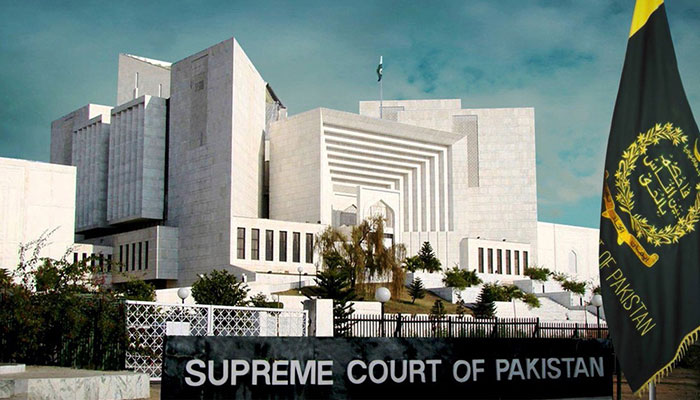
ISLAMABAD: The Supreme Court has said the tendency of judicial overreach — court acting beyond its jurisdiction and interfering in areas falling under the executive and legislature’s mandate — must be guarded against.
The observation has been made in a detailed judgment by a bench comprising Justice Manzoor Ahmad Malik, Justice Syed Mansoor Ali Shah, Justice Amin-ud-Din Khan, annulling a Lahore High Court decision in case about recruitments in the Multan Electric Power Company (Mepco).
The judgment observed: “Ignoring the constitutional boundaries of separation of powers can easily equip a judge with a false sense of power and authority. This is a dangerous tendency and must be guarded against to ensure that the judicial role continues to remain within its constitutional limits.”
The judgment maintained: “When judiciary encroaches upon the domain of the Executive, as in this case, where the learned judge disregarded the eligibility criteria and the recruitment policy of the Executive Authority and assumed the function of the Executive, it is said to commit judicial overreach – which occurs when a court acts beyond its jurisdiction and interferes in areas which fall within the Executive and/or the Legislature’s mandate.”
The judgment explained: “Through such interference the court violates the doctrine of separation of powers by taking on the executive functions upon itself. The instant case is a textbook case of judicial overreach, where a judge directs an authority to issue an Appointment Letter disregarding the recruitment process, merit and the employment policy of the executive authority. Such judicial role imperils the separation of powers, jeopardizes the legitimacy of the judicial institution and undermines constitutional democracy. It is imperative that the courts do not derogate from their constitutionally mandated oversight function of judicial review. Certain values in the Constitution have been designated as foundational to our democracy which means that, as cornerstones of our democracy, they must be scrupulously observed.”
The judgement said: “Judicial review is the power of the court to examine the actions of the legislative, executive, and administrative arms of the government and to determine whether such actions are consistent with the Constitution and the law. Actions judged inconsistent are declared unconstitutional or unlawful and, therefore, rendered null and void. The court entrusted with the power to judicially review an executive action can only declare it to be right or wrong but cannot take over the functions that belong to another organ of the State.
“In the instant case, the judge instead of deciding the case on merits, passed the final order of appointment of respondent no.1 without adjudicating the issue in hand and then executed the order by directing the petitioner that the appointment letter be issued by the next date of hearing. By assuming the role of the executive the judge disregarded his core function of adjudication, in accordance with law,” the judgement noted.







-
 Winter Olympics 2026: When & Where To Watch The Iconic Ice Dance ?
 -
 Melissa Joan Hart Reflects On Social Challenges As A Child Actor
 -
 'Gossip Girl' Star Reveals Why She'll Never Return To Acting
 -
 Chicago Child, 8, Dead After 'months Of Abuse, Starvation', Two Arrested
 -
 Travis Kelce's True Feelings About Taylor Swift's Pal Ryan Reynolds Revealed
 -
 Michael Keaton Recalls Working With Catherine O'Hara In 'Beetlejuice'
 -
 King Charles, Princess Anne, Prince Edward Still Shield Andrew From Police
 -
 Anthropic Targets OpenAI Ads With New Claude Homepage Messaging
 -
 US Set To Block Chinese Software From Smart And Connected Cars
 -
 Carmen Electra Says THIS Taught Her Romance
 -
 Leonardo DiCaprio's Co-star Reflects On His Viral Moment At Golden Globes
 -
 SpaceX Pivots From Mars Plans To Prioritize 2027 Moon Landing
 -
 J. Cole Brings Back Old-school CD Sales For 'The Fall-Off' Release
 -
 King Charles Still Cares About Meghan Markle
 -
 GTA 6 Built By Hand, Street By Street, Rockstar Confirms Ahead Of Launch
 -
 Funeral Home Owner Sentenced To 40 Years For Selling Corpses, Faking Ashes