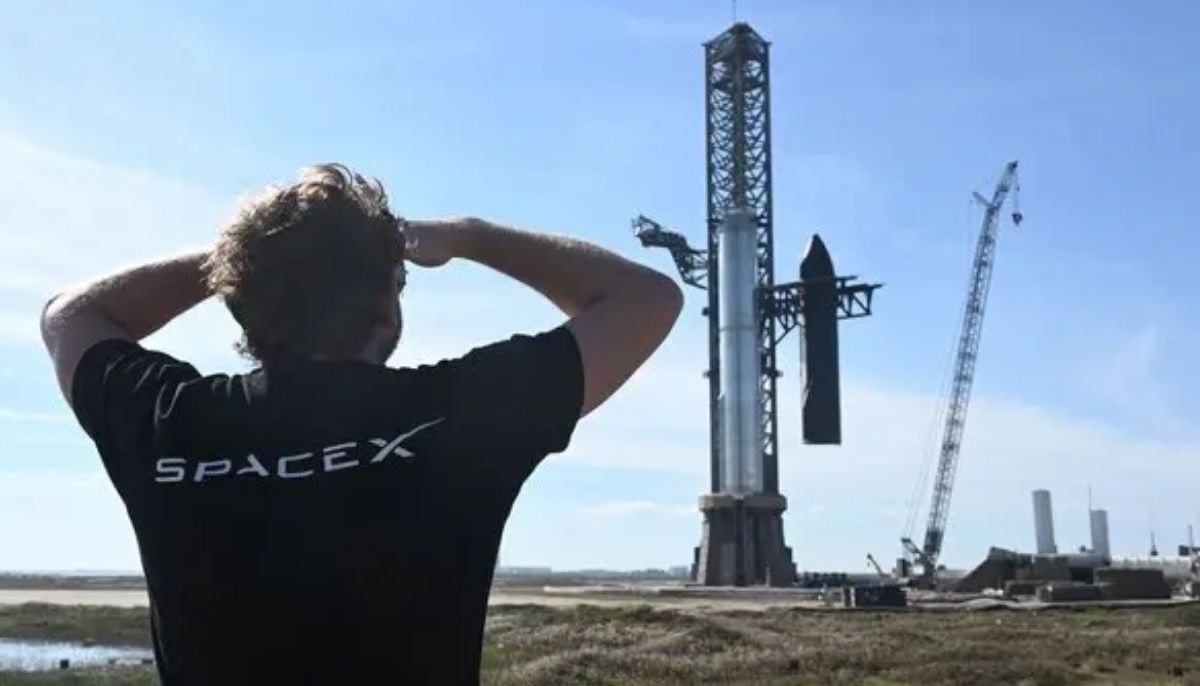
SpaceX pivots from Mars plans to prioritize 2027 Moon landing
SpaceX is redirecting efforts from a 2026 mission to an uncrewed Starship landing on the Moon by 2027

Elon Musk’s SpaceX has reportedly announced plans to prioritize going to the moon first and attempt a trip to Mars later. The company will target March 2027 for a lunar landing without astronauts on board.
The recent announcement comes after SpaceX agreed to acquire xAI in a collaborative deal that values the rocket and satellite company at $1 trillion. SpaceX is developing its next-generation Starship rocket as a stainless steel behemoth designed to be reusable serving an array of missions including achieving successful flights to the moon and Mars.
The recent change marks a pivotal point that coincides with SpaceX’s recent acquisition of Musk’s artificial firm xAI. In line with a journal prediction, a company memo underscores the merger and detailed intentions to support a sustained lunar base.
The United States has been in tough competition with China in its efforts to return astronauts to the Moon, where no humans have set foot since the final US Apollo mission in 1972. SpaceX has been discussing a goal of sending five Starships to the red planet as early as late 2026. Musk has lowered expectations acknowledging that a Mars mission this year is unlikely as the delay underscores the technical and logistical challenges involved in interplanetary travel.


-
 Dakota Johnson 'forgiven' for 'downfall' interview with Ellen DeGeneres
 -
 Pope Leo XIV apologises for Church's historic role in slavery calls it a 'moral failure'
 -
 New Orleans residents are being urged to begin relocating now over sea level rise
 -
 Iran says Ayatollah Mojtaba Khamenei suffered only minor injuries in February strike
-
 SpaceX IPO buzz intensifies as strategists debate $2 trillion valuation
 -
 China to launch Shenzhou 23 crew to Tiangong space station
 -
 Antarctic blizzard sends fuel containers floating on an iceberg: Here’s why
 -
 SpaceX Starship test flight succeeds despite engine failures
 -
 Is this Earth 2.0? NASA’s James Webb telescope spots ‘rare’ giant exoplanet
 -
 SpaceX Starship launch delayed again: Here’s what went wrong
 -
 Why do scientists think Neptune’s moon Nereid survived violent cosmic collision?
 -
 NASA set to unveil major Moon Base strategy and mission update
-
 SpaceX’s upgraded Starship V3 ready for high-stakes test flight: Where to watch live
 -
Scientists hatch live chickens from 3D-printed eggshells: Could artificial wombs be next?
-
SpaceX: Starship V3 all set for debut launch ahead of IPO
-
Four alien species recovered from crashed UFOs, Ex-CIA researcher claims