Antarctica lost ice equal to 10 times Los Angeles in 30 years, study finds
Doomsday Glacier already contributes to 4% of overall sea level rise
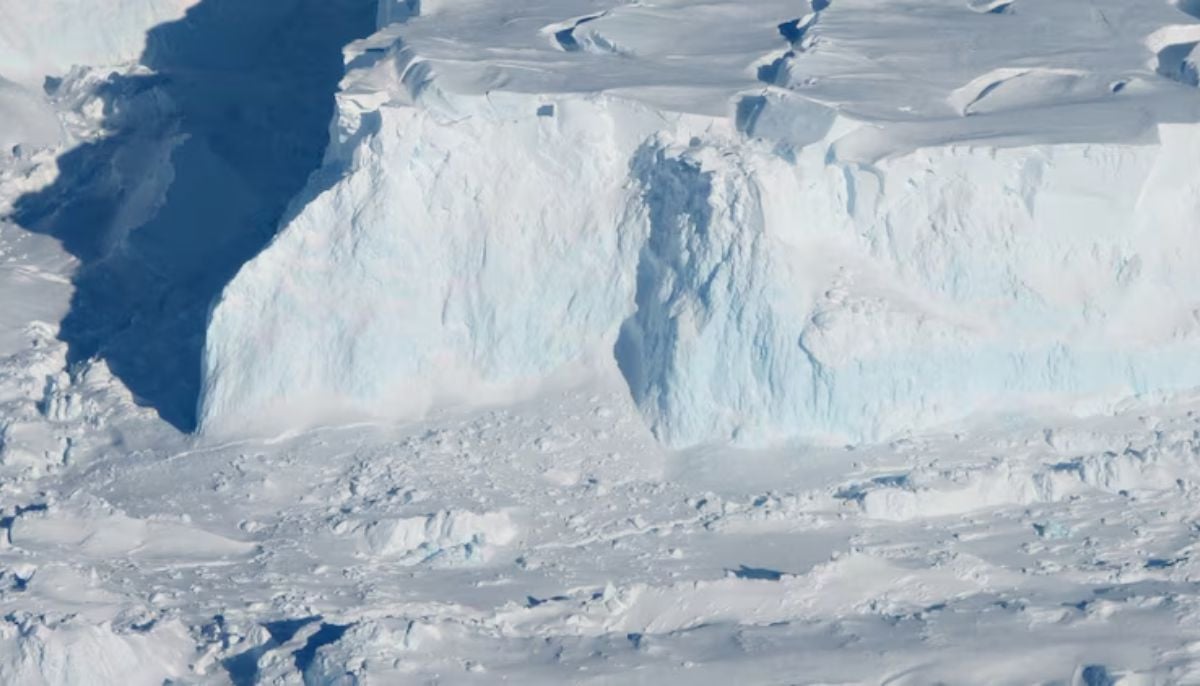
Antarctica is once again experiencing the harsh realities of climate change.
The scientists at the University of California have studied satellite photos taken over the last 30 years. They discovered that in three decades, Antarctica has lost a massive amount of ice, so much that if you took all that melted ice and spread it out, it would cover the entire city of Los Angeles.
As per findings published in the Proceedings of the National Academy of Sciences, the regions which are subjected to rapid ice melting include West Antarctica, the Antarctica Peninsula and parts of East Antarctica. In these regions, nearly 5,000 square miles of grounded ice have been melted since 1996.
The research also includes the comprehensive mapping of the grounding line, the specific spot where ice stops sitting on solid rock and starts floating on the ocean. This line is the "gold standard" for measuring how stable an ice sheet really is.
According to researchers, the good news is that for about 77 percent of Antarctica's coast, the grounding line has not moved at all. But in vulnerable areas, ice is retreating fast, losing about 170 square miles of grounded ice every year.
"Where warm ocean water is pushed by winds to reach glaciers, that’s where we see the big wounds in Antarctica," Eric Rignot, professor of earth system science at UC Irvine and lead author of the paper, said.
Why is this happening?
In West Antarctica, strong winds are pushing warm ocean water underneath the ice, melting it from below. The researchers call it “big wounds” of the continent.
Here is the biggest mystery, on the Antarctica Peninsula, the ice is also retreating, but scientists are clueless about the reason as there is not any warm water there.
"Something else is acting -- it’s still a question mark," Rignot said.
High sea levels
Antarctica has always been the center of attention for many scientists because of its massive contribution to severe rise in sea levels. Thwaites Glacier, also known as the "Doomsday Glacier," already contributes to 4% of overall sea level rise.
As per researchers’ observations, if the Western Antarctica Ice sheet were to collapse entirely, it would cause up to 9 feet in sea level rise.


-
 Coleen Nolan opens up about her marriage plans with boyfriend Ryan Brockbank
 -
 Goldie Hawn's family sheds 'lots of tears' as grandson starts new chapter
 -
 Chris Hansen turns furious over his portrayal in upcoming movie 'Primetime'
 -
 Kenny Rogers drops bombshell about his bond with Dolly Parton in resurfaced interview
-
 Scientists uncover two lost human ancestors hidden in modern DNA
 -
 Blood Moon 2026: When and where to watch lunar eclipse
 -
 SpaceX officially unveils 125,000-acre mega spaceport complex at Starbase Louisana
 -
 World’s first space airport is taking shape—What happens next?
 -
 North Sea Oil and Gas: Climate Damage will wipe out economic gains, study warns
 -
 NASA’s new telescope set to uncover mysteries of dark energy, dark matter and exoplanets
 -
 Should Pluto be a planet again? Astronomers revisit its demotion
 -
 China abruptly postpones Chang’e-7 moon mission to search for water–Here’s why
-
 Rare lunar eclipse lights up skies across the Americas: Where will it be visible?
 -
US researchers achieve major breakthrough in quantum data transmission through open air
-
NASA’s Artemis missions face new risk: Earth microbes could survive on moon
-
Europe’s wildfires are unearthing deadly remnants of WWI, WWII