
Farmers block trains in northern India
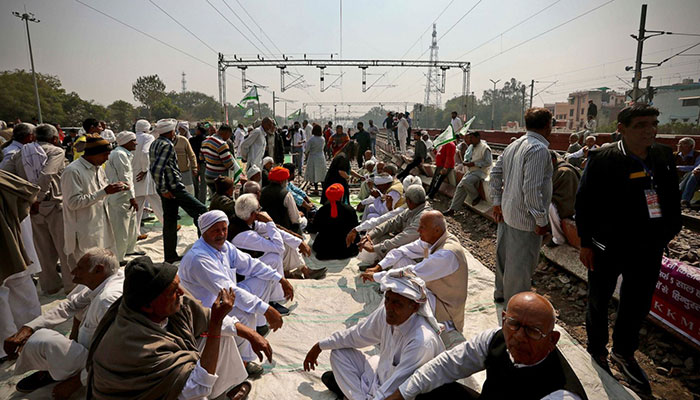
NEW DELHI: Thousands of protesting farmers blocked trains on Thursday by sitting on railroad tracks in parts of northern India to press their demand for the repeal of new agricultural reform laws that have triggered months of massive protests.
Samyukta Kisan Morcha, or Joint Farmers’ Front, organised four-hour blockades of trains at two dozen locations. Television showed protesters sitting on railroad tracks in Hapur, Modinagar, Kurukshetra and several other places in Haryana, Punjab and Uttar Pradesh states. Railroad authorities halted train movements in the affected areas.
Authorities deployed thousands of security forces at railroad stations and tracks to prevent any violence. The protesters carried banners and flags denouncing the three laws approved by Parliament in September, which they say will leave them poorer and at the mercy of corporations.
“The farmers have decided that the struggle to get these three laws repealed is connected to our lives, connected to our future, connected to our children and connected to our daily bread. Either we will survive, and our assets will survive, or the country won’t be able to get by as they will not get anything to eat,” said Hari Prakash, a 70-year-old farmer who was blocking a track on the outskirts of New Delhi.
Rakesh Tikait, a farmer leader, said they will not end their protests until the government repeals the laws. The protests turned violent on Jan. 26, India’s Republic Day, when a group of farmers riding tractors stormed the 17th century Red Fort in New Delhi.
Hundreds of police officers and scores of farmers were injured and one protester died. Tens of thousands of farmers have been camping on the outskirts of New Delhi since November. Eleven rounds of talks between the farmers and Agriculture Minister Narendra Singh Tomar have failed to produce any breakthroughs.
The government says the laws are necessary to modernize Indian agriculture. It has offered to delay their implementation for 18 months to deal with farmer objections. That’s not acceptable to the farmers, who are demanding their repeal.
The farmers believe the legislation will devastate their earnings by ending guaranteed prices for wheat and rice and force them to sell to powerful corporations at cheaper prices.
Tomar said the laws will lead to more private investment in agriculture and raise earnings by setting up warehouses where farmers can store crops and sell them when prices are favorable.







-
 Selma Blair Explains Why Multiple Sclerosis 'isn't So Scary'
 -
 Will Smith Surprises Wife Jada Pinkett With Unusual Gift On Valentine's Day
 -
 Shamed Andrew Has Paid Royal Favours With ‘national Scandal’
 -
 Prince William Ticked Off By How Andrew ‘behaved With Staff’
 -
 Prince William Questions Himself ‘what’s The Point’ After Saudi Trip
 -
 James Van Der Beek's Friends Helped Fund Ranch Purchase Before His Death At 48
 -
 King Charles ‘very Much’ Wants Andrew To Testify At US Congress
 -
 Rosie O’Donnell Secretly Returned To US To Test Safety
 -
 Meghan Markle, Prince Harry Spotted On Date Night On Valentine’s Day
 -
 King Charles Butler Spills Valentine’s Day Dinner Blunders
 -
 Brooklyn Beckham Hits Back At Gordon Ramsay With Subtle Move Over Remark On His Personal Life
 -
 Meghan Markle Showcases Princess Lilibet Face On Valentine’s Day
 -
 Harry Styles Opens Up About Isolation After One Direction Split
 -
 Shamed Andrew Was ‘face To Face’ With Epstein Files, Mocked For Lying
 -
 Kanye West Projected To Explode Music Charts With 'Bully' After He Apologized Over Antisemitism
 -
 Leighton Meester Reflects On How Valentine’s Day Feels Like Now