
Budget revisions
Budget 2015-16 has undergone some major revision. Finance Minister Ishaq Dar has revealed major changes in the budget, including increase in the salaries of government employees. The PML-N has demonstrated willingness to accept some of the major amendments proposed by opposition parties and the Senate with the televised debate over
By our correspondents
June 22, 2015
Budget 2015-16 has undergone some major revision. Finance Minister Ishaq Dar has revealed major changes in the budget, including increase in the salaries of government employees. The PML-N has demonstrated willingness to accept some of the major amendments proposed by opposition parties and the Senate with the televised debate over the budget bearing fruit. Dar accepted 20 demands completely while partially accepting 15 of the 92 non-binding recommendations. Put on the defensive by a debate that called the budget firmly pro-rich and anti-poor, Dar pointed to an increase of Rs5 billion in the Benazir Income Support Programme, the Baitul Mal and a crop insurance scheme to argue that the budget was pro-poor. Walk-outs included one by the PTI on Speaker Ayaz Sadiq’s election while the MQM walked out in protest against Defence Minister Khawaja Asif’s remarks against the party.
The changes made include a Rs20 billion subsidy on the use of certain kinds of fertiliser, the reduction of GST on pesticides, increase in the repayment period for solar tubewells, and exemption of oilseeds for sowing from customs duty and sales tax. Dar has also extended many of the incentives given to Khyber Pakhtunkhwa to investors in Balochistan. A five-year tax exemption was announced for all new manufacturing units for mobile phones. The salaries of government employees have been increased by 11 percent which would add Rs2 billion in cost to the national exchequer. The last of these issues could have easily been avoided by making provision for it in the original budget from the beginning. Moreover, the acceptance of an 11 percent increase suggests that the government’s claim that inflation was below five percent last year is questionable. Much of the other changes are cosmetic. How will the tax exemption for Balochistan’s industry work before providing? security there? The agricultural subsidy is a limited one and will barely impact farmers. The additions to the BISP are great, but the lack of tax reform in the revised budget is more alarming. Much of the critique of the budget focused on the high use of indirect and withholding taxes for non-taxpayers to raise taxes. This technically means that the government is willing to give non-taxpayers a clean chit for tax avoidance and is not serious about tax reform at all. The budget is still anti-poor. The minor changes Dar has accepted do not disguise that. The more worrying thing, though, is the lack of serious commitment towards raising revenue.
The changes made include a Rs20 billion subsidy on the use of certain kinds of fertiliser, the reduction of GST on pesticides, increase in the repayment period for solar tubewells, and exemption of oilseeds for sowing from customs duty and sales tax. Dar has also extended many of the incentives given to Khyber Pakhtunkhwa to investors in Balochistan. A five-year tax exemption was announced for all new manufacturing units for mobile phones. The salaries of government employees have been increased by 11 percent which would add Rs2 billion in cost to the national exchequer. The last of these issues could have easily been avoided by making provision for it in the original budget from the beginning. Moreover, the acceptance of an 11 percent increase suggests that the government’s claim that inflation was below five percent last year is questionable. Much of the other changes are cosmetic. How will the tax exemption for Balochistan’s industry work before providing? security there? The agricultural subsidy is a limited one and will barely impact farmers. The additions to the BISP are great, but the lack of tax reform in the revised budget is more alarming. Much of the critique of the budget focused on the high use of indirect and withholding taxes for non-taxpayers to raise taxes. This technically means that the government is willing to give non-taxpayers a clean chit for tax avoidance and is not serious about tax reform at all. The budget is still anti-poor. The minor changes Dar has accepted do not disguise that. The more worrying thing, though, is the lack of serious commitment towards raising revenue.







-
 Bad Bunny Faces Major Rumour About Personal Life Ahead Of Super Bowl Performance
 -
 Sarah Ferguson’s Links To Jeffrey Epstein Get More Entangled As Expert Talks Of A Testimony Call
 -
 France Opens Probe Against Former Minister Lang After Epstein File Dump
 -
 Last Part Of Lil Jon Statement On Son's Death Melts Hearts, Police Suggest Mental Health Issues
 -
 Leonardo DiCaprio's Girlfriend Vittoria Ceretti Given 'greatest Honor Of Her Life'
 -
 Beatrice, Eugenie’s Reaction Comes Out After Epstein Files Expose Their Personal Lives Even More
 -
 Will Smith Couldn't Make This Dog Part Of His Family: Here's Why
 -
 Kylie Jenner In Full Nesting Mode With Timothee Chalamet: ‘Pregnancy No Surprise Now’
 -
 Laura Dern Reflects On Being Rejected Due To Something She Can't Help
 -
 HBO Axed Naomi Watts's 'Game Of Thrones' Sequel For This Reason
 -
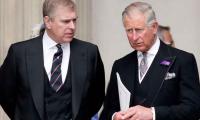 King Charles' Sandringham Estate Gets 'public Safety Message' After Andrew Move
 -
 Lewis Capaldi Sends Taylor Swift Sweet Message After 'Opalite' Video Role
 -
 Brooklyn Beckham Plunges Victoria, David Beckham Into Marital Woes: ‘They’re Exhausted As It Seeps Into Marriage
 -
 Sarah Ferguson Joins Andrew In ‘forcing’ Their Daughters Hand: ‘She Can Lose Everything’
 -
 'Bridgerton' Author Reveals If Actors Will Be Recast In Future Seasons
 -
 50 Cent Super Bowl Ad Goes Viral