
Europe and the Silk Route
With French President Emmanuel Macron on a three-day official visit to China, attention has begun to focus on the scale of China’s One Belt, One Road project. Also known as China’s Silk Route project, the European Union has found itself watching developments cautiously as the full scale of China’s plans unfold, and Europe is nervous. The full OBOR project aims at connecting China all the way to Europe. The biggest worry for the EU is that the trade will be one-way. But the reality they seem to have forgotten is that this is already the case. China remains a net exporter for Europe; and this is by design. The Chinese have positioned themselves as the biggest producers of consumer goods; and companies based in Europe and the US are moving production units into China. Until now, both goods and profits have travelled into Europe. China has been an unequal partner in the global trade, relying on cheap labour and high government infrastructure spending to ensure the most competitive cost of production for multinational companies. It seems the fear is that the tables might begin to turn a little once OBOR is completed, and China might wish to retain more of the profits for itself.
It is within this context that Macron’s headline making statement – that China’s Silk Road ‘cannot be one-way’ – should be understood. The French president has asked for greater access to the Chinese mainland for French and European companies. Earlier last year, Europe had refused to sanction China’s infrastructure programme, which includes building rail networks to major European cities. The EU complained about a lack of transparency in tendering processes and a lack of environmental sustainability. Much of these statements are politically motivated, though. The other fear seems to be a loss of control over states that were traditionally under Western influence.
There are some genuine concerns as well. China has been accused of turning a blind eye to authoritarian regimes that are willing to allow it to build the infrastructure it envisages. One could argue, though, that Europe has not been much different, and has tolerated authoritarianism where convenient – only one look at the arms trade between Europe and the Gulf States should be enough to show this. The larger contest is over who will be the new hegemon in the global economy, what with the US position weakening under Trump. The EU zone and China are leading the contest. It is the internal fracturing within the EU zone, such as Britain’s decision to pull out, which could push China into a clear position to take the front seat. China is certainly beginning to have a decisive influence over a number of countries. But what is striking is that key leaders in the EU, including Macron, are admitting that they will have to accept the ambitions of China.







-
 King Charles Takes A Major Step To Keep Horrified Prince William Out Of The Loop On Andrew: Insider
 -
 Taylor Swift Set To Make Biggest Cut From Her Wedding Guest: Blake Lively Or Ryan Reynolds
 -
 Prince William Meets Saudi Crown Prince Mohammed Bin Salman
 -
 Brooklyn Beckham Brutally Cuts Off Inner Circle Amid Feud With David, Victoria
 -
 Kaley Cuoco Reveals Why Fiance Tom Pelphrey Sleeps In Seperate Room
 -
 Ghislaine Maxwell Will Not Answer Congress Questions On Epstein
 -
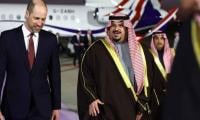 Kensington Palace Announces Prince William's Arrival In Saudi Arabia
 -
 ‘Andrew Crisis Follows King Charles Everywhere Now’
 -
 Jennifer Aniston Already Decided Her Wedding Dress?
 -
 Prince Harry, Meghan’s Hollywood Party Drama Exposes Chaotic PR Strategy
 -
 Jennifer Garner Reacts To Savannah Guthrie's Video As Search For Nancy Guthrie Continues
 -
 Bad Bunny Leaves Fans Worried With Major Move After Super Bowl Halftime Show
 -
 Captain Jason Talks Personal Hardships He Faced Ahead Of 'Below Deck' Season 4
 -
 Anti-monarchy Group Reacts To Prince William, Kate Middleton Statement On Epstein Scandal
 -
 Andrew 'must' Apologize Not Wider Royal Family For Jeffrey Epstein Links
 -
 Super Bowl 2026: Why Didn't Epstein Survivors Ad Air On TV?