
New diplomatic footprint
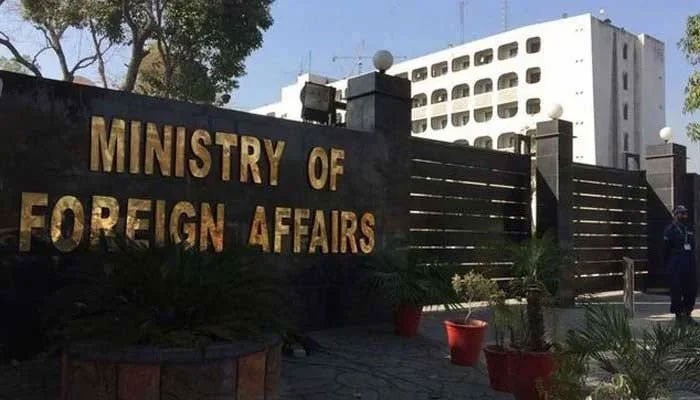
In Washington, fresh headlines about US State Department staff cuts have ignited familiar talk of leaner foreign service. In Islamabad, the moment offers a different imperative.
Pakistan does not need to mirror that retrenchment. It needs a focused reassessment of where and how we deploy our diplomatic resources. The goal is neither austerity for austerity’s sake nor a reaction to trade imbalances. It is the recalibration of a global presence to match new geopolitical and economic realities.
Pakistan currently runs nearly 90 embassies and high commissions, more than 70 consulates, and missions to key multilateral institutions such as the UN and the OIC. This covers almost 100 countries and serves over 10 million overseas Pakistanis. The scope is enormous, and its potential is even greater.
We must ask a simple question. Are we allocating resources where they matter most?
The Ministry of Foreign Affairs is budgeted around Rs27 billion annually. More than 90 per cent goes straight to overseas missions, paid in foreign currencies, US dollars, euros and pounds. That makes our diplomatic spending doubly vulnerable to exchange rate volatility. Recognising the issue is not the same as scaling back; the test should be prioritisation.
Certain capitals are essential. Washington, London, Brussels, Beijing, Ankara and Riyadh shape global norms. They influence trade, security cooperation and international narratives. Maintaining our presence there is mandatory. Our embassies must be modern, responsive and digitally equipped, not relics.
The problem is misalignment, not volume. We still operate in outdated buildings. Some properties lie underutilised. In many strategic missions, staffing and technology lag far behind. Meanwhile, smaller posts, often in low-impact locations, consume bureaucratic bandwidth with little return.
This demands a redesign. We should embrace a hub-and-spoke model. Regional embassies should act as full-service anchors backed by satellite consulates or mobile consular units. Several G20 countries already operate this way. The model allows Pakistan to maintain a presence without wasting resources where strategic need is limited.
Take the Gulf. Abu Dhabi, Dubai, Riyadh and Jeddah combined host millions of Pakistani expatriates. During Covid-19, Pakistani missions there repatriated tens of thousands. Remittances from Gulf states reached a record $31.2 billion in just the first 10 months of FY2024-25, a 31 per cent increase year over year. That surge supported Pakistan’s balance of payments. These missions do real work. They deserve to be equipped as operational centres built on strong coordination with NADRA, labour attaches and immigration authorities. They cannot remain ceremonial.
The same applies to North America and Europe. Communities in New York, Toronto and Birmingham serve as Pakistan’s informal goodwill ambassadors. Yet many of these consulates suffer from outdated systems, limited staff and weak public outreach. Expanding digital consular services, hiring experienced public diplomacy officers, and embedding trade specialists are essential tools of twenty-first-century diplomacy.
A detailed January 2025 AGP audit report on diplomatic missions highlighted that procurement irregularities, inflated hospitality bills, translation overspend and opacity in budget lines. These are easy governance failures to fix. What is harder is cultural. The Ministry of Foreign Affairs must build a culture of cost discipline tied directly to strategic outcomes.
Diplomacy serves a functional purpose. It facilitates trade, supports the diaspora, manages crises, and advances national interests in ways other statecraft tools cannot. It belongs in the same category as infrastructure, something to invest in, maintain and adapt as national priorities evolve. Treating it as overhead misses the point.
Pakistan’s FY2025-26 federal budget targeted Rs17.57 trillion in total outlay, down 6.7 per cent from Rs18.9 trillion the previous year. Defence spending rose to Rs2.55 trillion this year, an increase of 17 per cent. That’s appropriate. National security demands sustained investment and Pakistan should continue to prioritise it. But the country’s diplomatic posture deserves the same seriousness. Relationships, narratives and presence on the global stage are strategic assets that complement defence.
The budget also leaned on increased taxation, linking itself to a $7 billion IMF funding programme. That burden should not fall on diplomatic under-investment. Instead, Pakistan can free fiscal space by consolidating obsolete property and reallocating resources to high-impact missions.
Across the US under Trump, State Department cuts were framed as cost-saving. The result was a hollowing of diplomacy. Pakistan should not imitate. We should learn: retrenchment without strategy undermines interests. Strategic investment yields returns. Embassies that serve large Pakistani communities, drive trade, and secure development opportunities deliver real returns. These are instruments of influence and economic strategy.
The urgency comes not from visible decline, but from quiet drift. Pakistan doesn’t need a smaller footprint; it needs a smarter one. Low-impact missions can be closed or consolidated. High-value posts should be modernised and staffed accordingly. Currency exposure needs to be managed. Budget discipline must be enforced; these are practical steps that signal intent. In a world defined by alliances, digital competition, climate diplomacy and diaspora power, Pakistan should be deciding, not reacting.
The foreign service needs a sharper edge. It should be sized to match our ambitions, focused on where it can move the needle and grounded in clear priorities.
The writer is a non-resident fellow at the CISS. He posts/tweets @umarwrites


