
Welcome to Pakistan?
In my previous column (‘Pakistan’s tourism blindspot’, July 14), I explored how Pakistan, despite its immense cultural and natural wealth, continues to underperform in the global tourism economy due to the absence of real-time data, smart governance and institutional foresight.
However, following its publication, several readers, tourism professionals, development experts and international travellers pointed out what seems obvious in hindsight but was omitted in my initial, policy-centric approach: that tourism is as much about personal freedoms and cultural comfort as it is about numbers, indices or dashboards.
At its core, tourism is an experience economy. And experience begins not with arrival, but with the expectation of comfort, freedom and dignity. Today’s international traveller, whether from Berlin, Bangkok or British Columbia, isn’t just visiting for scenery. They want safety, personal freedom, clean and comfortable infrastructure, and the cultural space to be themselves. In many of these areas, Pakistan continues to falter.
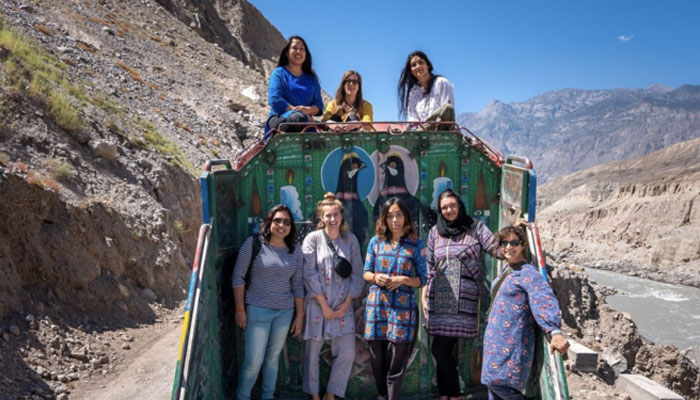
Take something as basic as weather-appropriate attire. With summer temperatures in most of the country crossing 40 C, international visitors, especially women, seek the liberty to dress comfortably. Yet they often find themselves navigating a social minefield where public staring, judgment, and, at times, harassment are normalised. While Pakistani society tolerates men loitering and gazing without consequence, it shows little acceptance for women, even foreign women, choosing clothing based on climate, not convention. This hypocrisy, rooted in cultural rigidity rather than law, becomes a silent but powerful deterrent to female tourists, and by extension, to many families and groups considering Pakistan as a destination.
Freedom of movement is another stumbling block. Tourists want to explore a place on their own terms, not shadowed by security protocols or stifled by suspicion. Pakistan’s genuine concerns around safety should not translate into excessive restrictions. Instead, a more intelligent model, one that ensures safety through subtle, tech-enabled means, could help assure tourists while preserving their autonomy.
One untapped lever that could accelerate this transformation lies in Pakistan’s telecom sector. Just as countries like Turkey, Thailand and the UAE have capitalised on customised SIM packages for inbound tourists, Pakistan has an opportunity to introduce ‘Tourism SIMs’, pre-activated mobile packages offering data, emergency access, language support and curated travel information. These SIMs can be issued at airports and land entry points, tied to digital visitor registration systems, and bundled with tourism apps.
This isn't merely about connectivity; it is about creating a digital tourism ecosystem. Enabling tourists to share their journeys live on platforms like Instagram, TikTok or YouTube could exponentially increase Pakistan’s global visibility. Authentic traveller-generated content remains one of the most influential forms of destination marketing.
The digital footprint created through such SIMs can offer policymakers real-time insight into tourist movement, preferences data and potential security risks, enabling a form of ‘soft surveillance’ that supports both experience design and national safety without intrusive mechanisms. For a country long constrained by perception and geopolitics, this is a rare convergence of economic opportunity and soft power strategy.
Then comes the question of lifestyle compatibility. One of the unspoken truths of Pakistan’s tourism policy is its blanket ban on alcohol, among a very small group of countries globally with such a policy. While this aligns with religious values for the Muslim majority, it alienates non-Muslim tourists who see a glass of wine or a beer as part of the travel experience. Here, a nuanced policy is urgently needed. Controlled, licensed availability of alcohol for non-Muslims and foreign tourists in specific hospitality zones (eg, high-end hotels, resort areas, airports) would not only align Pakistan with global tourism norms but also send a message of cultural openness and hospitality without compromising religious sensitivities.
Pakistan’s current approach appears to follow a one-size-fits-all strategy. It aims to attract both high-value Western and Far Eastern tourists, while also catering to low-budget regional faith-based travellers. But the needs of these groups are fundamentally different.
Western and Far Eastern tourists, accustomed to global standards, expect clean public toilets, eco-friendly infrastructure, reliable transport, modern bed-and-breakfasts and seamless digital services. These tourists are willing to pay more, stay longer and spread positive word-of-mouth, but only if the experience is worth it. Right now, the absence of proper planning, facilities and predictability sends them elsewhere.
In contrast, Hindu pilgrims, especially those visiting ancient temples such as Hinglaj Mata in Balochistan or Shivaharkaray near Karachi, often come from regions or backgrounds where lower hospitality standards are tolerated. While this segment may be more forgiving of infrastructure limitations, it is also less lucrative in terms of per-capita spend. That said, these pilgrims represent a low-hanging fruit for Pakistan’s tourism sector, especially in the short term. Basic improvements in sanitation, accessibility and religious facilitation can rapidly boost arrivals and revenue from this demographic.
The real missed opportunity lies with high-income Sikh diaspora tourists, particularly from Canada, the UK and the US. Sites like Kartarpur, Nankana Sahib and Panja Sahib hold immense spiritual significance and emotional value for them. These yatris travel with families, carry strong emotional connections, and crucially, spend in hard currencies. Yet Pakistan has yet to create a true luxury pilgrimage experience for them. Imagine curated spiritual journeys, heritage trains, five-star faith-based resorts and airports with dedicated services for Sikh pilgrims. The model already exists in places like Makkah, Lourdes and Varanasi. Why not here?
Unfortunately, the broader policy environment continues to undermine such ambitions. Pakistan still lacks a national tourism policy that’s both cohesive and inclusive. Provincial tourism departments operate in silos. Visa regimes are inconsistent and under-advertised. No digital concierge exists for trip planning or visitor safety. And data, whether on visitor movement, sentiment or spending patterns, remains fragmented or entirely absent.
If Pakistan is serious about being more than just a scenic postcard, it must begin by segmenting its audience. Faith tourists, adventure seekers, cultural enthusiasts and wellness travellers all require distinct strategies, infrastructure, and marketing. A Sikh yatri is not the same as a backpacker from Berlin, and both are vastly different from a yoga tourist from Japan or a Buddhist explorer tracing the Gandhara trail.
Finally, and perhaps most crucially, Pakistan must embrace cultural self-reflection. Hospitality is not just about welcoming the world, but also about being willing to evolve with it. A society that claims pride in its generosity must also be generous in its tolerance, openness and vision.
Tourism is a silent diplomat. Every visitor who comes to Pakistan leaves with a story. Whether that story is one of warmth or discomfort depends not just on the government, but on every citizen who interacts with a stranger. Until Pakistan addresses both its policies and its people’s perceptions, it will remain, like one of its ancient ruins, full of untapped beauty, held back by the dust of its own hesitation.
If Pakistan can align its cultural openness with digital innovation and targeted policy reform, it won’t just host tourism, it will win ambassadors.
The writer is a public policy expert and leads the Country Partner Institute of the World Economic Forum in Pakistan. He tweets/posts @amirjahangir and can be reached at: aj@mishal.com.pk







-
 Melania Trump Appears With Humanoid Robot At White House
 -
 ‘Addictive By Design’: Meta, YouTube Found Liable In Historic Verdict
 -
 Bruce Willis' Mom Marlene Makes Another Family Amid Son's Battle With Dementia
 -
 Roblox Safety Warning For Parents: Developer Says Kids Need 24/7 Monitoring
 -
 Chelsea Handler Explains Why She Dates Younger Men
 -
 Chappell Roan's Security Guard Takes 'full Responsibility' For His Interaction With Jorginho's Daughter?
 -
 Rosalía Cuts Concert Short Over Sudden Illness, Fans Shocked
 -
 'Buffy' Star Nicholas Brendon's Death Case Takes Massive Turn
 -
 FKA Twigs Takes Legal Stand Against Ex Shia LaBeouf
 -
 ‘Progressive’ Kate Middleton Snubs Outdated Royal Etiquette
 -
 Kylie Kelce Explains Why She Avoids Raising Kids With 'silver Spoon'
 -
 Meghan Markle Is Above Royal Family ‘empty Threats,’ Says Insider
 -
 Anne Hathaway Opens Up About 'defeated' Feeling As Working Mom
 -
 Shamed Andrew Should Testify In Epstein Case As ‘act Of Service’
 -
 What Really Happened Before Nicholas Brendon Was Found Dead At Home?
 -
 Sarah Ferguson Branded ‘most Famous Missing Person’ In UK Right Now