
Smarter regulation
Pakistan's regulatory framework is extensive, fragmented and operates across federal, provincial, and local tiers
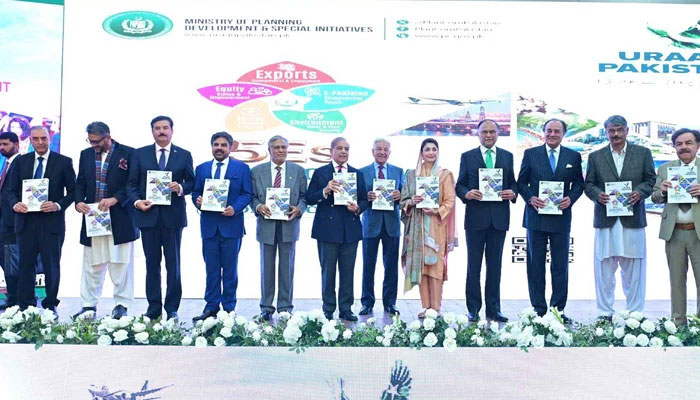
Pakistan’s regulatory framework is extensive, fragmented and operates across federal, provincial, and local tiers. At the federal level alone, there exist more than 122 regulatory authorities, a number that increases at lower levels of governance.
This includes sector-specific organisations such as the State Bank of Pakistan (SBP), which enjoys a degree of autonomy, the Securities and Exchange Commission of Pakistan (SECP), the National Electric Power Regulatory Authority (Nepra), the Oil & Gas Regulatory Authority (Ogra), the Public Procurement Regulatory Authority (PPRA), and the Pakistan Telecommunication Authority (PTA), among others.
At the provincial level, entities like the newly established Punjab Enforcement and Regulatory Authority (PERA) function as centralised enforcement agencies aimed at streamlining regulations. New national bodies are also emerging to tackle contemporary issues. For instance, the National Commission for Personal Data Protection (NCPDP) was established under the 2023 Personal Data Protection Act, and legislation concerning a cryptocurrency regulator and a central bank digital currency pilot was introduced under the Virtual Assets Act 2025. Mechanisms for reform, such as the Public-Private Partnership Authority (P3A), created in 2017, are designed to harness private sector financing for service delivery and infrastructure development. At the highest executive level, the Special Investment Facilitation Council (SIFC) convenes key stakeholders.
Trade facilitation has advanced with the introduction of the Pakistan Single Window (PSW) initiative, launched by Pakistan Customs. The PSW digitises the processes of import and export licensing and clearance, integrating various agencies, such as maritime, narcotics, drug regulation and fisheries departments, to minimise delays and reduce costs.
The proliferation of regulatory bodies, many of which operate with overlapping mandates, results in regulatory burdens that account for up to 39 per cent of GDP in associated costs. These costs encompass direct monetary fees, delays, and rent-seeking activities. Frequently, multiple agencies require concurrent approvals for the same procedure. For example, the import of fuel necessitates testing fees from both the Pakistan Standards and Quality Control Authority (PSQCA) and OGRA, effectively doubling expenses.
The licensing process is excessively complex: acquiring a trade license may involve 46 distinct steps, incur a cost of Rs80,000, and take up to 160 days. Opening a petrol station can involve 58 steps, representing 8.0 per cent of the total investment cost, while seeking building approval from the Capital Development Authority (CDA) can encompass 104 steps, amounting to 77 per cent of the total cost, often extending over multiple years.
Many regulatory bodies lack genuine independence; for instance, Nepra is unable to notify tariff changes autonomously and can only recommend alterations, with the government retaining the authority to make final decisions. This undermines the essential principle of regulatory separation of powers. Of these bodies, only the SBP demonstrates a significant degree of operational autonomy; the majority remain under ministerial oversight, leaving them susceptible to political influence and operational constraints.
The regulatory environment in Pakistan is characterised by a tendency towards revenue generation rather than facilitation. Each administrative desk is associated with fees and potential delays, creating incentives for corruption and inefficiency. Many regulatory processes remain paper-based, non-digitised and time-consuming, which further exacerbates these challenges. Currently, there is no institutionalised Regulatory Impact Evaluation (RIE) system in Pakistan. Proposed reforms primarily exist at the training level, as there is no dedicated office to assess the necessity, effectiveness or outcomes of regulations prior to approval.
The average import tariffs in Pakistan, which include regulatory duties (RDs) and additional customs duties (ACDs), are notably high, cascading, and discretionary. These distortions suppress export activity, diminishing from over 15 per cent of GDP in the 1990s to just over 10 per cent in 2024, while increasing costs for businesses and fostering rent-seeking behaviours among politically connected enterprises.
To improve regulatory efficiency, Pakistan should seek to streamline its regulatory framework by consolidating overlapping agencies, thereby reducing the total number of regulators and clarifying their mandates. The merging of approval desks and the unification of overlapping licensing functions under centralised authorities or single-window operations could enhance efficiency, drawing on the successful model of the Pakistan Single Window (PSW).
The establishment of a Regulatory Affairs Office, akin to the US Office of Regulatory Affairs, would subject proposed regulations to cost-benefit analysis and impact assessments, along with performance key performance indicators (KPIs) before enactment. This would promote rule-based and necessity-driven regulations while mitigating unnecessary or counterproductive legislative measures.
It is also essential to accelerate digital transformation by integrating NADRA, digital identification systems, online business registration, tax filing and licensing procedures. This initiative aims to formalize the informal economy, which accounts for approximately one-third of all economic activity, thus reducing compliance burdens, enhancing revenue generation and facilitating access to credit and markets for small businesses.
Regulatory bodies must have statutory independence in their staffing, decision-making and financial autonomy, minimising political interference. Experience from reforms implemented at the SBP can serve as a model; similar structural autonomy should be extended to Nepra, Ogra, the PPRA and the PTA. Concurrently, public service reforms, including merit-based hiring, sector-specific specialisation and the establishment of key performance indicators, should be initiated to mitigate operational inertia and inefficiencies.
Customs duty reforms should involve the elimination of RDs and ACDs, simplification of duty structures to no more than four tiers and the delegation of tariff policy oversight to a neutral National Tariff Board, thereby distancing it from the fiscal interests of the FBR. Such changes would bolster export growth, minimise distortions and enhance integration into global value chains. These reforms are integral to the URAAN Pakistan initiative and ongoing structural reform efforts.
The empowerment of the Public-Private Partnership Authority (P3A) and the SIFC is crucial, ensuring they function as genuine facilitators with clear governance structures that emphasise transparency and accountability. The scaling of public-private partnership models should be also be prioritised, particularly within the sectors of energy, transport, water and IT, bolstered by regulatory support to instill investor confidence.
According to the World Bank’s Development Update for April 2025, Pakistan’s economy shows signs of stabilization, with inflation reduced to approximately 4.5 per cent, foreign reserves elevated to $14.5 billion, and real GDP growth projected at 2.7 per cent for FY25, with further increases anticipated at 3.1 per cent in FY26 and 3.4 per cent in FY27. However, these gains remain precarious without ongoing reform initiatives.
Efforts to rationalise regulatory processes, implement rule-based licensingand undertake tariff reforms are fundamental to unlocking private-sector investment. The World Bank underscores that reducing procedural barriers while introducing competition and investor governance such as through the SIFC and P3A will enhance confidence and expand formal economic engagement. Through the implementation of digital enforcement measures and NADRA-linked documentation processes, Pakistan has the potential to significantly enhance its VAT and personal income tax collection efficiency currently at approximately 0.23 and 16 per cent, respectively. This could generate substantial additional revenue without increasing tax rates, thereby contributing to the stabilisation of public finances and reducing the risks associated with debt-to-GDP ratio.
Tariff reforms and streamlined trade processes could effectively reverse the decline in the export-to-GDP ratio, thereby revitalising Pakistan’s export competitiveness. Modelling by the World Bank suggests that eliminating RDs and ACDs, in conjunction with improvements in trade logistics through public-private partnerships, will have a positive impact on GDP, employment and the balance of payments in the medium term.
Reducing bureaucratic hurdles, simplifying licensing protocols and digitising business registration processes will facilitate the integration of SMEs into the formal economy, promoting competition and lowering entry barriers. A streamlined regulatory environment, complemented by competition policy reforms and advances in insolvency frameworks, will stimulate entrepreneurial ventures and job creation across diverse sectors.
The effective coordination of digital public infrastructure, digital identification systems, payment platforms, and data governance through initiatives such as the National Coordination Policy for Digital Development (NCPDP) will rely on coherent structures at the federal, provincial and local levels. A robust regulatory framework will be essential to ensure that digital public infrastructure is inclusive and efficient, thereby enhancing service delivery, advancing financial inclusion and facilitating e-government expansion.
Pakistan’s existing regulatory framework is characterised by excessive complexity, overlapping jurisdictions, rent-seeking behaviours and inadequate coordination. This framework generates frictions that amount to approximately 39 per cent of the country’s GDP, which undermines investment, restricts trade, and fosters inefficiency. Nonetheless, the implementation of targeted reforms such as streamlining regulatory agencies, establishing a regulation-impact evaluation body, digitising governmental processes, ensuring the independence of regulators, liberalising tariff policies and promoting public-private partnerships (PPPs) and trade facilitation presents substantial opportunities for improvement.
Executing these reforms in alignment with the URAAN Pakistan agenda and the World Bank’s 10-year Country Partnership Framework (FY26–35) could transition the economy from mere stabilisation to sustained growth. Such reforms would enhance exports, foster increased investment, elevate revenue generation without raising tax rates and facilitate inclusive economic advancement.
As inflation decreases to approximately 4.0 per cent, with reserves at $14.5 billion and signs of gradual growth, the restoration of momentum is critically dependent on regulatory modernisation and governance reforms.
The writer is a trade facilitation expert, working with the federal government of Pakistan.


