
Guardians of climate justice
Pakistan’s judiciary has emerged as unlikely yet powerful defender of environment
As Pakistan unveiled its first-ever fully climate-tagged federal budget, a critical question loomed large: will these high-level commitments truly improve the daily lives of the millions living below the poverty line?
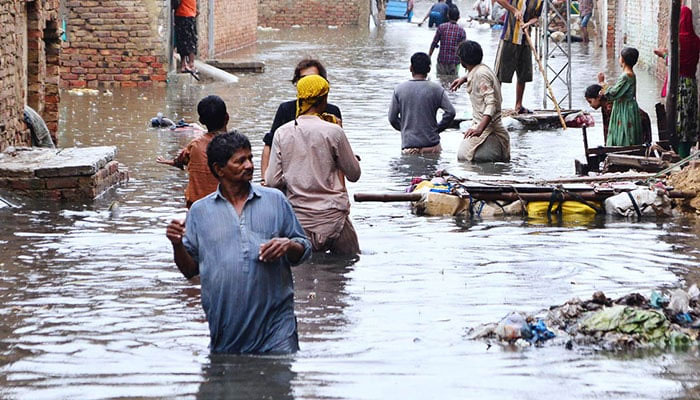
While fiscal measures like Climate Budget Tagging and new carbon levies are presented as progressive steps to tackle climate challenges, they risk becoming hollow victories if they fail to ensure that the poorest Pakistanis can breathe cleaner air, drink safe water, and survive the next devastating flood.
In a country where more than 40 per cent of people still lack basic services and climate disasters strike the most vulnerable the hardest, our climate spending must deliver real, tangible results, not just tick international checklists.
The landscape of Islamabad tells its own cautionary tale. The Margalla Hills National Park, intended to be a sanctuary of biodiversity and a buffer against the harsh impacts of urban sprawl, is under constant threat from steady encroachment, mismanaged guzara forests on its edges and a lack of coherent governance frameworks. The irony is striking: while we declare bold climate ambitions on global stages, we watch local ecosystems degrade at home, eroding our resilience and turning small, manageable problems into larger crises that ripple far beyond city limits.
At this pivotal moment, Pakistan’s judiciary has emerged as an unlikely yet powerful defender of the environment. Judicial activism, often criticised for stepping into the realm of the executive and legislature, has proven vital in upholding the constitutional right to a clean and healthy environment. By expanding the interpretation of fundamental rights under Articles 9 and 14, our higher courts have made it clear that the right to life and dignity includes access to clean air, safe water and a climate that does not endanger survival. Their use of public interest litigation and suo-motu powers has given citizens and civil society a platform to challenge the inaction that leads to unregulated construction, illegal logging and the quiet erosion of conservation laws.
Yet, as critical as this judicial safeguard is, it cannot fill every gap in our fractured system. Parliament, the very forum where the people’s will should shape national priorities, must reclaim its power as the main watchdog over climate finance and policy execution. Sadly, our parliamentary committees continue to be stifled by structural constraints. Even with the introduction of Climate Budget Tagging to track climate-relevant spending, committees often lack timely access to finance bills, the expertise to decode them and the authority to demand accountability from the government.
This year’s budget process laid this bare. Despite a welcome increase in mitigation funding, committees failed to flag severe cuts to pollution control and agricultural research, both pillars of resilience. Even more troubling was the quiet passage of an 18 per cent tax on solar panels, a blow to our push for clean energy, which slipped through with barely a question raised.
These oversights aren’t technical footnotes; they have real consequences for communities that rely on stable seasons, fertile land and secure water supplies to survive. As climate threats become increasingly erratic, these governance failures exacerbate the cracks in our social fabric. Pakistan needs more than polished policy statements; we need robust mechanisms to transform words into sustained action.
Imagine if our parliamentary committees could not only scrutinise budgets but also amend them, extend review periods, and invite stakeholders to weigh in before any spending is approved. Imagine if they worked hand-in-hand with local governments and civil society to ensure adaptation funding, like investments in flood defences, early warning systems or nature-based solutions, actually reached the communities that need them most.
One reason we keep circling back to the same mistakes is that we treat climate governance as separate islands: the judiciary protects rights, parliament signs off on budgets, the executive drafts policies and civil society protests from the sidelines. This fragmented approach leaves room for poor coordination, political expediency, and bureaucratic drift.
But Islamabad, as the nation’s administrative heartbeat, has a rare chance to break this pattern. Courts could enforce binding deadlines, demand regular progress reports on climate measures, and encourage ministries to overcome their inertia. Parliament, in turn, could strengthen its oversight bodies and learn from best practices abroad, drawing inspiration from the UK’s Environmental Audit Committee or its cross-party climate groups that hold governments accountable for every promise made.
But we should not stop at simply fixing what’s broken; we must also innovate. The scale of investment needed for genuine climate resilience is vast, estimated at $348 billion by 2030. The public sector cannot shoulder this burden alone. We must unlock new streams of funding: municipal bonds, climate trust funds, and private investment in ecosystem restoration and resilient infrastructure. Locally, guzara forests urgently need protection so that these community-owned lands do not become the next frontier of exploitation and deforestation. Why not pilot community-led forest trusts that generate livelihoods while safeguarding biodiversity? If we can turn the Margalla Hills National Park into a working model of how urban development can coexist with conservation, it could inspire new frameworks for managing other protected and surrounding areas nationwide.
The judiciary, too, could widen its role. Beyond issuing landmark rulings, it could help uncover the structural flaws in our laws, drive reforms to expand technical capacity and clarify the tangle of federal and provincial responsibilities that often stall progress. Imagine if the courts required annual public hearings on the state of the climate, where ministries report on results, communities voice their struggles and independent experts propose real fixes. Such open accountability would prompt our institutions to think beyond short-term, politically convenient gestures and commit to the long, often challenging path of genuine climate resilience.
Ultimately, this is about reimagining what democratic governance should look like in an era of escalating climate risks. The people of Islamabad, and all of Pakistan, cannot afford for climate resilience to remain the domain of grand speeches and sporadic court interventions.
We need an ecosystem of checks and balances that holds our leaders to their promises and ensures that every rupee spent brings us closer to a safer, more sustainable future. It is time for our judiciary and parliament to move beyond parallel tracks and instead collaborate, share insights and co-create governance frameworks that match the scale and urgency of the crisis we face.
Climate change will not pause while we figure this out. Our cities, forests, rivers and people are counting on us to do far more than talk. As citizens, we must demand that our courts continue to protect our rights, our parliamentarians become bold champions of climate accountability and our policymakers embrace innovative financing, smart governance and collaborative oversight.
Only then can we bridge the chasm between policy and reality, and ensure the next generation inherits a Pakistan resilient enough to weather the storms that are already at our door.
The writer is a policy analyst and researcher with a Master’s degree in public policy from King’s College London.







-
 Melania Trump Appears With Humanoid Robot At White House
 -
 ‘Addictive By Design’: Meta, YouTube Found Liable In Historic Verdict
 -
 Bruce Willis' Mom Marlene Makes Another Family Amid Son's Battle With Dementia
 -
 Roblox Safety Warning For Parents: Developer Says Kids Need 24/7 Monitoring
 -
 Chelsea Handler Explains Why She Dates Younger Men
 -
 Chappell Roan's Security Guard Takes 'full Responsibility' For His Interaction With Jorginho's Daughter?
 -
 Rosalía Cuts Concert Short Over Sudden Illness, Fans Shocked
 -
 'Buffy' Star Nicholas Brendon's Death Case Takes Massive Turn
 -
 FKA Twigs Takes Legal Stand Against Ex Shia LaBeouf
 -
 ‘Progressive’ Kate Middleton Snubs Outdated Royal Etiquette
 -
 Kylie Kelce Explains Why She Avoids Raising Kids With 'silver Spoon'
 -
 Meghan Markle Is Above Royal Family ‘empty Threats,’ Says Insider
 -
 Anne Hathaway Opens Up About 'defeated' Feeling As Working Mom
 -
 Shamed Andrew Should Testify In Epstein Case As ‘act Of Service’
 -
 What Really Happened Before Nicholas Brendon Was Found Dead At Home?
 -
 Sarah Ferguson Branded ‘most Famous Missing Person’ In UK Right Now