
Heatwaves and highways
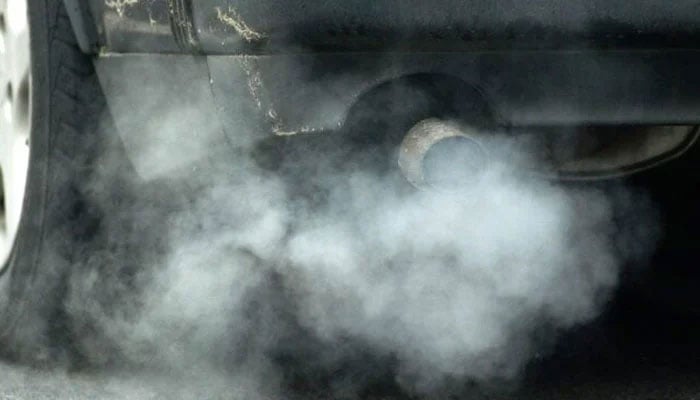
As record-breaking heatwaves grip the country and smog morphs into what many now call Pakistan’s unofficial ‘fifth season’, it’s becoming increasingly clear that the nation’s approach to infrastructure, particularly transport, must urgently shift to climate-conscious planning.
A recent report, ‘State of Global Air Quality Funding 2024’, revealed that globally, 61 per cent of air quality-related funding is being channelled into transport infrastructure. This is a clear signal: the global fight against climate change is increasingly being waged through smarter, cleaner and more inclusive transport systems.
Over the past several decades, successive governments in Pakistan have placed tremendous emphasis on road infrastructure, viewing it as the cornerstone of economic growth. This has led to a national road density of 0.5 kilometres per square kilometre, a considerable achievement given our fiscal constraints and geography. But this figure masks critical shortcomings. According to the Pakistan Economic Survey 2023-24, highways grew by a remarkable 59.8 per cent in the last five years, but primary roads – a lifeline for rural connectivity and economic inclusion – stagnated with a dismal 0.02 per cent growth.
While the link between infrastructure and economic growth is well established globally, the relationship – particularly in the case of road infrastructure – presents a more nuanced picture in Pakistan. Road development has undeniably contributed to enhancing connectivity, facilitating trade and supporting mobility, especially in populous regions like Punjab and Sindh.
However, emerging evidence suggests that the economic returns from continued road expansion may be diminishing. Studies that incorporate environmental costs, such as rising emissions, have found that, in some cases, road development can have neutral or even negative effects on GDP per capita, particularly when factoring in the long-term environmental toll and the growing burden of maintenance. Disaggregated analyses also indicate that the short-run link between road length and economic growth is limited at the national level, and in provinces like Balochistan there is little evidence of a direct causal relationship.
This evolving understanding highlights the importance of strategic, data-driven investment. A composite infrastructure index reveals that diversified investments across sectors – including energy, telecommunications and urban services – yield more substantial and sustained growth outcomes than road development alone. These findings emphasise the need for an integrated infrastructure approach that balances mobility with sustainability and inclusivity.
The country’s mobility trends tell a similar tale. Over the past five years, vehicle registrations have surged, especially among private modes of transport. According to the Pakistan Economic Survey 2023-24, cars, jeeps and station wagons increased by 34.9 per cent, while motorcycles – often the most accessible option for low-income households – rose by 30.8 per cent. Amongst motorcycles, electric two-wheelers have emerged as a practical alternative, particularly for women seeking affordable and independent mobility. But this individual workaround also highlights a policy vacuum where people are left to navigate risky choices on their own.
Two-wheelers now account for nearly 70 per cent of road accidents, raising serious safety concerns. In stark contrast, motor buses declined by 31.5 per cent, exposing a deepening crisis in public transport. This shift has led to higher congestion, increased demand for imported fossil fuels, higher road safety risks and worsening air quality in already choked urban centres.
The expansion of private transport is also an environmental emergency. The transport sector alone consumes nearly half of Pakistan’s total imported fossil fuels, driving both energy insecurity and carbon emissions. This reality contradicts the vision laid out in Pakistan’s National Transport Policy 2018, which called for integrated multimodal systems anchored in public transport, non-motorised mobility, and urban planning that supports walkability and cycling.
Some progress has been made. Studies focusing on the Islamabad-Rawalpindi MBS reveal that the system has significantly improved mobility for working women, students, and casual travellers. There are also modest environmental gains: research using satellite data found that the average land surface temperature (LST) along Murree Road dropped by nearly 17 C after the introduction of the MBS – a rare instance of infrastructure delivering climate co-benefits.
Still, issues of accessibility, last mile and efficiency persist. These systems, while air-conditioned and elevated, serve just 5–10 per cent of the urban population. Disabled persons and the elderly struggle with station access, broken elevators, and a lack of inclusive design. Studies show that only 35 per cent of metro users shifted from private or other public modes, far below the 50–70 per cent modal shifts observed in cities like Athens, Madrid and Croydon. These statistics signal that Pakistan’s mass transit systems are falling short of global standards in both reach and effectiveness.
In contrast to high-cost, low-coverage solutions, experts are now championing shared mobility as a more sustainable path forward. A study by PIDE proposes a pragmatic yet transformative solution: repurposing the 200+ underutilised buses currently operated by universities and government institutions in Islamabad and Rawalpindi. These 30–40-seater vehicles, which typically remain idle during much of the day after completing their limited office runs, represent a significant yet untapped public asset.
The study suggests integrating these buses into a broader shared public transport network, designed to serve general commuters beyond just students and staff. This approach would optimise existing resources without requiring major new infrastructure investment. By mapping high-density travel routes across union councils in the twin cities, the plan ensures intracity connectivity.
The result would be a more inclusive, efficient, and affordable public transport system that not only reduces traffic congestion and environmental emissions but also creates revenue that can be reinvested into upgrading the public transport sector over time.
For this innovative short-term fix to be effective, it must be supported by modernised regulations. Several forward-looking recommendations are also highlighted in the AIIB’s 2025 Asian Infrastructure Finance Report, ‘Infrastructure for Planetary Health’, launched by the Pakistan Institute of Development Economics. Across Asia, leading economies are already making significant strides: China launched its Air Pollution Prevention and Control Action Plan in 2014, introducing nationwide air quality monitoring, linking bureaucratic promotions to environmental performance, and electrifying its public transport systems.
India, under its National Clean Air Program (2019), expanded monitoring infrastructure and enhanced enforcement capabilities. Governance reforms were further supported by public awareness campaigns and ambitious energy transition goals outlined in India’s 2018 National Policy on Biofuels, which incentivised the use of ethanol and biodiesel blends in transportation.
Indonesia has implemented Euro 4 emission standards, is phasing out older vehicles, and is restoring carbon-rich peatlands. To strengthen implementation, the government has expanded air quality monitoring across major urban centres, such as Surabaya and Medan, and introduced stricter regulatory penalties for industrial polluters in Java and Sumatra.
These countries recognise that the path to urban air quality and climate resilience lies in bold policy reforms, electrified public transport and urban greening.
As we modernise governance, we must also modernise how we move. The climate clock is ticking, the urban population is swelling and the environment is deteriorating. What the country needs is a transport revolution. This means revising the National Transport Action Plan 2020, adopting a composite infrastructure approach prioritising multimodal transport, electric and efficient public transport, shared mobility, cycling, walking and green planning. Pakistan’s future will be shaped by the routes we choose now.
The writer is a senior research economist at the Pakistan Institute of Development Economics (PIDE). She can be reached at: saba@pide.org.pk


