
Film director Jami jailed for two years in defamation case
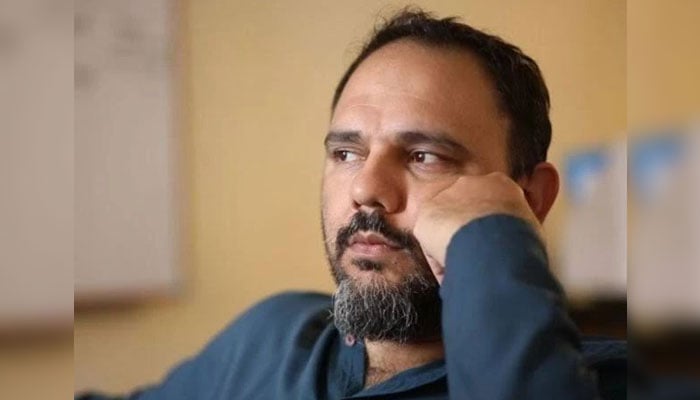
A sessions court has sentenced director Jamshed Mahmood Raza , famously known as Jami, to two years of simple imprisonment on charges of defaming fellow director Sohail Javed.
Additional Sessions Judge (South) Syed Waqar Hyder also imposed a fine of Rs10,000 on the convict and said that in case of default in payment of the fine, he shall undergo an additional one-month simple imprisonment.
Jami, who turned up in court on bail, was taken into custody and remanded to the Central Jail Karachi along with the conviction warrant to serve out the sentence.
In 2019, Javed filed a private complaint against Jami, a celebrated music video and film director and producer, for disseminating defamatory content.
The complainant claimed that the accused published a letter authored by an anonymous girl recounting an incident of sexual assault on his Facebook page, Jami Moor, on February 14, 2019.
Although, the publication did not explicitly name the complainant, it strongly insinuated to the general public, particularly to those within the show business industry that the individual being referred to as the predator was the complainant, he said.
Javed said that specific references within the publication such as "a music video and TVC Director", "He was a panelist at a festival in Hyderabad", "He introduced his 23 or 24-year-old son to me, who worked in the same profession as mine", and descriptions of personal stories shared by the alleged predator, led people to believe that the complainant was the subject of the accusation.
Javed said the accused had also publicly read the letter aloud at the Lahooti Melo 2019, a festival held at the Sindh University Jamshoro.
The complainant maintained that the allegations, which were entirely false, frivolous and based on speculation, had cast aspersions on his integrity, significantly impacting his standing in society causing immense mental distress. It was argued that the social media publication, including its comments, constituted defamation under the sections 499 and 500 of the Pakistan Penal Code.
On February 18, 2019, the complainant said he served a legal notice to the accused, demanding an unconditional public apology and immediate removal of the publication, but the notice was ignored by the accused who further disseminated the publication.
In his statement under the Section 342 of the Code of Criminal Procedure before a court, Jami denied all the allegations against him. He claimed that he had read a letter that was given by the organisers of the Lahooti Melo, and that he had no knowledge of what was in that letter at that time.
He said he had posted a video on Facebook, on which viewers mentioned the name of the complainant. Thereafter, he added that he deleted the post as well as his Facebook account.
He said that he was an activist, director and producer, however, the complainant had given a false statement against him on oath, adding that he had no intention of defaming the complainant or any other person.
In his written order, the judge noted: "In conclusion, it stands proved that the accused, with knowledge and recklessness, defamed the complainant by means of public communication, thereby harming his reputation."
"The publication of the letter, which was shared more than 200 times on available record, and the subsequent commentaries of the accused, and the accused's failure to deny or disassociate himself from the defamatory content, all combine to constitute the offense of defamation under Section 500 PPC."
The judge observed, "the accused has neither presented any credible evidence substantiating the allegations in the letter nor has he shown that his publication served a lawful public purpose. The victim of the alleged incident was not produced, no complaint was filed with relevant legal authorities; and no protective mechanism for the victim was invoked. This failure indicates that the act of publication was not in furtherance of any lawful or public interest but was rather, reckless and malicious."







-
 Sarah Ferguson Told To Take ‘villain’ Roles In Hollywood
 -
 Amy Madigan And Ed Harris’s Love Story Revealed: How The Couple Built A 45-year Marriage
 -
 Ducks Vs Canadiens Injury Update: Kirby Dach Leaves Ice Following Heavy Hit
 -
 Maple Leafs Vs Minnesota Wild: Veteran Defenceman Jeff Petry Set For Minnesota Debut
 -
 Why Sam Asghari Wishes Britney Spears 'success And Recovery' After Arrest?
 -
 Warriors Vs Knicks Preview: Draymond Green Out While Karl Anthony Towns Set To Return
 -
 Princess Beatrice, Eugenie Key ‘suspects’ Of The Royal Family
 -
 Lewis Pullman Teases 'surprises' In 'Avengers: Doomsday': 'Made For The Fans'
 -
 Kevin O’Leary Predicts Timothee Chalamet's Oscars Win Despite Backlash
 -
 David Beckham Calls Victoria 'best Mom' After Brooklyn Snub
 -
 Oscars 2026: Will Conan O'Brien Roast Timothée Chalamet In His Monologue?
 -
 ‘I’m Dead For Coffee’: Netanyahu Appears In Video Addressing Rumours Declaring Him 'dead'
 -
 Kris Jenner Admits She Was Terrified For Kylie Jenner: Here’s Why
 -
 Prince Harry, Meghan Markle Snub Royal ‘melodrama’ From Critic
 -
 Colin Jost Fires Back At Joke About Scarlett Johansson ‘carrying’ Him
 -
 The Oscars: Jessie Buckley Shares What The Enemy Of Cinema Impact Is