
Indian activists seek to save child brides
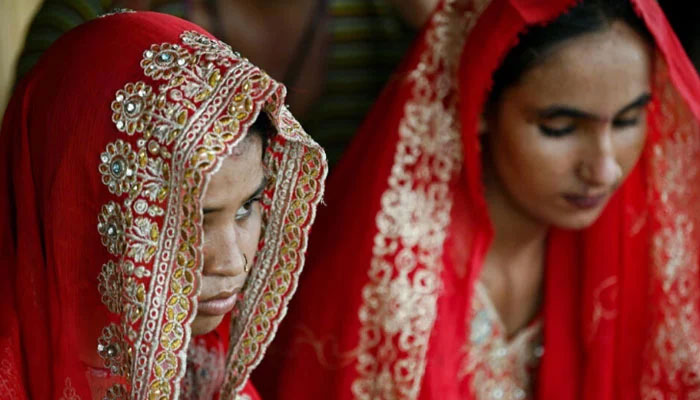
BEED, India: When wedding season comes in India, the phone of child rights activist Tatwashil Kamble never stops ringing with appeals to stop girls from being married off due to poverty.
Kamble said he has helped stop thousands of illegal marriages in India, where nuptials before the age of 18 are banned. “The elders of the village think: ´How dare we come to stop a marriage in their village!´” said Kamble, who has been campaigning for more than a decade in western Maharashtra state.
Many families are motivated by poverty to marry off their daughters, so that the girls can start earning their own living. When activists have sought to stop marriages, “it has led to physical altercations”, according to Kamble.
Sometimes they are able to stop the nuptials from taking place, or, if they arrive too late, then the bride is taken to a shelter and supported in deciding on her own future. India accounts for one in three of the world´s child brides, according to the UN children´s agency, with at least 1.5 million girls getting married each year.
Kamble said he is driven by the bitter memory of seeing a teenager die of blood loss during labour. “That´s when I thought: so many young girls are getting married and, even after their death, it´s not being called child marriage. They are saying ´the mother has died´” without acknowledging she was a girl.
Kamble works in the Beed district of Maharashtra, an area dominated by sprawling sugarcane fields hit hard by years of drought. Workers said they have little choice but to marry their daughters off young -- arguing they do it to protect the girl, not harm her.
“It is not like we don´t like the idea of education,” said Manisha Barde, a sugarcane cutter who was a child bride herself. “We want her to become a doctor.” Barde, however, arranged for her teenage daughter to be married only to be stopped by authorities.
She did so because they were poor and, if they had “better jobs, we wouldn´t have thought of her marriage”. Farm labourers said that when their children are little, relatives look after them or they come to the fields.
But when the girls become teenagers, their parents begin to worry -- either that they could start a relationship before marriage, or be subjected to sexual violence.
“There are very few girls who stay unmarried until 18,” said Ashok Tangde, district chief of the child welfare committee. “I have seen girls who have never seen a school,” he said.
Families worry for “the girl´s safety”, Tangde said, and even those opposed to child marriage can end up organising a wedding. Tangde said his team received 321 calls from across the district about child marriages that were taking place, or about to happen, in the first five months of this year.







-
 Dove Cameron Calls '56 Days' Casting 'Hollywood Fever Dream'
 -
 Prince William, Kate Middleton ‘carrying Weight’ Of Reputation In Epstein Scandal
 -
 Timothée Chalamet Compares 'Dune: Part Three' With Iconic Films 'Interstellar', 'The Dark Knight' & 'Apocalypse Now'
 -
 Little Mix Star Leigh-Anne Pinnock Talks About Protecting Her Children From Social Media
 -
 Ghislaine Maxwell Is ‘fall Guy’ For Jeffrey Epstein, Claims Brother
 -
 Timothee Chalamet Rejects Fame Linked To Kardashian Reality TV World While Dating Kylie Jenner
 -
 Sarah Chalke Recalls Backlash To 'Roseanne' Casting
 -
 Pamela Anderson, David Hasselhoff's Return To Reimagined Version Of 'Baywatch' Confirmed By Star
 -
 Willie Colón, Salsa Legend, Dies At 75
 -
 Prince Edward Praised After Andrew's Arrest: 'Scandal-free Brother'
 -
 Shawn Levy Recalls Learning Key Comedy Tactic In 'The Pink Panther'
 -
 King Charles Fears More Trouble As Monarchy Faces Growing Pressure
 -
 Inside Channing Tatum's Red Carpet Return After Shoulder Surgery
 -
 Ryan Coogler Brands 'When Harry Met Sally' His Most Favourite Rom Com While Discussing Love For Verstality
 -
 Sarah Pidgeon Explains Key To Portraying Carolyn Bessette Kennedy
 -
 Justin Bieber Rocked The World With Bold Move 15 Years Ago