
Steel industry warns tariff cuts could lead to shutdowns
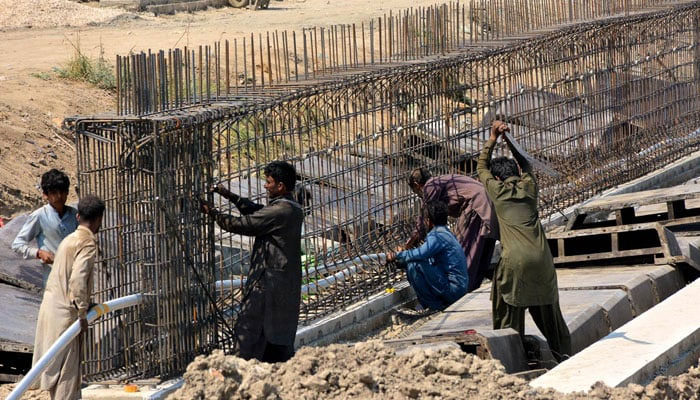
ISLAMABAD: The steel industry has warned the government of potential shutdowns due to the implementation of the National Tariff Reduction Policy over the next two years. Industry leaders argue that the average import tariff on steel products is set to be reduced from 55 per cent to 44 per cent in the Finance Bill 2025-26.
“If the tariff is further reduced to 38 per cent on average -- planned for 2026-27 -- we will have no option but to shut down our operations,” said steel industry executives during a press conference on Friday. Following the closure of Pakistan Steel Mills, private players in the sector collectively invested over Rs1 trillion, with each unit contributing between Rs40 billion and Rs50 billion. Industry representatives warned that the government’s policy trajectory risks turning the country into a “trading economy”.
In a joint media briefing, Abbas Akberali, patron-in-chief of the Pakistan Association of Large Steel Producers (PALSP) and chairperson of Amreli Steels, along with PALSP Chairperson Javed Iqbal, Vice Chairperson Illayus Aziz Malik and Secretary General Wajid Bokhari, called on the government to exempt the steel sector from tariff rationalisation for one year. They urged authorities to engage with the industry to develop a 10-year roadmap to reduce the cost of doing business, enabling local producers to compete with global giants like China.
They demanded a reduction in electricity tariffs from 14 cents to 7 cents per kWh and lower prices for gas and furnace oil to ensure a level playing field. Amreli Steels alone has downsized 25 to 30 per cent of its workforce in recent years; other companies have made similar cuts.
While some recent government measures, such as reduced electricity costs and lower interest rates, have brought limited relief, both remain among the highest in the region. The industry welcomed the gradual withdrawal of tax exemptions for the former Fata and Pata regions but questioned whether the move would survive the budget process, recalling last year’s reversal at the eleventh hour.
Industry leaders criticised the government for delegating the task of tariff rationalisation to individuals, some of them foreign, who, they argue, lack an understanding of Pakistan’s industrial realities and the steel sector’s operational environment. They said key ministries, including Commerce and Industries, were being sidelined in the tariff decision-making process. They also stressed that the government should have first introduced reforms to incentivise local iron ore extraction alongside tariff cuts. This, they argued, would help boost raw material availability, cut production costs, enhance product quality, and improve international competitiveness.
Globally, steel remains a heavily protected industry. India, currently the world’s second-largest steel producer, recently increased support for its sector. Bangladesh, too, protects its steel industry with tariffs as high as 89.92 per cent. In comparison, Pakistan offers far less protection, ranging between 43 to 57 per cent. Moreover, while Bangladesh levies only a nominal sales tax on steel, amounting to a few thousand taka per tonne, Pakistan imposes a sales tax of Rs38,000 per tonne.
Consequently, Bangladesh’s largest steel mill has a production capacity of 2.4 million tonnes, while Pakistan’s largest unit, with a capacity of 1.1 million tonnes, remains closed. The government’s proposed tariff reductions threaten to exacerbate this disparity, they said. Local producers are also contending with the region’s highest power rates, even after a recent reduction from 17 to 14 cents per kWh. In contrast, power in China costs just 7 cents. Coupled with high interest rates and massive currency devaluation, which has more than doubled working capital requirements, these factors have severely eroded competitiveness. Industry leaders urged the government to first improve Pakistan’s standing on global ease and cost of doing business indices before exposing local firms to international competition. Pakistan currently ranks 110th out of 140 countries. “Before opening up our market to the world’s leading steel producers, we must at least aim to improve our ranking to 50,” they said.







-
 Prince William Closes Saudi Arabia Visit With Rare Desert Shot
 -
 'King Charles Acts Fast Or Existential Crisis' Over Andrew Scandal
 -
 Brooklyn Beckham Charging Nearly £300 In Ticket Cost For Burger Festival
 -
 Prince William Makes Unexpected Stop At Local Market In Saudi Arabia
 -
 Zayn Malik Shares Important Update About His Love Life
 -
 Kate Middleton, William Are Holding Onto Their Hats As Worse Gets Threatened: Behind The Veil Of Shame
 -
 British Soap Awards Scrapped Again As ITV Confirms 2026 Hiatus
 -
 Climate Nearing Dangerous Tipping Points, Study Shows
 -
 James Van Der Beek, 'Dawson's Creek' Star, Dies At 48
 -
 Threads Launches Dear Algo AI Feature To Personalise Feeds In Real Time
 -
 Police Take Action Over Andrew's Ties With Jeffrey Epstein While In UK Office
 -
 Courtney Love Makes First Appearance Since New Report On Kurt Cobain's Death
 -
 King Charles Anxious As Uncertainty Grows Over Sarah Ferguson’s Next Move
 -
 Real Reason Kim Kardashian Is Dating Lewis Hamilton
 -
 Rihanna Leaves Elderly Woman Star-struck In Viral Grocery Store Video
 -
 TikTok US Launches Local Feed Using Precise Location Data