
Ukraine’s Sumy region on edge as Russian advance closes in
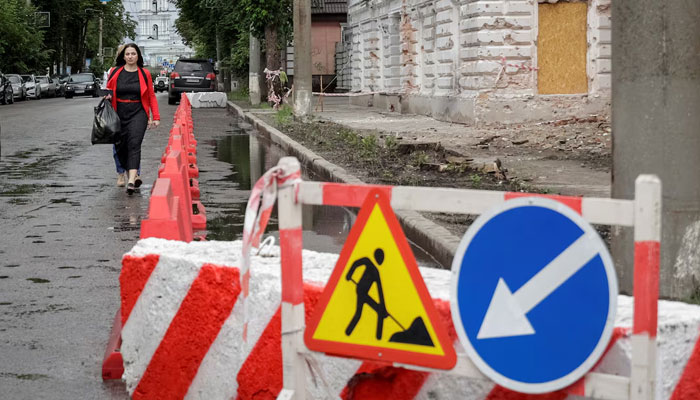
STETS’ KIVKA, Ukraine: Despite the driving rain, a few elderly residents wander into the streets of Stetskivka in northeast Ukraine to catch a yellow bus to go shopping in nearby Sumy, the regional capital.
They are worried about the Russian drones that have been striking the area with increasing regularity, more than three years into Moscow´s invasion. “I´m afraid. Nobody knows what could happen to the bus we take,” Galyna Golovko, 69, told AFP at the small shop she runs near the bus stop.
Golovko said she never goes out in the morning or evening when Russian drones criss-cross the sky. “It´s scary how many drones fly in the morning.... In the morning and in the evening it´s just hell,” she said.
The border with the neighbouring Russian region of Kursk is just 17-kms away. The Sumy region was the starting point for a Ukrainian incursion into Kursk last year. Ukraine held swathes of the territory for eight months, until a spring offensive by Russian forces supported by North Korean troops pushed them back.
Moscow has since advanced towards the city of Sumy, taking several villages along the way and forcing mandatory evacuations of civilian residents. At the Stetskivka bus stop, an elderly woman said she had packed up in case Russian troops arrive in town, where Ukrainian soldiers have replaced a pre-war population of 5,500 people. The town is just 10 kilometres from the front line, and residents said there is heavy fighting nearby.
Beyond Stetskivka, “everything has been destroyed, there is not a single village,” Golovko said. On her shop counter, there was a plastic box with a few banknotes -- donations for a local family that lost its home, destroyed by a Russian glide bomb. Ten kilometres to the south lies Sumy, a city that had 255,000 inhabitants before the war.
So far, restaurants are crowded and there seems little concern about the Russian advance. But buildings in the city bear the scars of Russian bombardments. And, when the sounds of car horns go down in the evenings, explosions can be heard in the distance.




-
 AI Film School Trains Hollywood’s Next Generation Of Filmmakers
 -
 Royal Expert Claims Meghan Markle Is 'running Out Of Friends'
 -
 Bruno Mars' Valentine's Day Surprise Labelled 'classy Promo Move'
 -
 Ed Sheeran Shares His Trick Of Turning Bad Memories Into Happy Ones
 -
 Teyana Taylor Reflects On Her Friendship With Julia Roberts
 -
 Bright Green Comet C/2024 E1 Nears Closest Approach Before Leaving Solar System
 -
 Meghan Markle Warns Prince Harry As Royal Family Lands In 'biggest Crises' Since Death Of Princess Diana
 -
 Elon Musk Weighs Parenthood Against AI Boom, Sparking Public Debate
 -
 'Elderly' Nanny Arrested By ICE Outside Employer's Home, Freed After Judge's Order
 -
 Keke Palmer On Managing Growing Career With 2-year-old Son: 'It's A Lot'
 -
 Key Details From Germany's Multimillion-euro Heist Revealed
 -
 David E. Kelley Breaks Vow To Cast Wife Michelle Pfeiffer In 'Margo's Got Money Troubles'
 -
 AI-powered Police Robots To Fight Crime By 2028: Report
 -
 Everything We Know About Jessie J's Breast Cancer Journey
 -
 Winter Olympics 2026: What To Watch In Men’s Hockey Today
 -
 Winnie Harlow Breaks Vitiligo Stereotypes: 'I'm Not A Sufferer'