
The terror blackhole
To escape blackhole of terror, Pakistan must look both externally – at proxy wars being waged by India – as well as internally
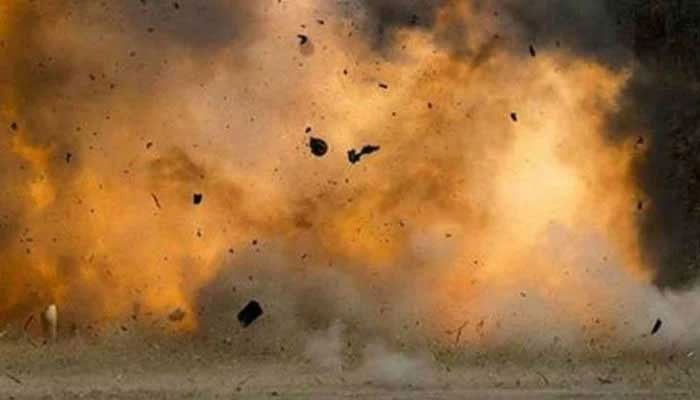
There is perhaps no greater unifying thread across the diverse regions, ethnicities and classes of Pakistan than the haunting trauma of terrorism. From the early 2000s to the present day, Pakistan has been caught in a brutal cycle of violence that has left deep scars on its people, its economy and its psyche. While military operations and years of sacrifice have pushed back the most intense phases of terror, the threat continues to fester, resurfacing with regular and deadly frequency. According to the latest data from the Pakistan Institute for Conflict and Security Studies (PICSS), militant attacks in May alone claimed 113 lives and injured 182 individuals. These numbers tell only part of the story. What is particularly alarming is the disproportionate increase in casualties among security personnel – up 73 per cent – and civilian injuries, which surged by a staggering 145 per cent compared to April. Beyond the statistics lies a grim truth: terrorism in Pakistan has not been eradicated; it has simply mutated and relocated.
Globally, Pakistan ranked seventh in civilian casualties from explosive weapons in 2024, according to the UK-based group Action on Armed Violence (AOAV). The international community may view Pakistan through the prism of geopolitics, but for ordinary citizens, especially in conflict-hit areas like Khyber Pakhtunkhwa and Balochistan, the struggle is intensely personal. The sound of sirens, the fear of marketplaces, the mistrust of strangers – these are all part of daily life in communities that have known nothing but instability. And yet, to treat terrorism solely as a security challenge is to miss the forest for the trees. The roots of extremism in Pakistan run deep, embedded in decades of governance failures, economic inequality and social exclusion. In places like KP and Balochistan, militancy often thrives not because people inherently support violence but because the state has failed to provide an alternative.
The young people who grew up during the peak of the war on terror inherited not just shattered homes but also shattered futures. A generation raised on fear, with little trust in the state and even fewer opportunities to prosper, is vulnerable to recruitment by extremist groups that promise identity, purpose and retribution. The economic impact of terrorism has further compounded this crisis, reducing purchasing power, discouraging investment and drying up livelihoods, particularly in already marginalised regions. Pakistan cannot afford to treat terrorism as a problem of ‘others’. It is not confined to distant mountains or border areas. Pakistan has a real proxy terror problem which cannot be ignored and can only be countered by intelligence and kinetic operations. We also need to kill the ideology that breeds them. For that, we need to implement the National Action Plan – work on mindsets and long-term reform, rooted in compassion, inclusion and a commitment to building a just society. To escape the blackhole of terror, Pakistan must look both externally – at proxy wars being waged by India – as well as internally. Only then can we solve the terror riddle.







-
 'Buffy' Star Nicholas Brendon's Death Case Takes Massive Turn
 -
 FKA Twigs Takes Legal Stand Against Ex Shia LaBeouf
 -
 ‘Progressive’ Kate Middleton Snubs Outdated Royal Etiquette
 -
 Kylie Kelce Explains Why She Avoids Raising Kids With 'silver Spoon'
 -
 Meghan Markle Is Above Royal Family ‘empty Threats,’ Says Insider
 -
 Anne Hathaway Opens Up About 'defeated' Feeling As Working Mom
 -
 Shamed Andrew Should Testify In Epstein Case As ‘act Of Service’
 -
 What Really Happened Before Nicholas Brendon Was Found Dead At Home?
 -
 Sarah Ferguson Branded ‘most Famous Missing Person’ In UK Right Now
 -
 Why King Charles Does Not Need A Driving License? Expert Reveals
 -
 Did Graham Norton Really Sign NDAs For Taylor Swift’s Wedding?
 -
 ‘Polite’ King Charles Treats Staff Better Than ‘boorish’ Andrew
 -
 Princess Beatrice's Husband Raises Eyebrows With Deleted Instagram Post
 -
 Dua Lipa 'snubs' Priyanka Chopra
 -
 Will Taylor Frankie Paul Still Get Her 'Bachelorette' Salary?
 -
 'Harry Potter' Returns: First Glimpse Of HBO's New Series