
‘Tariff rationalisation to increase exports, jobs’
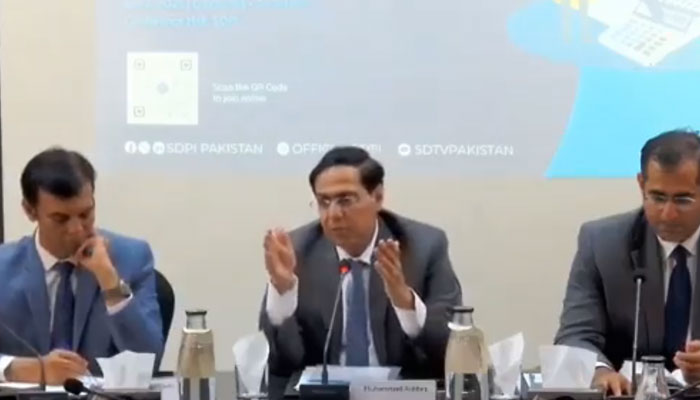
Islamabad:As tariff debates take center stage globally following a change in the US administration, experts called for sector-specific interventions to make Pakistan’s new tariff policy a success.
They were speaking at a seminar on “Winners and losers: making sense of Pakistan’s new tariff policy” organised by Sustainable Development Policy Institute here Monday. Muhammad Ashfaq, Joint Secretary, Ministry of Commerce, unveiling details of the upcoming National Tariff Policy 2025–30, said that tariff rationalisation is now essential to stimulate exports, enhance manufacturing and generate employment.
He said that Pakistani imports are twice its exports and unless we align our tariff structure with trade realities, circular debt and revenue shortfalls will continue to undermine our growth, he said, adding that new tariff policy originally shelved due to the COVID-19 pandemic and 2022 floods, aims to gradually reduce import duties across the board. The responsibility for customs tariffs now also officially shifted from the Federal Board of Revenue (FBR) to the Ministry of Commerce, which now oversees the National Tariff Board, a structural change designed to bring policy coherence, he added.
Mr Ashfaq projected that by 2029-30, federal tax revenue could reach Rs2.1 trillion driven by increased sales tax collections and a rise in indirect taxation. He noted that while the import bill may rise initially, exports are expected to surge, along with job creation, ie, one million new jobs during the policy’s implementation phase.
He said that Pakistan also opened negotiations with the US Administration to review tariffs on its exports. Though the US is not pressing hard on trade barriers, its concern over trade surpluses makes tariff rationalisation a mutual interest. No changes to Pakistan’s tariff policy are anticipated after the conclusion of bilateral talks, he said.
SDPI Executive Director Dr Abid Qaiyum Suleri in his opening remarks opined that the topic, once a technical concern, became a household name, which reflects its growing importance both globally and domestically.
For Pakistan, he said, the debate is particularly pressing as the country prepares its federal budget under the supervision of not one, but two International Monetary Fund (IMF) programmes.







-
 Alicia Keys Celebrates 25 Years Of Breakout Single ‘Fallin’’
 -
 Akinola Davies Jr. Gives His Immigrant Parents A Shoutout In 2026 BAFTAs Acceptance Speech
 -
 Princess Beatrice, Eugenie Told 'first Thing They Should Do' After Andrew Arrest
 -
 Jennifer Garner Reveals What Her Kids Think Of Her Acting Career
 -
 Prince William Should Focus On 'family Business' After Andrew Blunder
 -
 Katherine Schwarzenegger Pratt 'brought To Tears' By Sister-in-law's Gesture
 -
 Prince William Makes Bold Claim About Britain's Creative Industry At BAFTA
 -
 Andrew Mountbatten Windsor Insulting 'catchphrase' That Degarded Staff
 -
 Kate Middleton, Princess Beatrice 'undercurrent Tension' Comes To Surface
 -
 'Grey's Anatomy' Alum Katherine Heigl Reveals Why She Stayed Silent After Eric Dane Loss
 -
 Host Alan Cumming Thanks BAFTAs Audience For Understanding After Tourette’s Interruption From Activist
 -
 Jennifer Garner Reveals Why Reunion With Judy Greer Makes Fans 'lose Their Minds'
 -
 Chris Hemsworth Makes Shocking Confession About His Kids' Reaction To His Fame
 -
 Wiz Khalifa Reveals Unconventional Birthday Punch Tradition With Teenage Son In New Video
 -
 BAFTAs 2026: Kerry Washington Makes Debut In Custom Prada Gown
 -
 Jennifer Lopez Gets Emotional As Twins Max And Emme Turn 18