
Path to peace runs through economic resolve
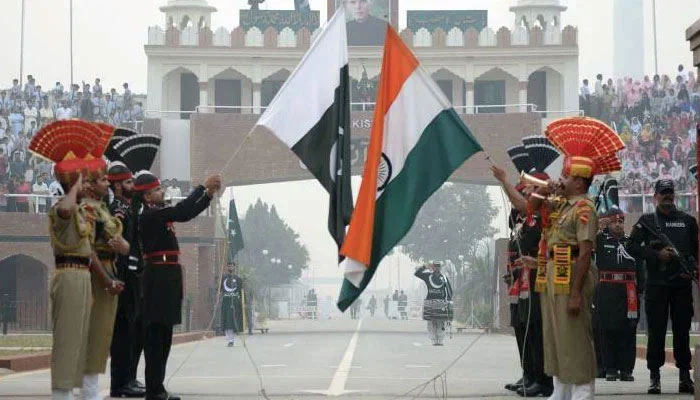
LAHORE: In its pursuit of becoming the undisputed regional power in South Asia, India has deliberately maintained heightened tensions with Pakistan -- seeking to further strain Pakistan’s economy at a time when the country is striving for recovery.
India’s strategic interests have often been served by internal instability within Pakistan. Militant groups operating inside the country have periodically turned against the state, forcing the Pakistani military and security apparatus to divert resources inward.
Under the illusion that Pakistan, preoccupied with internal threats, lacked the bandwidth for strategic engagement, India underestimated its neighbour’s military capacity. That illusion was shattered during the most recent conflict, when Pakistan retaliated with precision, demonstrating technological prowess and operational capability.
Pakistan continues to express a desire for peaceful relations with India -- but on terms defined by strength. The core of this stance lies in the economic wellbeing of its population.
Destabilising a nuclear-armed neighbour is rarely in any country’s long-term interest. Despite internal threats, Pakistan’s military has preserved its ability to project strength, particularly on its eastern front. India has never had the luxury of overlooking this reality. Attacks targeting Pakistani civilians and military personnel -- especially children -- have galvanised public support for the armed forces, consolidating their influence over both domestic and foreign policy, including the country’s stance on India.
Pakistan has conducted multiple operations to dismantle militant networks and reclaim internal stability. Some analysts argue that this has enabled the military to re-engage externally, including with India.
While India may have enjoyed short-term strategic reprieve during Pakistan’s internal fight against terrorism, long-term regional peace and economic integration hinge on a stable and moderate Pakistan.
Given this context, Pakistan’s political parties must unite to prioritise economic recovery. Indian media has already urged its government to keep Pakistan engaged in border skirmishes to exert continued economic pressure. The current economic climate demands focused governance and constructive opposition. Pakistanis should remain vigilant, but not be provoked by Indian sabre-rattling.
The country’s economic challenges can largely be addressed through better resource allocation. This is no time for political gamesmanship. The government must remove individuals with compromised reputations -- regardless of whether allegations have been proven -- and assemble a clean, competent team of local experts. With a sound economic foundation, the political leadership would be better positioned to counter India’s diplomatic manoeuvres.
Pakistan’s industrial sector has been severely constrained by flawed government policies. It now requires facilitation and support to regain competitiveness. A capable and honest economic team must lead efforts to revitalise industry. However, businesses should not expect undue concessions or subsidies.
With inflation at record lows, interest rates halved over the past six months, and a stable rupee, the government has a favourable macroeconomic environment to enact reforms. One pressing issue is the anomaly in yarn imports: exporters are exempt from sales tax on imported yarn, but face the tax when purchasing domestically produced yarn. This has led to a decline in local yarn sales, with imports now making up nearly 50 per cent of total fabric production.
Moreover, some unscrupulous exporters are exploiting this loophole -- buying cheaper local yarn while claiming to use higher-priced imported yarn, thereby distorting the market. Since there is no mechanism to verify the origin of the yarn used, this practice goes unchallenged. The only viable solution is to impose a sales tax on imported yarn as well, ensuring a level playing field.






-
 Melissa Jon Hart Explains Rare Reason Behind Not Revisting Old Roles
 -
 Meghan Markle Eyeing On ‘Queen’ As Ultimate Goal
 -
 Japan Elects Takaichi As First Woman Prime Minister After Sweeping Vote
 -
 Kate Middleton Insists She Would Never Undermine Queen Camilla
 -
 King Charles 'terrified' Andrew's Scandal Will End His Reign
 -
 Winter Olympics 2026: Lindsey Vonn’s Olympic Comeback Ends In Devastating Downhill Crash
 -
 Adrien Brody Opens Up About His Football Fandom Amid '2026 Super Bowl'
 -
 Barbra Streisand's Obsession With Cloning Revealed
 -
 What Did Olivia Colman Tell Her Husband About Her Gender?
 -
 'We Were Deceived': Noam Chomsky's Wife Regrets Epstein Association
 -
 Patriots' WAGs Slam Cardi B Amid Plans For Super Bowl Party: She Is 'attention-seeker'
 -
 Martha Stewart On Surviving Rigorous Times Amid Upcoming Memoir Release
 -
 Prince Harry Seen As Crucial To Monarchy’s Future Amid Andrew, Fergie Scandal
 -
 Chris Robinson Spills The Beans On His, Kate Hudson's Son's Career Ambitions
 -
 18-month Old On Life-saving Medication Returned To ICE Detention
 -
 Major Hollywood Stars Descend On 2026 Super Bowl's Exclusive Party