
Govt urged to scrap tax relief on infant formula milk
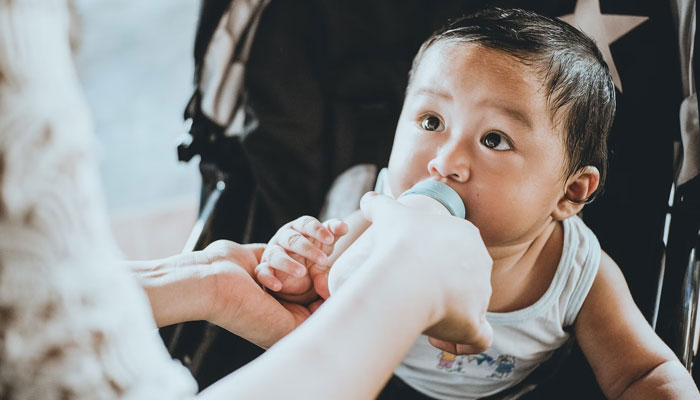
Islamabad:The Scaling Up Nutrition Civil Society Alliance (SUNCSA) Pakistan as well as healthcare professionals’ bodies including Pakistan Pediatric Association (PPA) has strongly urged the government to drop any plans for tax relief on breastmilk substitutes, warning that such a move would be a major setback to child health and nutrition efforts in the country.
The alliance of over 150 civil society organizations cautioned that slashing or eliminating taxes on infant formula could severely undermine decades of progress made in promoting breastfeeding — a practice that is crucial to reducing infant mortality and boosting child survival in Pakistan.
Citing alarming statistics, SUNCSA Pakistan noted that the country continues to report one of the highest infant mortality rates globally, with 50 deaths per 1,000 live births, much of it due to preventable conditions. UNICEF data shows that diarrheal diseases alone kill more than 53,000 children annually in Pakistan.
Evidence from global health research makes it clear that children who are not breastfed are at a significantly higher risk of dying from infections like diarrhoea and pneumonia. One study found that infants who were not breastfed were over 10 times more likely to die from diarrhoea compared to exclusively breastfed babies.
“Every child deserves the best start in life, and that begins with breastfeeding. Breastfeeding is the first vaccine, the first protection, and the first right of every child,” said Dr. Shabina Raza, Convener of SUNCSA Pakistan and member of the Global Executive Committee of the SUN Movement.
“Policies must protect and promote breastfeeding as a cornerstone of child health and well-being, while ensuring alignment with our national and global commitments.” The alliance emphasized that taxation on breastmilk substitutes is an internationally recommended tool to discourage aggressive marketing and the unnecessary use of formula. SUNCSA warned that any tax relief would send the wrong message — suggesting breastmilk substitutes are equal to or better than breastfeeding, a perception not supported by science.
Such a move, they argued, would undermine not only public health policy but also the deeply rooted cultural understanding of breastfeeding as the best nutrition for infants. “Breastfeeding is a natural and powerful intervention that no manufactured product can replicate,” said Mubarak Ali Sarwar, Chairperson of SUNCSA Pakistan. “Instead of encouraging substitute feeding through fiscal incentives, we must invest in supporting mothers, enforcing laws, and protecting every child’s right to optimal nutrition.”
SUNCSA also pointed out that providing tax relief on breastmilk substitutes would contradict several national and international commitments, including the International Code of Marketing of Breastmilk Substitutes, Pakistan’s Protection of Breastfeeding and Young Child Nutrition Ordinance (2002), and the Infant and Young Child Feeding Strategy, all of which call for protecting breastfeeding from commercial interference.
Calling the proposed tax relief a policy misstep, SUNCSA urged the government to immediately reconsider any such proposal, explore alternatives like increasing the Federal Excise Duty on BMS to curb misuse, and ensure civil society and public health experts are involved in future policymaking.
SUNCSA Pakistan reaffirmed its support for the government’s broader nutrition agenda but warned that protecting breastfeeding must remain a national priority. "Breastfeeding is not only a nutritional imperative — it is a national responsibility,” the alliance said.







-
 'Buffy' Star Nicholas Brendon's Death Case Takes Massive Turn
 -
 FKA Twigs Takes Legal Stand Against Ex Shia LaBeouf
 -
 ‘Progressive’ Kate Middleton Snubs Outdated Royal Etiquette
 -
 Kylie Kelce Explains Why She Avoids Raising Kids With 'silver Spoon'
 -
 Meghan Markle Is Above Royal Family ‘empty Threats,’ Says Insider
 -
 Anne Hathaway Opens Up About 'defeated' Feeling As Working Mom
 -
 Shamed Andrew Should Testify In Epstein Case As ‘act Of Service’
 -
 What Really Happened Before Nicholas Brendon Was Found Dead At Home?
 -
 Sarah Ferguson Branded ‘most Famous Missing Person’ In UK Right Now
 -
 Why King Charles Does Not Need A Driving License? Expert Reveals
 -
 Did Graham Norton Really Sign NDAs For Taylor Swift’s Wedding?
 -
 ‘Polite’ King Charles Treats Staff Better Than ‘boorish’ Andrew
 -
 Princess Beatrice's Husband Raises Eyebrows With Deleted Instagram Post
 -
 Dua Lipa 'snubs' Priyanka Chopra
 -
 Will Taylor Frankie Paul Still Get Her 'Bachelorette' Salary?
 -
 'Harry Potter' Returns: First Glimpse Of HBO's New Series