
Fortify to flourish
Punjab must take immediate action to close nutrition gap one of most effective ways is food fortification
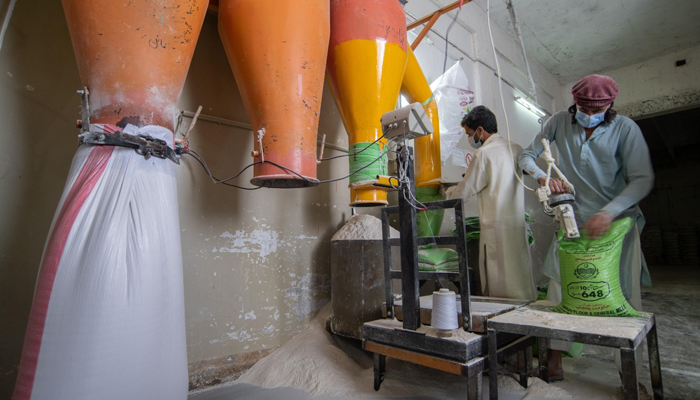
Micronutrient deficiencies, often referred to as 'hidden hunger’, are silently eroding Pakistan’s health and economic potential, leaving millions of children, women, and vulnerable populations malnourished and susceptible to disease.
Despite being a country that produces staple foods in abundance, Pakistan continues to struggle with severe micronutrient deficiencies – 40 per cent of children under five are stunted, and over 50 per cent of adolescent girls and 41.7 per cent of women of reproductive age suffer from anaemia.
These deficiencies are not just a public health issue; they undermine economic growth too. Malnutrition costs Pakistan an estimated $17 billion annually in productivity losses, healthcare expenses, and reduced cognitive potential in children.
One of the most viable, cost-effective, and sustainable solutions to this crisis is mandatory food fortification of staple foods such as wheat flour, edible oil, and salt. While Sindh, Balochistan, and Khyber Pakhtunkhwa have taken decisive steps in enacting mandatory fortification laws, Punjab – the most populous province – remains alarmingly behind.
The urgency of investing in nutrition in Punjab cannot be overstated. Its malnutrition statistics are staggering: 52 per cent of children suffer from anaemia, 49 per cent face vitamin A deficiency, and over 70 per cent lack sufficient vitamin D. Among women of reproductive age, 41 per cent are anaemic, and 25 per cent have vitamin A deficiencies. These figures highlight the long-term impact of malnutrition, which affects physical and cognitive development, impairs immunity, complicates pregnancies and increases child mortality.
Punjab must take immediate action to close the nutrition gap. One of the most effective ways is food fortification.
By fortifying staple foods already consumed by millions daily, food fortification ensures essential nutrients reach all segments of society without requiring major changes in dietary habits. Wheat flour fortification with essential micronutrients such as iron, folic acid, vitamin B12, and zinc is a proven, cost-effective strategy to combat micronutrient deficiencies, as recognised by the World Health Organisation and the Food and Agriculture Organisation. Enriching edible oil with vitamins A and D further helps bridge nutritional gaps at minimal cost.
According to the Lancet Global Health Report (2022), mandatory food fortification with folic acid is a safe, cost-effective, and sustainable intervention to prevent neural tube defects, including spina bifida and anencephaly – both growing public health issues in Pakistan.
A systematic review published in Lancet Global Health further highlights that large-scale fortification programs have been linked to a 34 per cent reduction in anaemia prevalence among women and children in various countries, underscoring its crucial role in public health. The benefits far outweigh the cost – fortifying a 20-kg bag of wheat flour adds only Rs20, making it one of the most affordable and scalable interventions to combat malnutrition.
Beyond health benefits, food fortification is a sound economic investment. The World Bank and Copenhagen Consensus (2022) indicate that every dollar invested in iron fortification yields an $8 return in economic productivity. Folic acid fortification returns $46 per dollar spent by reducing birth defects and maternal complications, while iodine fortification provides a $30 return for every dollar invested. Given these high health and economic returns, food fortification has been a national priority for the government, with the provincial governments of Sindh, Balochistan, and Khyber Pakhtunkhwa following suit and passing mandatory fortification laws in their regions.
However, with over half (52 per cent) of Pakistan’s population residing in Punjab, the absence of mandatory fortification laws in the province remains a critical gap in the country’s fight against malnutrition. Unlike other provinces where fortification laws enforce compliance, Punjab relies on voluntary measures, resulting in inconsistent fortification and limited impact.
Without a legally binding framework, food manufacturers are not obligated to fortify their products, leading to variations in nutrient levels and weakening the effectiveness of fortification efforts. Strong legislation ensures quality control, uniformity, and broad access to fortified products.
Globally, 147 countries mandate salt iodisation, 104 require wheat flour fortification, and 43 enforce edible oil fortification. Pakistan cannot afford to lag. Punjab must align with these best practices and accelerate its legislative process to introduce mandatory food fortification laws.
The province has already recognised fortification as a priority in its Multisectoral Nutrition Strategy (2024) and Punjab Food Fortification Strategy (2018). These commendable strategies must be transformed into actionable plans implemented with strong regulatory frameworks.
Passing a mandatory food fortification law in Punjab is crucial to saving lives and driving economic growth. Enacting this legislation will help protect children from preventable diseases, support healthier pregnancies, and reduce long-term economic losses.
Investment in food fortification is an investment in Pakistan’s well-being and prosperity. Over half of the nation’s population cannot access foods enriched with essential micronutrients. As Punjab’s first female chief minister, there is hope Maryam Nawaz will champion this long-pending legislation in the best interest of the province’s population, particularly women and children, who are the most affected and vulnerable. By enacting mandatory food fortification laws, she can leave a lasting legacy of improved public health, stronger economic growth and a more nourished Punjab.
The writer is the country director for Nutrition International.


