
Health minister directs end to reliance on Indian pharma
“India is not a trusted partner, especially when lives of our citizens are at stake.” says minister
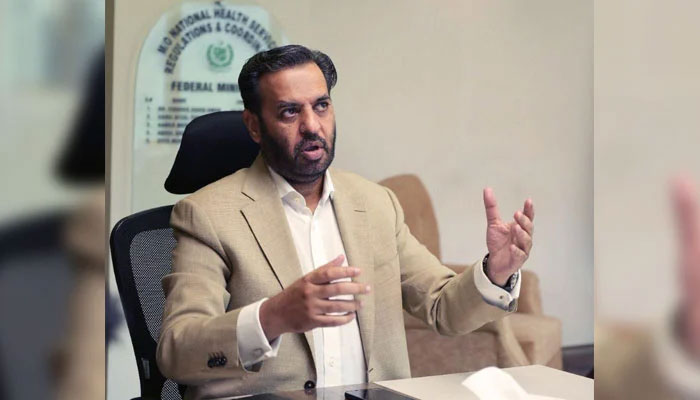
ISLAMABAD: Declaring India an “unreliable enemy,” Federal Minister for Health Mustafa Kamal has directed Pakistan’s health institutions, pharmaceutical regulators, and industry stakeholders to immediately end all the reliance on Indian medicines, vaccines, and pharmaceutical ingredients.
He warned that depending on India amid escalating regional tensions is a national security risk and called for urgent diversification of supply chains and expansion of local manufacturing capacity.
“India is not a trusted partner, especially when the lives of our citizens are at stake. We cannot afford to let our healthcare system remain vulnerable to any disruption caused by our adversary,” the minister stated during a high-level emergency meeting held at the National Institute of Health (NIH) on Thursday.
The emergency session was convened to assess national preparedness in the event of a public health emergency triggered by the evolving geopolitical situation.
It was attended by senior officials including the Director General Health, the Chief Executive Officer of the Drug Regulatory Authority of Pakistan (DRAP), heads of federal hospitals, representatives from the Islamabad Health Regulatory Authority, and provincial health leaders from Sindh, Khyber Pakhtunkhwa, and Azad Jammu & Kashmir.
Mustafa Kamal directed the DRAP to ensure the uninterrupted availability of life-saving medicines and vaccines and urged immediate arrangements for sourcing from local or alternative international markets instead of India. He also instructed the NIH to rapidly scale up domestic vaccine production. He emphasised that no disruption must occur in routine or emergency services at federal hospitals. He instructed provincial health departments to allocate additional beds and ensure adequate reserves of essential drugs and blood supplies to prepare for any contingency.
Polyclinic Hospital was asked to make special arrangements for treating burn patients in the event of mass casualties, and the minister stressed that the medical needs of the armed forces should be addressed on a priority basis.
A significant outcome of the meeting was the establishment of a National Health Emergency Centre at the NIH.
The centre will operate 24/7, maintaining real-time coordination with provincial departments, hospitals, and relevant stakeholders to monitor developments and enable rapid response.
“The exchange of timely and accurate information during a crisis is critical. The Ministry of Health is closely monitoring the situation and will take every possible measure to ensure public health safety,” Kamal assured.
In line with the minister’s instructions, DRAP has issued an advisory to pharmaceutical manufacturers, including the Pakistan Pharmaceutical Manufacturers Association (PPMA), Pharma Bureau, and the Pakistan Chemists and Druggists Association (PCDA).
The advisory urges drug manufacturers to adopt proactive strategies to maintain consistent supplies of registered medicines. Recognising the risks posed by global supply chain disruptions, trade restrictions, and public health emergencies, DRAP emphasised that manufacturers must reduce reliance on single sources of raw materials--particularly those imported from India, such as Active Pharmaceutical Ingredients (APIs) and excipients.
Manufacturers have been advised to establish multiple sources for APIs and critical inputs to reduce dependency. They are also encouraged to routinely evaluate the reliability and risk exposure of their suppliers and to develop contingency sourcing plans accordingly.
In addition, DRAP recommended maintaining buffer stocks of raw materials and finished products to absorb potential delays or disruptions. Improving supply chain visibility to anticipate demand and respond swiftly to shortages, hoarding, or black market activity was also highlighted as a priority.
“These steps are essential for building a resilient pharmaceutical supply chain that ensures uninterrupted access to safe, effective, and quality medicines for the Pakistani population,” the regulatory body noted.
DRAP also reiterated its commitment to providing technical assistance and regulatory guidance to support the pharmaceutical industry in this transition.





-
 Andrew Mountbatten Windsor Faces Future With UK MPs, Says Expert
 -
 Shamed Andrew Told 'nobody Is Above The Law' Amid Harrowing Silence
 -
 Gisele Bundchen Melts Hearts With Sweet Bike Ride Glimpse Featuring Son
 -
 Prince William Found Meghan Markle ‘quite Refreshing’ At Start
 -
 Kate Middleton Knew Should Could Not Be ‘voice Of Reason’ With Prince Harry
 -
 Rihanna Has Wardrobe Malfunction At A$AP Rocky Fashion Show
 -
 Prince Harry Felt System Had ‘one Rule For Him, One For Prince William’
 -
 Jake Paul's Fiancée Sends Him Over The Moon Over Stunning Victory
 -
 Harper Beckham Sends Valentine’s Love Amid Brooklyn Family Drama
 -
 Why Prince William, Kate Middleton 'partnership' Is Important For Monarchy
 -
 Katie Price Drama Escalates As Family Stays In Touch With Ex JJ Slater
 -
 Critics Target Palace Narrative After Andrew's Controversy Refuses To Die
 -
 Sarah Ferguson’s Delusions Take A Turn For The Worse: ‘She’s Been Deserted’
 -
 ICE Agents 'fake Car Trouble' To Arrest Minnesota Man, Family Says
 -
 Camila Mendes Reveals How She Prepared For Her Role In 'Idiotka'
 -
 China Confirms Visa-free Travel For UK, Canada Nationals