
The noise after the fire
Entire families were erased in seconds, and local communities are still searching through debris for remains
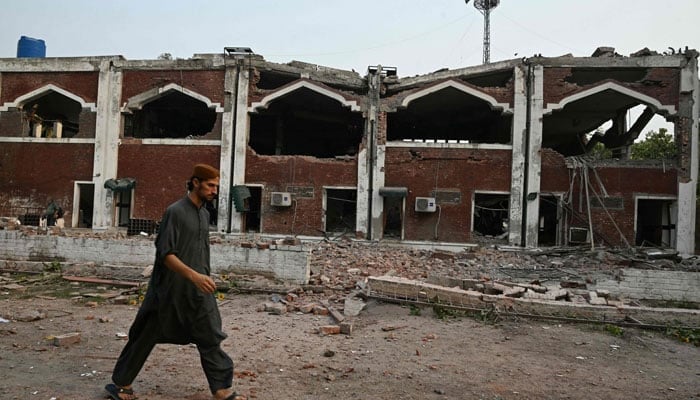
The airstrikes came without warning. Indian fighter jets crossed into Pakistani territory, striking locations in Azad Kashmir. Indian officials described the operation as a response to the April 22 tragedy in Pahalgam.
But the targets were not combatants. The missiles landed in civilian areas. Homes were destroyed. Children were among the dead. Entire families were erased in seconds, and local communities are still searching through debris for remains. Pakistan’s military responded swiftly, intercepting multiple aircraft and launching targeted retaliatory strikes across the Line of Control. The region once again stood on the brink.
The escalation has drawn international attention. Leaders in Washington, Beijing and Moscow have called for restraint. The UN has urged dialogue. But these appeals, however well-intentioned, miss a critical truth. There is no balance in a situation where one side fires the first shot and the other is asked to show the most patience. Calls for calm must begin with clarity.
In the hours after the Pahalgam incident, the Indian government accused Pakistan of orchestrating the attack. No investigation had taken place. No evidence was presented. The narrative was issued immediately and repeated consistently. This pattern is not new. When violence erupts in Indian-occupied Kashmir, the political instinct in New Delhi is to turn outward. Rather than examining its own policies of militarisation, disenfranchisement, and demographic engineering in the region, it blames the neighbour it has long chosen to vilify.
Pakistan, this time, chose a different response. The military held a press briefing on April 29, presenting what it called evidence of Indian involvement in subversive activities inside Pakistan. A suspect was arrested with explosives. Forensic analysis revealed communication with external handlers. Financial records showed cross-border transfers. The evidence did not merely challenge the Indian narrative. It offered a counter-story grounded in detail. These were not vague accusations or theories. They were findings rooted in investigation, not speculation.
The next day, Pakistan’s leadership addressed the nation. It reiterated its long-standing position. Pakistan does not seek escalation. It does not believe in reckless conflict. But it reserves the right to respond to aggression with strength. That response came after Indian jets crossed into Pakistani airspace. It was swift, deliberate, and targeted. Yet even in that moment, Pakistan did not frame its actions as a demonstration of dominance. It framed them as a necessary defence.
India, by contrast, has made escalation a strategy. It calls its strikes ‘surgical’. It labels civilian deaths as collateral. It claims moral high ground while silencing dissent in Occupied Kashmir and repressing independent media at home. This is the same state whose agents have been implicated in transnational assassination plots in Canada and the US. These are not allegations made by adversaries. They are charges brought forward by Western governments based on credible intelligence.
What has changed is not the nature of Indian actions, but the world’s ability to ignore them. As more evidence emerges of India’s willingness to use covert force beyond its borders, the burden shifts. The international community can no longer afford the luxury of pretending this is a balanced rivalry. It is not.
Pakistan’s position remains consistent. It has called for an independent investigation into the Pahalgam attack. It has released the information it possesses. It has taken measured action in response to military aggression. It has not sought to inflame the situation. Instead, it has asked the world to look closely at the facts. This is a country that has endured the consequences of conflict and understands what restraint truly means.
In doing so, Pakistan demonstrates the kind of clarity this moment demands. It is not enough to speak of peace while tolerating provocation. It is not enough to issue joint statements while refusing to identify the aggressor. Real diplomacy requires truth. Real accountability requires courage.
The people of South Asia deserve better. Kashmiris deserve a future that is not decided by airstrikes or media campaigns. Pakistanis deserve security that is not held hostage to external deflection. And Indians deserve leadership that does not resort to external blame to cover internal failures. The stakes are too high for familiar scripts to continue unchecked.
What has happened in recent days is not a breakdown. It is a reveal. It shows who initiates and who responds. It shows who turns mourning into accusation and who turns accusation into action. And it shows who still believes that power can be exercised with responsibility, even under fire. There is a difference between being provoked and being provocative, and the world must not confuse the two.
The world is watching this moment. But more importantly, the region is living it. As the smoke settles, history will not only record who fired. It will record who acted with judgment. It will remember who stood for truth, even when silence would have been easier. Pakistan has made its choice with strength, clarity, and deliberate restraint. The question now is whether others are willing to do the same.
The writer is a non-resident fellow at the CISS. He posts/tweets @umarwrites







-
 'Buffy' Star Nicholas Brendon's Death Case Takes Massive Turn
 -
 FKA Twigs Takes Legal Stand Against Ex Shia LaBeouf
 -
 ‘Progressive’ Kate Middleton Snubs Outdated Royal Etiquette
 -
 Kylie Kelce Explains Why She Avoids Raising Kids With 'silver Spoon'
 -
 Meghan Markle Is Above Royal Family ‘empty Threats,’ Says Insider
 -
 Anne Hathaway Opens Up About 'defeated' Feeling As Working Mom
 -
 Shamed Andrew Should Testify In Epstein Case As ‘act Of Service’
 -
 What Really Happened Before Nicholas Brendon Was Found Dead At Home?
 -
 Sarah Ferguson Branded ‘most Famous Missing Person’ In UK Right Now
 -
 Why King Charles Does Not Need A Driving License? Expert Reveals
 -
 Did Graham Norton Really Sign NDAs For Taylor Swift’s Wedding?
 -
 ‘Polite’ King Charles Treats Staff Better Than ‘boorish’ Andrew
 -
 Princess Beatrice's Husband Raises Eyebrows With Deleted Instagram Post
 -
 Dua Lipa 'snubs' Priyanka Chopra
 -
 Will Taylor Frankie Paul Still Get Her 'Bachelorette' Salary?
 -
 'Harry Potter' Returns: First Glimpse Of HBO's New Series