
Pakistan’s healthcare, disaster systems failing children, elderly: Amnesty
IHHN compared relationship between mortality rates and climate indicators, including precipitation and temperature
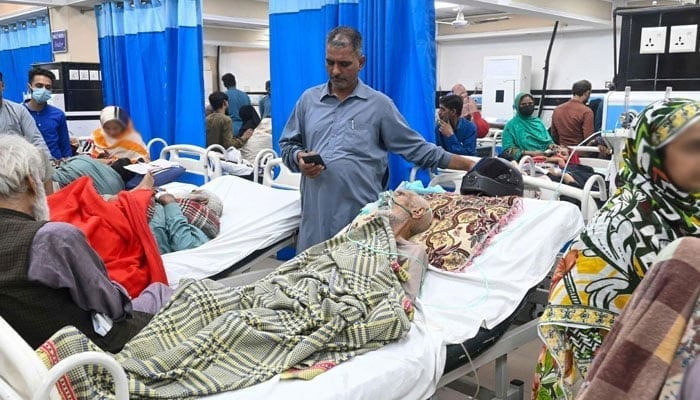
KARACHI: Pakistan’s healthcare and disaster response systems are failing to meet the needs of children and older people who are most at risk of death and disease amid extreme weather events related to climate change, Amnesty International said in a new report.
Invisible deaths of older people and children during climate disasters in Pakistan documents how increasingly frequent floods and heatwaves are overwhelming Pakistan’s underfunded healthcare system, leading to preventable deaths among young children and older adults in particular.
Pakistan, which contributes about 1 per cent of global greenhouse gas emissions annually, is the world’s fifth-most vulnerable country to climate disasters.
In collaboration with Indus Hospital & Health Network (IHHN), a charity hospital that provides free healthcare in Pakistan, Amnesty International investigated how spikes in deaths often followed extreme weather events.
“Rising temperatures drive ever more intense and unpredictable weather. Children and older people in Pakistan are suffering on the front line of the climate crisis, exposed to extreme heat or floods that lead to disproportionate levels of death and disease,” said Laura Mills, researcher with Amnesty International’s Crisis Response Programme.
“Pakistan’s healthcare system is woefully underfunded and overstretched, even in non-emergency times. The climate emergency creates an extra strain that is unbearable and the system is failing to deliver adequate care to those in need.” Floods often foster the spread of water- and mosquito-borne diseases and respiratory illnesses, which pose a major threat to older people and young children.
Similarly, extreme heat is most dangerous for older adults, particularly those with pre-existing health conditions, as well as infants. Pakistan collects virtually no mortality data on these impacts, limiting its ability to respond adequately and save lives. IHHN conducted a quantitative study, analysing deaths across three of its facilities in 2022: Badin (in Sindh province, most affected by floods), and Muzaffargarh and Bhong (in Punjab province, most affected by heatwaves).
IHHN compared the relationship between mortality rates and climate indicators, including precipitation and temperature. To build on IHHN’s quantitative investigation, Amnesty International conducted qualitative interviews to further understand the situation.
Amnesty International visited Sindh and Punjab provinces four times between April 2024 and January 2025 and conducted remote interviews in Khyber Pakhtunkhwa and Balochistan. In total, the organisation interviewed 210 people, including 90 relatives of people whose deaths could credibly be explained by heatwaves or flooding.







-
 King Charles ‘worried’ For Prince William As Heir Doesn’t Have Temperament To Be King
 -
 France Records Around 1,000 Excess Deaths During Deadly Heatwave
 -
 Kris Jenner Crowns Khloe Kardashian 'most Amazing Mother' In Birthday Tribute
 -
 David Beckham Melts Hearts With His Unseen Baby Snaps As Celebrated Mom Sandra
 -
 Which Countries Will Ban Grand Theft Auto VI At Launch?
 -
 Prince Harry’s ‘emotional Safe Haven’ In UK Revealed
 -
 North West Debuts Daring New Facial Piercings At Paris Fashion Week
 -
 Why Tech Firms Are Blaming AI For The Massive Surge In Device And Console Prices
 -
 Prince William’s Secret To A Successful Marriage With Kate Middleton Comes To Light
 -
 Google Gemini AI Capacity Shortage Delays Meta's AI Projects: Report
 -
 Holly Madison Reveals Why She Underwent Plastic Surgery After Pregnancies
 -
 Dean McDermott Expresses Gratitude As He Marks Three Years Of Sobriety
 -
 South Korea, Japan Deepen Defense Ties In Major Security Push
 -
 Andrew Mountbatten-Windsor’s Fears Over His Own Life And Life Span Turn Worrying: ‘You Can’t Erase This!’
 -
 Katy Perry's Long-awaited Return Ends In Disappointment
 -
 Eva Green Hospitalized After Injury On ‘Wednesday’ Set