
Irsa starts providing indented supplies to four federating units
Water data says normal flows remained above 30,000 cusecs per day
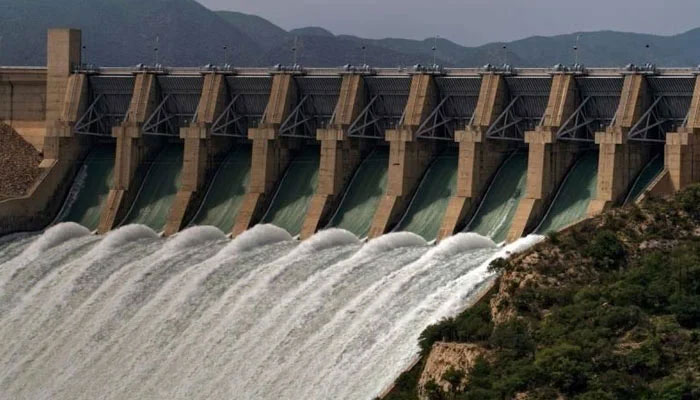
ISLAMABAD: With a massive hike in water flows in all rivers of Pakistan, the Indus River System Authority (Irsa) has started providing indented supplies to all the four federating units for irrigation purposes meaning zero shortages. The accumulative water deficit will now plummet below 20 per cent from April 1 to June 30 this year.
The Irsa Advisory Committee (IAC), scheduled to meet on Monday (today), will review the water situation and finalisation of anticipated water availability criteria for the balance period. Chief Engineer Adviser to the Ministry of Water Resources, Member Water and Member Power Wapda, secretaries of Irrigation and Agriculture departments of the four provincial governments will attend the meeting.
“The water inflows have improved mainly because of a rise in temperature to 26.7 degrees in Skardu which is why we have started storing water in dams and so far 2.111 million acre feet (MAF) of water has been stored. Sometime in May and June, there may be a dip in water inflows so the stored water will be used to irrigate the Kharif crops,” Khalid Idrees Rana, Irsa spokesman told The News.
“Since the water flows have increased to a reasonable level, Irsa started providing the indented supplies to all provinces from May 3. Right now, the demand of 84,100 cusecs per day from Punjab, 60,000 cusecs from Sindh, 2,000 cusecs from Khyber Pakhtunkhwa (KPK) and 1,000 cusecs from Balochistan is being fulfilled,” he said.
In Sindh, cotton sowing is over, but it is being sown in south Punjab. In May and June, other Kharif crops like rice -- seedlings and sowing -- will start and then water for sugarcane will start.
Earlier for the month of April, water shortage was estimated at 43 per cent which was reduced to 27 per cent on April 22 and it was further reduced to 22 per cent on April 28. “Now the accumulative water deficit may reduce to below 20 per cent after the IAC meeting.”
When asked why water flows in Chenab River massively reduced to 35,600 cusecs from 66,500 cuces in one day (May 3-May 4), the spokesman said water flows increased in Chenab because of flood-like situation and now they have become normal after the flood receded. The PTI (Press Trust of India), however, reported that water flows in Chenab River nosedived on May 4 as Indian authorities filled a storage of Baglihar project. But water data says the normal flows remained above 30,000 cusecs per day.
According to the water data as of May 4, the water flows in the Indus at Terbal have increased to 91,500 cusecs, in Kabul to 35,900 cusecs, in Jehlum at Mangla to 44,300 cusecs and in Chenab at Marala the flows dipped to normal 35,600 after 66,500 cusecs in one day.







-
 Mike Tindall Knows ‘how To Draw Line’ Unlike Prince Harry, Says Exprrt
 -
 'Growing Pains' Star Kirk Cameron Breaks Silence On California's 'terrible Politics'
 -
 Sarah Ferguson ‘new Circus’ Has Modified King Charles
 -
 Edward James Olmos Talks About Reuniting With Jennifer Lopez After Nearly 30 Years
 -
 Prince Harry ‘completely Shocked’ By King Charles Coldhearted Action
 -
 Billy Idol Reveals How His Approach To Performing Has Changed Over Years
 -
 Creed Bratton Reveals One Personal Information He Had To Change Before 'The Office' Career
 -
 Crown Princess' Health Prompts Future King To Cut Short Foreign Visit
 -
 Hannah Waddingham Gets Candid About 'Ted Lasso' Season 4 Return
 -
 Kim Kardashian Gives Up On Law Dream For Love?
 -
 'The Office' Stars Reveal Where Their Characters Would Be Today
 -
 Nick Jonas Makes Surprising Confession About His Two Careers
 -
 Paul McCartney Lifts Lid On Why 'The Beatles' Never Returned As A Band
 -
 Barry Manilow Reflects On Difficult Recovery After Life-threatening Illness: 'Was Killing Me'
 -
 Jamie Lee Curtis Heartbroken As She Announces Sister Kelly's Death
 -
 More Americans Eye Canadian Citizenship As Rules Widen