
Our children need us
Commission also raised red flags over lack of reliable, disaggregated data on children with disabilities and minority groups
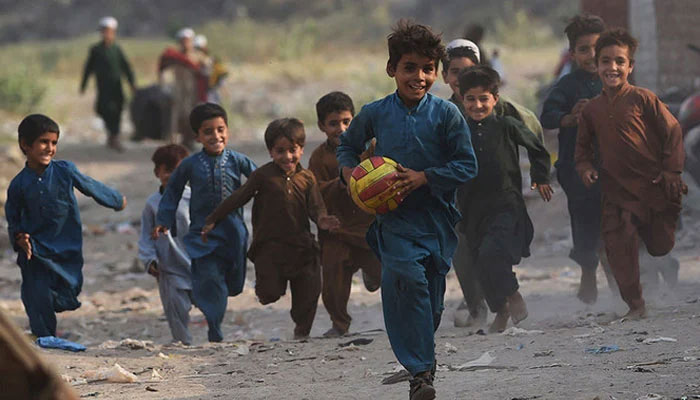
Children are the future of a nation, but authorities in Pakistan have usually turned a blind eye to their needs. The fact that their issues remain largely hidden is evident from the fact that 2025 marks the release of the country’s first-ever ‘State of Children in Pakistan 2024’ report by the National Commission on the Rights of the Child (NCRC). The report reveals that 26 million children aged 5-16 are out of school, representing 38 per cent of the school-age population, while 79 per cent have never attended school. Gender disparities are stark; 52 per cent of these out-of-school children are girls. Children from low-income backgrounds often have to choose between attending school and earning some money for their parents. This leaves them stuck in the cycle of poverty. But a majority of children who go to school are no better. The quality of education is another issue pointed out by the report. According to the World Bank, 77 per cent of children in Pakistan are classified as ‘learning poor’, meaning they are unable to read and comprehend a simple text by age 10.
The report also highlights serious challenges in access to and quality of education, especially in Balochistan and Punjab, with Balochistan struggling to keep kids in school and Punjab facing crowded classrooms. In Balochistan, only 52 per cent of children who start primary school stay enrolled through to Grade 5, meaning nearly half drop out before completing the primary cycle. Islamabad, however, retains 97 per cent of its students up to Grade 5, showing much better educational retention. The pupil-teacher ratio (the average number of students per teacher) is 32 nationwide, which is already quite high. However, in Punjab’s primary schools, it rises to 42 students per teacher, indicating overcrowded classrooms that likely strain teachers and reduce the quality of learning.
Health indicators show equally grim realities. Nearly 50 per cent of children under five suffer from malnutrition, contributing to high under-five mortality rates. While leaders have often highlighted issues like malnourishment and stunting, no successive governments have taken any meaningful steps to create a better environment for children. Disparities in WASH (water, sanitation, and hygiene) services and low immunisation coverage amplify health vulnerabilities, particularly among rural and marginalised communities. The NCRC highlighted systemic challenges in child protection, reporting high rates of violence, economic exploitation and child marriage. The commission also raised red flags over the lack of reliable, disaggregated data on children with disabilities and minority groups. The report should be a wakeup call for our policymakers. Our leaders have largely ignored dozens of children who silently work at a young age, dealing with harsh working conditions. Our children look up to us for a better future. The government has to take this report seriously and chalk out a plan that meets the needs of our children – every one of them, regardless of their financial and social background.







-
 'Buffy' Star Nicholas Brendon's Death Case Takes Massive Turn
 -
 FKA Twigs Takes Legal Stand Against Ex Shia LaBeouf
 -
 ‘Progressive’ Kate Middleton Snubs Outdated Royal Etiquette
 -
 Kylie Kelce Explains Why She Avoids Raising Kids With 'silver Spoon'
 -
 Meghan Markle Is Above Royal Family ‘empty Threats,’ Says Insider
 -
 Anne Hathaway Opens Up About 'defeated' Feeling As Working Mom
 -
 Shamed Andrew Should Testify In Epstein Case As ‘act Of Service’
 -
 What Really Happened Before Nicholas Brendon Was Found Dead At Home?
 -
 Sarah Ferguson Branded ‘most Famous Missing Person’ In UK Right Now
 -
 Why King Charles Does Not Need A Driving License? Expert Reveals
 -
 Did Graham Norton Really Sign NDAs For Taylor Swift’s Wedding?
 -
 ‘Polite’ King Charles Treats Staff Better Than ‘boorish’ Andrew
 -
 Princess Beatrice's Husband Raises Eyebrows With Deleted Instagram Post
 -
 Dua Lipa 'snubs' Priyanka Chopra
 -
 Will Taylor Frankie Paul Still Get Her 'Bachelorette' Salary?
 -
 'Harry Potter' Returns: First Glimpse Of HBO's New Series