
An unequal world
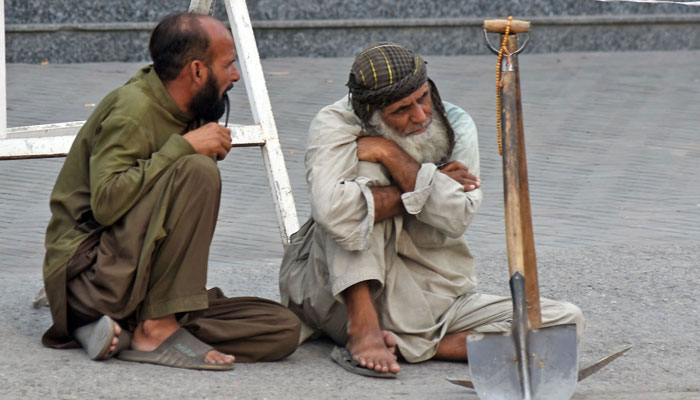
Despite an official minimum wage of Rs37,000, many support staff remain underpaid
The 21st century is fast becoming defined by a brutal truth: the divide between the haves and the have-nots is growing wider. In a world flooded with motivational posts by CEOs and influencers urging people to ‘grind’ and ‘hustle’ their way to success, the reality for most workers is far grimmer. These calls to work harder often ignore a basic fact: the global economic system is rigged to benefit the elite few, while leaving the vast majority struggling to make ends meet. Oxfam’s latest report puts this stark inequality into numbers – and the statistics are alarming. Since 2019, global CEO pay has surged by a staggering 50 per cent. Today, top executives earn an average of $23,500 per hour – an amount that eclipses what many workers around the world make in an entire year. This surge in executive wealth has outpaced worker wage increases by 56 times.
Meanwhile, the workers – the very people whose labour keeps companies functioning – continue to live paycheck to paycheck. As the cost-of-living crisis worsens across continents, these workers are being asked to stretch their stagnant wages to cover rising food prices, rent and utility bills. In many parts of the world, they are also being asked to sacrifice job security. The Oxfam report also flags the looming threat of US tariffs, which could disrupt manufacturing orders that sustain industries in countries like Pakistan, Bangladesh, Vietnam and India. These countries have long served as low-cost manufacturing hubs, offering jobs to millions. But as protectionist rhetoric returns to US politics, especially under former President Donald Trump’s ‘America First’ model, the risk of mass layoffs looms large. These are livelihoods at stake.
On top of economic injustice, workers – particularly women – face persistent gender pay gaps. Even as the world claims progress, women still effectively work one day a week without pay, according to Oxfam. Countries like Japan and South Korea exhibit particularly steep disparities. Even more troubling is the scarcity of female leadership in high-earning corporations: fewer than 7.0 per cent of companies with CEOs earning over $10 million are led by women. Inequality, clearly, is intersectional. The solution, as proposed by Oxfam and the International Trade Union Confederation (ITUC), lies in bold, systemic reform. Governments must tax the ultra-rich more aggressively, enforce living wages, and most crucially, protect the right of workers to unionise and collectively bargain. A new social contract – one that prioritises people and the planet over unchecked profit – is what is needed.
In Pakistan, the situation is no better. Despite an official minimum wage of Rs37,000, many support staff remain underpaid. Fresh graduates and skilled workers often settle for wages barely above subsistence level. Labour laws exist, but enforcement remains weak and labour unions increasingly toothless in the face of employer pressure and political apathy. The struggle for workers’ dignity is far from over. But history has shown us one truth time and again: when workers unite, empires tremble. It is time to revisit the lessons of Labour Day – not as a perfunctory annual ritual, but as a call to action. The economy may be built by entrepreneurs, but it runs on the sweat, toil and determination of the working class. How can they be ignored?







-
 Paul McCartney Talks 'very Emotional' Footage Of Late Wife Linda In New Doc
 -
 Princess Beatrice, Princess Eugenie's Response To Andrew's Arrest Revealed
 -
 King Charles And Princess Anne Bestow Honours At Windsor Castle
 -
 King Charles 'worried' As Buckingham Palace, Royal Family Facing 'biggest Crisis'
 -
 Milo Ventimiglia Recalls First Meeting With Arielle Kebbel On The Sets Of 'Gilmore Girls' Amid New Project
 -
 Eric Dane Infuriated After ALS Diagnosis As He Feared The Disease Would Take Him Away From His Girls
 -
 It's A Boy! Luke Combs, Wife Nicole Welcome Third Child
 -
 Leading Astrophysicist Shot Dead At Southern California Home
 -
 Johnny Depp's Kind Gesture Towards Late 'Grey's Anatomy' Actor Eric Dane Before Death Laid Bare
 -
 How Princess Eugenie, Beatrice React To Andrew Arrest?
 -
 Kylie Jenner 'convinced' Gwyneth Paltrow Is 'crushing' On Timothee Chalamet: 'It's Disrespectful'
 -
 Gemma Chan Reflects On 'difficult Subject Matter' Portrayed In 'Josephine'
 -
 Blood Falls In Antarctica? What Causes The Mysterious Red Waterfall Hidden In Ice
 -
 AI Power Play: Nvidia Moves To Invest $30 Billion In OpenAI
 -
 Will Savannah Guthrie Ever Return To 'Today' Show? Here's What Insiders Predict
 -
 Andrew Mountbatten-Windsor In A Fix Over New Disturbing TMZ Photos