
KP to make anti-beggary law
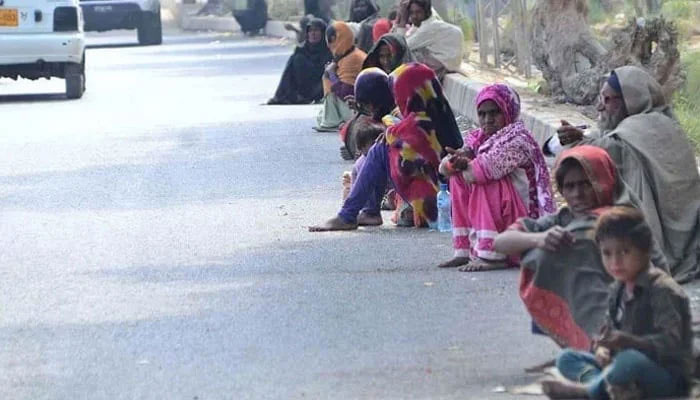
PESHAWAR: Taking notice of the issue of professional beggary in the province, Chief Minister Ali Amin Khan Gandapur has decided to carry out proper legislation to effectively curb it and ensure a safe environment for citizens.
In this regard, an official communique said, a letter has been sent from the Chief Minister’s Secretariat to the chief secretary, asking for the preparation and enactment of a new law titled “Khyber Pakhtunkhwa Vagrancy (Control and Rehabilitation) Act.” The objective of this legislation, the communique said, was to control the practice of forced begging involving children and disabled persons and to counter exploitation-based criminal activities.
The letter, mentioned for the formation of a multi-departmental committee under the supervision of the Secretary Social Welfare with representation from the concerned departments including Law, Local Government, Police, Child Protection Commission, Bureau of Statistics, the Commissioner and Deputy Commissioner of Peshawar, NGOs, and civil society to oversee the proposed legislation and related matters. It has also been mentioned that the committee must present the draft law and an operational and enforcement framework within thirty days.
The letter further noted the proposed law should clearly categorise child and forced begging, professional beggary, vagrancy, and other related activities. It should also prescribe penalties for the use of children, disabled individuals, and drug addicts in begging, and criminalize the operation, financing or sheltering of begging groups. Moreover, the law should include punishments for professional beggars who obstruct public movement or harass citizens. Designated officers from the police, social welfare, and local government departments will be authorized to apprehend violators and process their cases.
Additionally, it has also been mentioned to establish a WhatsApp hotline for citizen facilitation and reporting of professional beggars. Through this, citizens can report incidents by uploading pictures of persons involved in professional begging or child exploitation. Furthermore, designated traffic points, terminals, markets, and other public places should be declared “No Begging Zones.” The new law will also incorporate provisions for on-the-spot fines and summary trials of offenders. To identify and register repeat offenders, an AI-based facial recognition or biometric mechanism be employed.
The letter states that children found begging would be handed over to the Child Protection and Welfare Commission, while legal action would be proposed under relevant laws against guardians, handlers and groups forcing children into begging. The legislation will also include measures for the rehabilitation of homeless individuals involved in professional beggary.







-
 Arden Cho Shares Update On Search For ‘perfect’ Wedding Dress Ahead Of Italy Ceremony
 -
 Ariana Madix Goes Unfiltered About Dating Life
 -
 Prince William Closes Saudi Arabia Visit With Rare Desert Shot
 -
 'King Charles Acts Fast Or Existential Crisis' Over Andrew Scandal
 -
 Brooklyn Beckham Charging Nearly £300 In Ticket Cost For Burger Festival
 -
 Prince William Makes Unexpected Stop At Local Market In Saudi Arabia
 -
 Zayn Malik Shares Important Update About His Love Life
 -
 Kate Middleton, William Are Holding Onto Their Hats As Worse Gets Threatened: Behind The Veil Of Shame
 -
 British Soap Awards Scrapped Again As ITV Confirms 2026 Hiatus
 -
 Climate Nearing Dangerous Tipping Points, Study Shows
 -
 James Van Der Beek, 'Dawson's Creek' Star, Dies At 48
 -
 Threads Launches Dear Algo AI Feature To Personalise Feeds In Real Time
 -
 Police Take Action Over Andrew's Ties With Jeffrey Epstein While In UK Office
 -
 Courtney Love Makes First Appearance Since New Report On Kurt Cobain's Death
 -
 King Charles Anxious As Uncertainty Grows Over Sarah Ferguson’s Next Move
 -
 Real Reason Kim Kardashian Is Dating Lewis Hamilton