
Lumpy skin disease resurfaces in Sindh
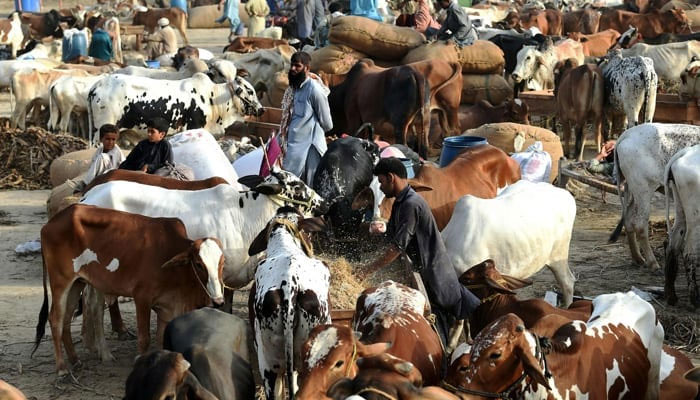
LAHORE: Lumpy skin disease (LSD), a highly infectious viral disease affecting cattle, has reemerged in central Sindh, raising alarm bells across the country over its potential spread.
The Sindh livestock department has confirmed multiple cases in Moro and Naushahro, marking the second outbreak in less than four years. The disease was first reported in Pakistan in November 2021 in Sindh, followed by outbreaks in Punjab in March 2022, leading to significant losses for farmers.
According to official findings, the virus originally spread from India into Pakistan. The previous outbreaks resulted in economic losses amounting to billions of rupees due to decreased animal productivity, damage to hides, and high mortality rates. An estimated 7,000 cattle died during the 2021-2022 outbreak.
The Punjab livestock and dairy development department has issued a warning about the resurgence of LSD, urging increased vigilance, especially at interprovincial borders, to monitor animal movements. Field staff have been directed to educate livestock farmers on the risks of LSD, biosecurity measures, and disease control strategies. Detailed prevention and control guidelines are being distributed to farmers and veterinary staff, with instructions to immediately report any suspected or confirmed cases.
LSD is caused by the lumpy skin disease virus (LSDV), a member of the Poxviridae family, genus Capripoxvirus, which also includes sheeppox and goatpox viruses. The disease primarily affects cattle and water buffalo, causing severe skin lesions. Research suggests that the virus can persist on skin sores for extended periods, increasing the risk of transmission.
Pakistan has witnessed widespread LSD outbreaks in recent years, with over 190,000 reported cases nationwide and more than 7,500 cattle deaths. Karachi, in particular, has been severely impacted.
A senior official from the Punjab livestock & dairy department revealed that genetic analysis confirmed the current LSD strain in Pakistan is identical to the variant that previously spread across India. “Our tests show that this virulent strain originated in India. There are three possible routes of transmission -- airborne spread, ticks or insect vectors crossing the border, or direct animal movement,” the official explained.
India’s Punjab, Rajasthan, and Gujarat -- bordering Pakistan’s Punjab and Sindh -- have reported 4,500 cattle deaths from LSD, according to recent data. With the disease now resurfacing in Pakistan, authorities are ramping up surveillance and containment measures to prevent another large-scale outbreak.







-
 Winter Olympics 2026: When & Where To Watch The Iconic Ice Dance ?
 -
 Melissa Joan Hart Reflects On Social Challenges As A Child Actor
 -
 'Gossip Girl' Star Reveals Why She'll Never Return To Acting
 -
 Chicago Child, 8, Dead After 'months Of Abuse, Starvation', Two Arrested
 -
 Travis Kelce's True Feelings About Taylor Swift's Pal Ryan Reynolds Revealed
 -
 Michael Keaton Recalls Working With Catherine O'Hara In 'Beetlejuice'
 -
 King Charles, Princess Anne, Prince Edward Still Shield Andrew From Police
 -
 Anthropic Targets OpenAI Ads With New Claude Homepage Messaging
 -
 US Set To Block Chinese Software From Smart And Connected Cars
 -
 Carmen Electra Says THIS Taught Her Romance
 -
 Leonardo DiCaprio's Co-star Reflects On His Viral Moment At Golden Globes
 -
 SpaceX Pivots From Mars Plans To Prioritize 2027 Moon Landing
 -
 J. Cole Brings Back Old-school CD Sales For 'The Fall-Off' Release
 -
 King Charles Still Cares About Meghan Markle
 -
 GTA 6 Built By Hand, Street By Street, Rockstar Confirms Ahead Of Launch
 -
 Funeral Home Owner Sentenced To 40 Years For Selling Corpses, Faking Ashes