
Making women strong
In most cases, employers treat this as their responsibility to help family of their devoted and hardworking employees
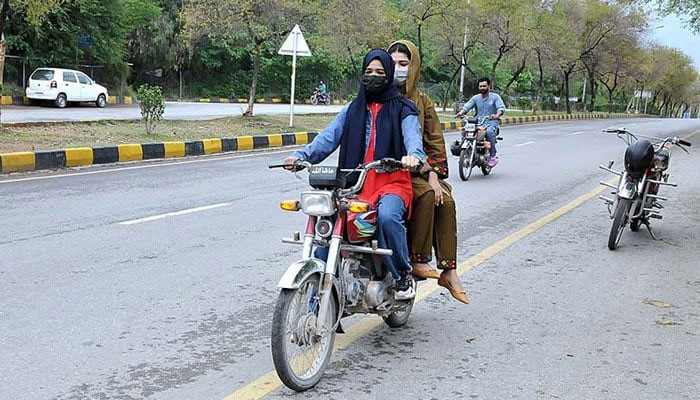
Nations that evolve have a higher chance of success. All laws have room for improvement, and, when necessary, authorities must tweak the rules to protect the economic and human rights of the affected. Recently, the Supreme Court of Pakistan ruled that a daughter is eligible for a job in place of her deceased father, a government employee, regardless of her marital status. Justice Syed Mansoor Ali Shah highlighted the inconsistency of societal norms, saying that if a son’s marriage does not impede his succession, a daughter’s marriage shouldn’t either. This is a refreshing start, and the ruling could go a long way in empowering women in the country. A previous ruling, however, has prevented such appointments on the grounds that no one should be allowed to have preferential treatment. This is a bit complex. In most cases, employers also treat this as their responsibility to help the family of their devoted and hardworking employees. In cases where the deceased employee was the primary breadwinner, offering a job to a dependent is usually seen as providing necessary financial security.
According to the Asian Development Bank, female labour force participation in Pakistan is at 25 per cent, well below rates for countries with similar income levels. Even among women with high levels of education, labour force participation lags: only around 25 per cent of women with a university degree in Pakistan are working. According to a recent report by the International Labour Organisation (ILO), the gender pay gap in Pakistan is 25 per cent based on hourly wages, meaning women earn Rs750 for every Rs1,000 earned by men. For monthly wages, the gap is about 30 per cent, given that women also work fewer hours, says the report. That married women used to be ineligible for this security has its roots in society’s patriarchal mindset where a married woman is pushed to be dependent on her husband and in-laws. In a country where women already struggle to find good employment opportunities, such steps are welcome.
There has also been a cultural shift here. Over the years, women have proved themselves to be capable of providing financial assistance to their families, regardless of their marital status. This change allows our laws to evolve, making women more important in inheritance matters. The institution of marriage in our country is inherently designed to favour men. Such rulings provide the support women in our country need to have financial independence. Women are tired of surviving on the crumbs thrown at them by men. Our country does not need to be stuck in old traditions where half of the population is considered secondary. It is time we move on, and this time the winds of change have to favour women.







-
 Did They Ever Find Nancy Guthrie? Popular Burglary Theory 'blown Apart'
 -
 Shamed Andrew New Home Looks Like Episode Of ‘Midsomer Murders’
 -
 Lily Collins Melts Hearts With Unseen Glimpses Of Daughter Tove
 -
 'The Bachelorette' Cancelled: Fans React To Axing After Taylor Frankie Paul Abuse Video
 -
 Prince Harry, Meghan Markle Face Great ‘risk’ Amid Australia Plans
 -
 Taylor Frankie Paul's Ex Dakota Mortensen Responds To Claims As Drama Deepens
 -
 Andrew Mountbatten Windsor Is Just One Cog In Jeffrey Epstein Network, Says Expert
 -
 Miley Cyrus Breaks Silence On Long-standing Claims Her Parents 'needed Her Money'
 -
 US States Challenge Trump’s Move To Revoke Basis Of Climate Regulations
 -
 Meghan Markle Is Targeted By ‘misogynists,’ Claims Insider
 -
 Prince William And Kate Middleton Stunning Portrait: Who Captured The Viral Image?
 -
 Uma Thurman Admits She's 'excited' For Life Beyond Motherhood Phase: 'More Oxygen'
 -
 OpenAI To Acquire Python Tools In Major AI Push To Take On Anthropic As Competition Intensifies
 -
 Shamed Andrew Suspected For ‘corruption’ In Public Job
 -
 Meghan Markle Mocked Over 'bizarre' Product Launch
 -
 Kensington Palace Unveils 'special' Prince William, Kate Middleton Photo