Resettlement of militants: PHC rejects Aimal Wali’s plea seeking judicial probe
Assistant Attorney General Daulat Khan and Additional Advocate General Asad Jan Durrani appeared before court
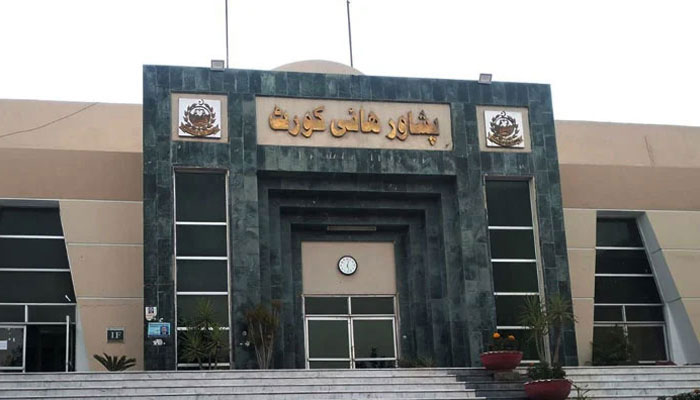
PESHAWAR: The Peshawar High Court (PHC) has issued a detailed judgment rejecting a petition filed against the resettlement of militants in Khyber Pakhtunkhwa.
The court dismissed the request for the establishment of a high-level commission or a judicial inquiry led by a judge, stating that policymaking was the prerogative of the government, and the judiciary cannot interfere in such matters.
A two-member bench, comprising acting Chief Justice SM Atiqque Shah and Justice Sahibzada Asadullah, heard the petition filed by the Awami National Party (ANP) President Senator Aimal Wali Khan. Assistant Attorney General Daulat Khan and Additional Advocate General Asad Jan Durrani appeared before the court.
Senator Aimal Wali Khan, in his petition, had alleged that militants were resettled in KP during the previous government of Pakistan Tehreek-e-Insaf (PTI), which he claimed led to a resurgence of terrorism in the province. He had requested the court to order the formation of a high-level commission or a judicial inquiry to uncover the truth and prevent further resettlement of militants.
The court, after hearing the arguments, dismissed the petition and issued a six-page detailed judgment authored by Justice Sahibzada Asadullah. The judgment stated that the petitioner failed to present any evidence proving the violation of fundamental rights. It emphasized that policymaking fell under the executive authority, and the court cannot intervene in such decisions.
The judgment further highlighted that an unpopular government policy cannot be declared invalid solely on that basis. It acknowledged the severe impact of terrorism on Khyber Pakhtunkhwa over the past several decades, resulting in the loss of thousands of lives, including law enforcement personnel and civilians, and causing economic damage amounting to billions of dollars.
The court noted that terrorism had tarnished Pakistan’s international image, particularly affecting Khyber Pakhtunkhwa, and several political leaders had been assassinated in suicide attacks. The ruling clarified that the legislature, executive, and judiciary were the pillars of the state, each with its distinct roles and responsibilities. While the judiciary was responsible for delivering justice and interpreting the Constitution and laws, it cannot interfere in policy matters. The judgment advised the petitioner to raise his concerns in parliament, where the federal government had the authority to establish a commission if deemed necessary. It concluded that if Senator Aimal Wali had further reservations, he should approach the relevant government institutions, rendering the petition non-maintainable.







-
 Prince William, Kate Middleton’s Frustrations Rise As Divorce Rumors Finally Get Answered?
 -
 Charlie Puth Gets Real About Super Bowl Anthem Role
 -
 Kim Kardashian Explains Why She Rarely Sees Jonathan Cheban Now
 -
 Meghan Markle Spilt ‘third Date’ Magic With Prince Harry
 -
 When Will 'Jujutsu Kaisen' Season 3 Ep 4 Come Out?
 -
 Prince William Lays Down The Law As Andrew’s Exile Nears: ‘Even If He Spirals Out Of Control’
 -
 Phil Collins Shares New Details About His Long-running Health Struggles
 -
 Paris Hilton Reveals Sweet Sibling Dynamic Between Phoenix, London
 -
 Chris Pratt Gets Honest About Panic Around AI
 -
 Jennifer Garner Shares Rare Parenting Insight After Ex Ben Affleck's Remark: 'I've Been There'
 -
 King Charles Exits London Without Seeing Prince Harry
 -
 Kim Kardashian Praises Taylor Swift Despite Past Feud: 'Great Artist'
 -
 Stefon Diggs Pays Tribute To Cardi B: ‘I Don’t Talk Too Much But’
 -
 Sarah Ferguson Plans To Sell Princess Diana ‘private Letters?’
 -
 Kim Kardashian Pushes Back On Criticism Over North West’s Style Statements
 -
 Meghan Trainor's Kids 'over The Moon' After Welcoming Baby Mikey