
What to know about satellite communications race
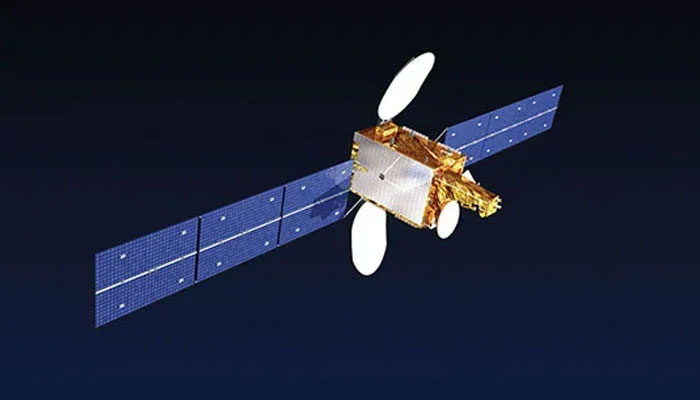
PARIS: Elon Musk’s SpaceX subsidiary Starlink is the most widely known firm offering satellite communications, but the sector is the scene of hot competition between several groups.
Depending on their technology, different players can offer widely varying capacity and applications for connectivity via space. From their orbits around the Earth, satellites serve as “relays between one point on the ground and another”, said Jean-Philippe Taisant, deputy director of telecoms and navigation at France’s CNES space centre.
Ground antennas used to communicate via satellite can vary in size and shape, with Musk boasting that Starlink’s are just “as big as a pizza box”. They enable internet access in areas of the Earth’s surface without landline connections by copper or fibre optic cable, or cellular networks using 4G or 5G technology.
Places where they are deployed range from remote, sparsely populated regions to ships far out at sea. Not all satellites orbit at the same distance from the Earth. Starlink’s constellation uses a low earth orbit (LEO) of between 550 and 1,300 kilometres (350-810 miles) which “provides a low-latency offering”, said analyst Joe Gardiner of CCS Insight -- referring to the delay in signals travelling between the ground and the satellite.
That is an advantage “compared to the main alternative, which is a... geostationary satellite, around 36,000 kilometres away from Earth”. Geostationary satellites orbit at the same speed as the Earth’s rotation, staying fixed above one position on the ground.
Their orbital distance means they can send and receive to a much larger area of the Earth’s surface at the cost of higher latency.
Starlink’s French competitor Eutelsat operates both LEO and geostationary satellites, while Luxembourg-based SES has geostationary orbiters only. A lower orbit means LEO satellites are only reachable from a smaller area, meaning more are needed for full global coverage and launches are more regular.
“The growth of LEO satellites in the last few years has been caused by the introduction of cheaper launch costs... this has mainly occurred due to SpaceX’s innovations,” Gardiner said. “SpaceX is the only satellite operator with the ability to launch its own satellites as needed,” the company boasts on its website.







-
 King Charles Takes A Major Step To Keep Horrified Prince William Out Of The Loop On Andrew: Insider
 -
 Taylor Swift Set To Make Biggest Cut From Her Wedding Guest: Blake Lively Or Ryan Reynolds
 -
 Prince William Meets Saudi Crown Prince Mohammed Bin Salman
 -
 Brooklyn Beckham Brutally Cuts Off Inner Circle Amid Feud With David, Victoria
 -
 Kaley Cuoco Reveals Why Fiance Tom Pelphrey Sleeps In Seperate Room
 -
 Ghislaine Maxwell Will Not Answer Congress Questions On Epstein
 -
 Kensington Palace Announces Prince William's Arrival In Saudi Arabia
 -
 ‘Andrew Crisis Follows King Charles Everywhere Now’
 -
 Jennifer Aniston Already Decided Her Wedding Dress?
 -
 Prince Harry, Meghan’s Hollywood Party Drama Exposes Chaotic PR Strategy
 -
 Jennifer Garner Reacts To Savannah Guthrie's Video As Search For Nancy Guthrie Continues
 -
 Bad Bunny Leaves Fans Worried With Major Move After Super Bowl Halftime Show
 -
 Captain Jason Talks Personal Hardships He Faced Ahead Of 'Below Deck' Season 4
 -
 Anti-monarchy Group Reacts To Prince William, Kate Middleton Statement On Epstein Scandal
 -
 Andrew 'must' Apologize Not Wider Royal Family For Jeffrey Epstein Links
 -
 Super Bowl 2026: Why Didn't Epstein Survivors Ad Air On TV?