
Govt aims to raise Rs6.75tr via T-bills, bonds in three months
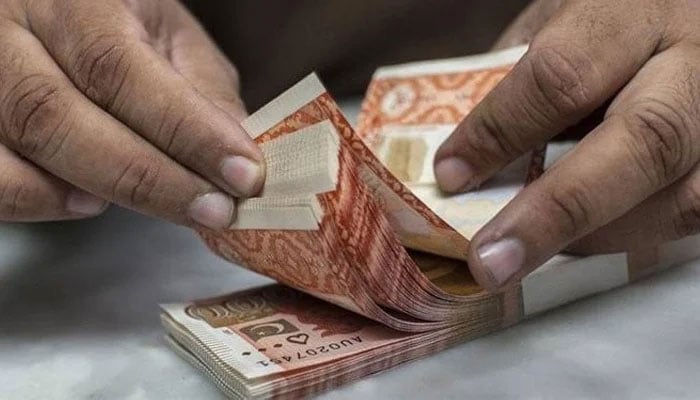
KARACHI: The government plans to borrow Rs6.75 trillion from banks through treasury bills and bonds between March and May to finance its budget deficit and repay loans.
The government aims to raise Rs3.65 trillion through Market Treasury bills (T-bills) with maturities of three, six and 12 months. In addition, the government intends to sell fixed and floating-rate Pakistan Investment Bonds (PIBs) with maturities of two, three, five, 10 and 15 years, seeking to borrow Rs3.1 trillion from commercial banks, according to the auction calendar issued by the State Bank of Pakistan (SBP) on Monday.
The total maturity amount for T-bills and PIBs during these three months is projected to be Rs3.872 trillion. The government heavily relies on bank borrowing to meet its spending needs and repay domestic debt, largely due to low tax collection and weak financial inflows. Recently, the International Monetary Fund (IMF) completed its first review of the $7 billion bailout, although a staff-level agreement has yet to be reached as discussions continue on specific policy matters.
In its monetary policy statement issued last week, the SBP noted an improvement in both the overall and primary fiscal balance for the first half of FY25 compared to the previous year. This improvement was driven by a significant increase in revenues, especially non-tax revenues, and controlled expenditures, primarily on subsidies. However, the shortfall in the Federal Board of Revenue’s (FBR) tax revenue against its target has widened further in January and February.
Global rating agency Moody’s recently upgraded Pakistan’s banking outlook from stable to positive due to enhanced financial performance. According to Moody’s report, the positive outlook for the banking sector reflects the improving outlook for the government (currently rated Caa2 positive). Pakistani banks have substantial exposure to the sovereign through their large holdings of government securities, which make up about half of total banking assets. Nevertheless, Pakistan’s long-term debt sustainability remains a significant risk, given its still weak fiscal position and high liquidity and external vulnerability risks.
The report said that as of September 2024, government securities constituted 55 per cent of banks’ total assets. This substantial exposure links banks’ credit strength to that of the government, which is improving from very weak levels. Despite an increase in problem loans to 8.4 per cent of total loans as of September 2024, up from 7.6 per cent the previous year, overall loans account for only 23 per cent of banks’ total assets.


