
US journalist sues Indian govt after losing overseas citizenship
Raphael Satter covers cybersecurity for Reuters news agency in US
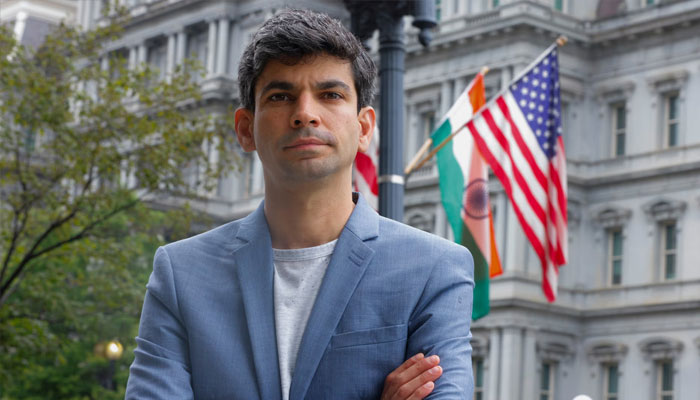
LONDON: A US journalist has taken the Indian government to court after his Indian overseas citizenship was unilaterally cancelled, after the publication of a story critical of a prominent Indian businessman, The Guardian reported.
Raphael Satter, who covers cybersecurity for the Reuters news agency in the US, received a letter from India’s ministry of home affairs in early December 2023, accusing him of producing work that “maliciously” tarnished India’s reputation and informing him that his Overseas Citizen of India (OCI) card had been cancelled.
OCI status is given to foreign citizens of Indian origin, or those married to Indian nationals, and allows for visa-free travel, residency and employment in India. Satter received his OCI through marriage. The cancellation of his OCI status means he is no longer able to travel to India, where members of his family live.
In recent years, the ruling Bharatiya Janata party (BJP) government, led by the Indian prime minister, Narendra Modi, has been accused of revoking OCI privileges for those it has deemed critical, part of what Human Rights Watch has called a campaign of “politically motivated repression”.
Journalists, academics and activists have been a particular target. Several high-profile journalists have been forced to leave the country after their OCI cards were revoked and academics have been turned away at the Indian border.
According to the letter sent to Satter in December 2023, his OCI status was revoked for his alleged “practising [of] journalism without proper permission” and for work that had been “maliciously creating adverse and biased opinion against Indian institutions in the international arena”.
Satter, who works in Washington DC, denies ever conducting journalism in India and has only travelled to the country to visit family.
The Indian government provided no specifics to Satter’s lawyers on how his journalistic work had been deemed a national security threat to India. However, Satter’s lawyers noted that the cancellation of his OCI came at exactly the same time that a defamation case had been filed against him in India for a story he had written on an Indian cybersecurity company Appin and its co-founder Rajat Khare.
Satter’s investigation for Reuters, titled “How an Indian startup hacked the world”, exposed the workings of Appin, alleging it had become “a hack-for-hire powerhouse that stole secrets from executives, politicians, military officials and wealthy elites around the globe”.
Rajat Khare’s US representative, the lawfirm Clare Locke, rejected any association between its client and the cyber-mercenary business, telling Reuters that Khare “has never operated or supported, and certainly did not create, any illegal ‘hack for hire’ industry in India or anywhere else”.







-
 Nicole Kidman Celebrates Galentine’s Day Months After Keith Urban Split
 -
 Justin Bieber Unveils Hailey Bieber As First Face Of SKYLRK In Intimate Campaign Debut
 -
 Caitlin O’Connor Says Fiance Joe Manganiello Has Changed Valentine’s Day For Her
 -
 Rachel Zoe Sends Out Message For Womne With Her Post-divorce Diamond Ring
 -
 James Van Der Beek's Final Conversation With Director Roger Avary Laid Bare: 'We Cried'
 -
 Jaden Smith Walks Out Of Interview After Kanye West Question At Film Premiere
 -
 Why Halle Berry Wasn't Ready For Marriage After Van Hunt Popped Question? Source
 -
 Michelle Obama Gets Candid About Spontaneous Decision At Piercings Tattoo
 -
 Bunnie Xo Shares Raw Confession After Year-long IVF Struggle
 -
 Brooks Nader Reveals Why She Quit Fillers After Years
 -
 Travis Kelce Plays Key Role In Taylor Swift's 'Opalite' Remix
 -
 How Jennifer Aniston's 57th Birthday Went With Boyfriend Jim Curtis
 -
 JoJo Siwa Shares Inspiring Words With Young Changemakers
 -
 James Van Der Beek Loved Ones Breaks Silence After Fundraiser Hits $2.2M
 -
 Disney’s $336m 'Snow White' Remake Ends With $170m Box Office Loss: Report
 -
 Travis Kelce's Mom Donna Kelce Breaks Silence On His Retirement Plans