
IMF review
Experts say that this is largely due to core inflation remaining elevated, current account showing deficit
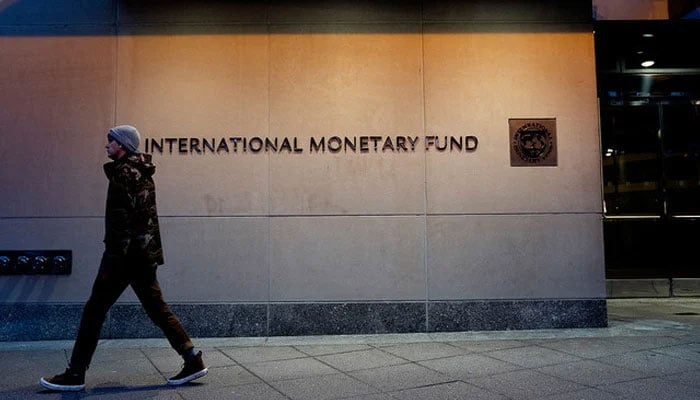
Monday marked the beginning of Pakistan’s first biannual review under the $7 billion Extended Fund Facility (EFF) the country signed with the IMF back in September. The nine-member IMF delegation will reportedly hold discussions with Pakistan until March 14 and assess the country’s compliance with the various targets it has to meet to be eligible for the EFF over the first half of the current fiscal year. Around $1.1 billion in funding depend on the successful conclusion of this review. The broad parameters for the next fiscal year’s budget will also be discussed. And while the economy has largely stabilised on several fronts since the IMF deal was signed last year, with inflation dropping to the lowest level in nearly a decade (1.52 per cent) for February, the government has struggled to meet several important targets, especially where revenue collection is concerned. The FBR’s shortfall over the first eight months of the current fiscal stands at a sizable Rs604 billion. While the government is planning to fetch Rs250 billion through revenue administrative measures by bringing retailers into the tax net, this will not be enough to meet the designated target.
However, it has been reported that government officials believe the revenue shortfall will not be an insurmountable hurdle, owing to a higher-than-targeted primary budget surplus and a better-than-expected revenue-to-GDP ratio. The latter comes down to higher non-tax revenues. But what does any of this mean for the average Pakistani? Simply put, it is unlikely that the release of the next tranche of loans and Pakistan’s continued progression in the IMF programme will result in any major financial relief for the people, at least not in the immediate term. Taxes and tariffs will continue to remain quite high and growth is projected to remain sluggish, with the IMF having lowered Pakistan’s estimated growth rate for the current fiscal to 3.2 per cent to 3.0 per cent last month. And, despite easing price pressures, Pakistan’s real interest rate remains quite high. Economic analysts warn that prolonged high rates could stifle economic recovery and add fiscal strain, with debt servicing consuming over three-fourths of government revenue. Sadly, these rates are not expected to come down any time soon, with reports saying that the State Bank of Pakistan (SBP) may be cautious about cutting interest rates this month, despite having room for a further reduction in borrowing costs due to a decline in inflation.
Experts say that this is largely due to core inflation remaining elevated, the current account showing a deficit, and market yields rising. As such, the string of rate cuts that the country has enjoyed over the past few months might be coming to an end sooner than many would have liked. There are also other signs of trouble ahead, with the country’s trade deficit rising by over 33 per cent year-on-year (YoY) to $2.3 billion in February. Exports declined by 5.57 per cent on a YoY basis and by 17.35 per cent on month-on-month basis, underscoring the country’s anaemic large-scale manufacturing. So with industry still weak, high borrowing rates, taxes and tariffs, and prices still high despite the fall in inflations, where is the money coming into Pakistani wallets? Aside from IMF assistance, the economic stabilisation Pakistan has seen over the past few months has relied on taking more money from ordinary people to meet revenue collection targets. And, yes, it is the ordinary folks who the burden has, yet again, fallen heaviest on. But the government has still fallen short and any disruption in the IMF programme will mean a return to what we had before last September, again, hitting ordinary people the hardest. But telling the people ‘it could be worse’ and that they ought to be grateful it isn't is no smart way to keep them on their side, true as it may be. The government might just be able to keep the IMF onside for now, but it runs a serious risk of losing the people first.


