
KP’s new anti-graft entity to have massive powers
Ahmad Kundi, opposition MPA, has rejected new ACF, stating that without political will, it will never achieve its targets
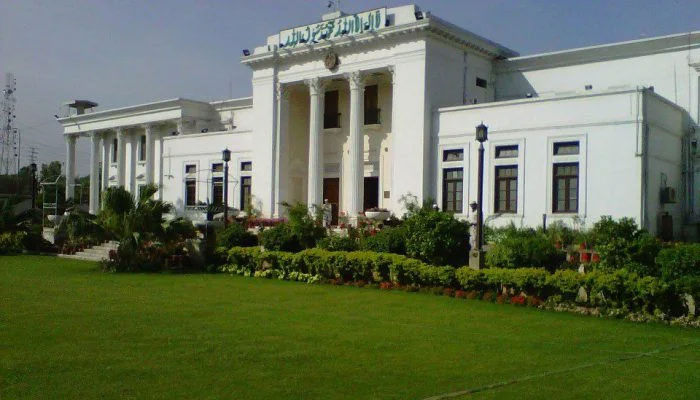
PESHAWAR: After the failed experiment of Khyber Pakhtunkhwa Ehtesab Commission, the Pakistan Tehreek-e-Insaf (PTI) government is preparing to transform the Anti-Corruption Establishment in Khyber Pakhtunkhwa into a strong and effective institution.
Through new legislation, the existing department will be converted into a powerful Anti-Corruption Force (ACF) which will also be able to hold even the chief minister accountable under the new rules.
Expert investigators will be recruited from the market to eliminate the white-collar crimes, and special courts will be established to reduce the trial duration. During the previous PTI administration, the KP Ehtesab Commission was launched under Chief Minister Pervaiz Khattak. Once touted as a game-changer in KP’s fight against corruption, it turned out to be a costly failure. Despite the initial promise of swift accountability, the commission struggled with internal conflicts, legal hurdles and operational inefficiencies. After spending nearly one billion rupees of taxpayer money, the commission was eventually disbanded without achieving significant results.
Ahmad Kundi, an opposition MPA, has rejected the new Anti-Corruption Force (ACF), stating that without political will, it will never achieve its targets. He argued that the new anti-corruption body would be a waste of time and money, similar to past failed initiatives. Kundi further emphasized that unless the body operates independently, free from political influence and bureaucratic pressure, it will face the same challenges as its predecessors and ultimately fail to curb corruption effectively.
Brig (R) Musadiq Abbassi, the architect of the new body and Adviser to the Chief Minister on Anti-Corruption, told this correspondent that the proposed reforms include the establishment of a new Anti-Corruption Force (ACF) with a three-tier approach: awareness, prevention, and enforcement. The ACF will operate with a zero-harassment policy, promoting good governance while targeting white-collar crimes with educated and well-trained personnel.
Rejecting comparisons with the previous Ehtesab Commission, he said that the government is not establishing a new institution but is only strengthening the existing one. He clarified that this will not be a parallel body to NAB, as NAB laws have changed and now only deals with cases involving amounts above Rs500 million.
One of the key objectives of the overhaul is to significantly improve the conviction rate in corruption cases. Currently, the conviction rate stands at a dismal 1-2 percent, with zero convictions out of 20 cases in Bannu and only two out of 26 in Peshawar. The government aims to elevate this rate to 80 percent by establishing dedicated anti-corruption courts and streamlining prosecution procedures. He added that the new body has outstanding features, including the power to recover embezzled amounts and scrutinise excessive wealth. An Ehtesab Committee will supervise and hold the Anti-Corruption Force accountable. Courts will be established to limit the trial period and penalise frivolous complaints. Other features include the power to call for information, handle cases of cheating the public at large, and provide witness protection.







-
 Kylie Kelce Explains Why She Avoids Raising Kids With 'silver Spoon'
 -
 Meghan Markle Is Above Royal Family ‘empty Threats,’ Says Insider
 -
 Anne Hathaway Opens Up About 'defeated' Feeling As Working Mom
 -
 Shamed Andrew Should Testify In Epstein Case As ‘act Of Service’
 -
 What Really Happened Before Nicholas Brendon Was Found Dead At Home?
 -
 Sarah Ferguson Branded ‘most Famous Missing Person’ In UK Right Now
 -
 Why King Charles Does Not Need A Driving License? Expert Reveals
 -
 Did Graham Norton Really Sign NDAs For Taylor Swift’s Wedding?
 -
 ‘Polite’ King Charles Treats Staff Better Than ‘boorish’ Andrew
 -
 Princess Beatrice's Husband Raises Eyebrows With Deleted Instagram Post
 -
 Dua Lipa 'snubs' Priyanka Chopra
 -
 Will Taylor Frankie Paul Still Get Her 'Bachelorette' Salary?
 -
 'Harry Potter' Returns: First Glimpse Of HBO's New Series
 -
 Ryan Gosling Credits His Kids For Key Detail In New Role
 -
 Prince William, Kate Middleton Mark 'historic Moment'
 -
 Why Roberts Pattinson Says Couples 'ruin' Their Big Day Amid Suki Waterhouse Wedding Rumors?