Scientists discover rare form of 'magnets' that might surprise you
Scientists at University of Stuttgart discovered a completely new type of 'magnetism' in atom-thin materials

This new discovery might surprise science aficionados or science enthusiasts.
In a rare discovery, scientists have uncovered an unusual sort of magnet that has never been discovered before.
A group of German scientists from the University of Stuttgart has discovered a completely new type of magnetism in materials that are only a few atoms thick.
While working with international partners, the research team showed the process that when certain ultra-thin layers are stacked and slightly twisted, they can produce never-before-seen magnetic behavior.
Moreover, the researchers suggest findings could help pave the way for future generations of ultra-dense and energy-efficient data storage.
They said as the world produces more and more digital information, storing data reliably in smaller and smaller spaces is becoming a major challenge.
Scientists advised that the magnetic storage devices—such as hard drives—rely on tiny magnetic regions to represent information.
To increase storage density, scientists need new magnetic states that are both extremely small and very stable. which became the actual reason where the Stuttgart team’s discovery becomes important.
How the process initiated?
The research team studied a two-dimensional material made from chromium iodide, consisting of just four atomic layers and found something entirely new when they slightly rotated two pairs of layers relative to each other.
This tiny twist turns out to have a big effect. It creates a previously unknown magnetic state that can be precisely controlled by adjusting how electrons interact across the layers.
Even more impressive, this magnetism remains stable despite disturbances from the surrounding environment, a key requirement for any real-world technology.
The twisted structure gives rise to objects known as "skyrmions."
Skyrmions:
They are extremely small, swirling magnetic patterns that behave a bit like knots.
Skyrmions are especially exciting because they are naturally stable and can serve as robust carriers of information.
Although skyrmions have been observed in other materials before, this is the first time they have been created and directly detected in a twisted, atom-thin magnetic system.
Seeing these effects was not easy. The magnetic signals involved are incredibly weak—far too weak for conventional microscopes.
To solve this problem, the researchers used a highly sensitive quantum microscope based on nitrogen-vacancy centers in diamond.
These tiny defects in diamond crystals act as quantum sensors, capable of detecting minuscule magnetic fields with exceptional precision.
This technique has been developed and refined at Stuttgart over many years and was crucial to the success of the experiment.
Beyond potential applications, the discovery also challenges existing theories of magnetism. The results suggest that current models do not fully explain how electrons behave collectively in ultra-thin magnetic materials.
Refining these theories could open the door to even more unexpected discoveries in two-dimensional physics.
Conclusion:
The findings together show that atom-thin materials still hold many surprises—and that even a slight twist can unlock entirely new physical worlds.
Additionally, the research was led by Jörg Wrachtrup, head of the Center for Applied Quantum Technologies at the university, and the latest findings were published in the journal Nature Nanotechnology.


-
 Elon Musk’s Mars colonization dream faces reality check from Nobel laureate
 -
 NASA competition model 2.0 cuts mission selection by 45%
 -
 A ‘neglected’ neutrino may hold the key to why the Universe exists
 -
 Can cancer drugs be made in space? Here’s what the new mission aims to find out
 -
 SpaceX Falcon 9 successfully launches Bandwagon-5 mission with 32 payloads
 -
 Europe launched 8 orbital rockets last year, can it rival Starlink?
 -
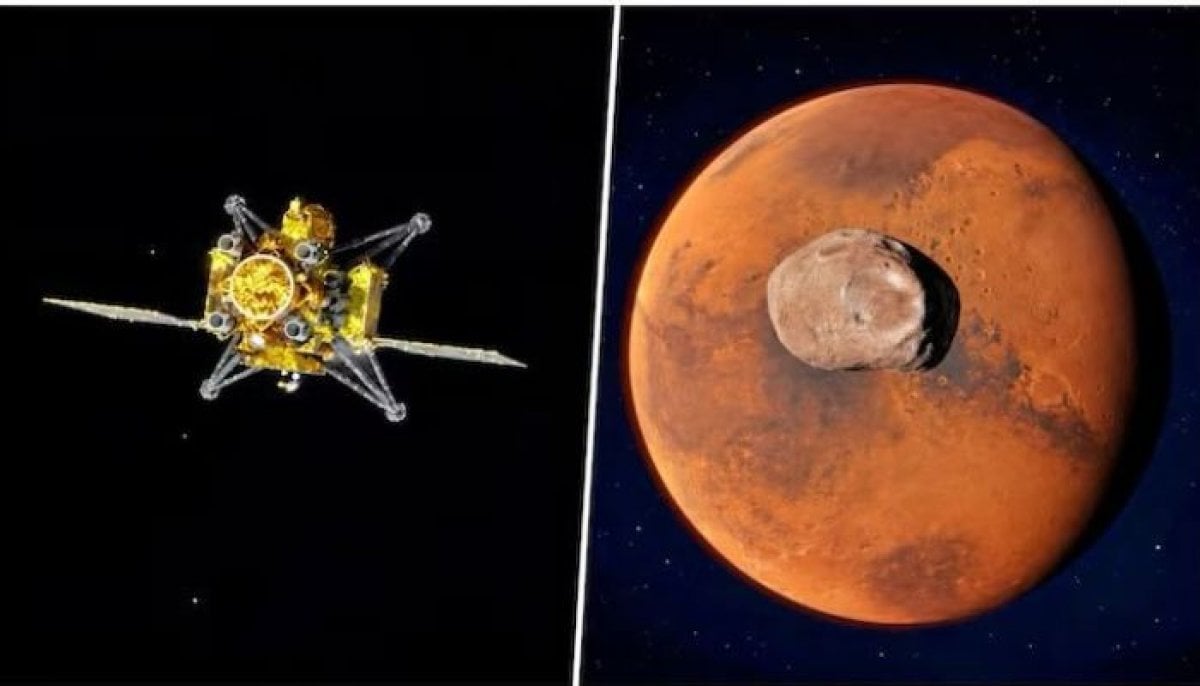 Japan launches world’s first mission to bring sample back from phobos
 -
 Orionid meteor shower 2026: Peak date, viewing tips and what to expect