
Senate HR body voices concern over delayed justice, overcrowded prisons
Committee was informed that there are currently 3,646 prisoners sentenced to death in Pakistan’s jails
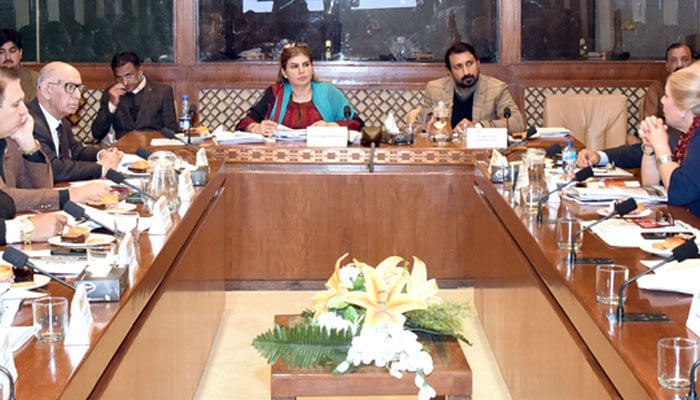
ISLAMABAD: The Senate Functional Committee on Human Rights Expresses Deep Concern Over Pakistan’s Overcrowded Prisons and Delayed Justice for Death Row Prisoners.
During the meeting, which was chaired by Senator Samina Mumtaz Zehri, here at the Parliament House on Thursday, the Senate Functional Committee on Human Rights voiced dissatisfaction with the current state of Pakistan’s prison system.
The Senate Functional Committee on Human Rights was informed that there are currently 3,646 prisoners sentenced to death in Pakistan’s jails, with the appeals of 2,212 death row prisoners from Punjab pending in the Lahore High Court and 276 pending in the Supreme Court.
On average, it takes at least five years for an appeal to be heard, causing prolonged uncertainty for those facing death sentences.
In addition, the issue of overcrowding continues to plague the prison system, with 73 percent prisoners in Punjab jails, 74 percent in Sindh, 2 percent in Khyber Pakhtunkhwa (KPK), and a staggering 15% overcrowding in Balochistan’s prisons.
The session featured a briefing by the Chairman of the National Commission for Human Rights (NCHR) on the prison system and the implementation of laws to prevent torture and punishment.
The committee discussed several critical issues, including overcrowding, prolonged pre-trial detention, and the systemic neglect of vulnerable populations such as women and juveniles in
prisons.
Despite receiving detailed statistics, Chairperson Senate Functional Committee on Human Rights Samina Mumtaz Zehri lamented that these numbers fail to reflect the true plight of prisoners and the egregious violations of basic human rights faced by individuals whose crimes have not even been determined yet.
Senator Irfan Siddiqui pointed out the excessive delay in the judicial process, noting that it can take up to five years for a case to be confirmed, during which prisoners continue to endure harsh conditions. “Even after the lengthy process, prisoners are still subjected to jail conditions that resemble punitive measures rather than rehabilitative ones,” said Senator Siddiqui.
Chairperson Senate Functional Committee on Human Rights Senator Samina Mumtaz Zehri, in her remarks, expressed her dismay at the inability to address issues such as custodial torture and the treatment of under-trial women and children. She emphasized that the real issue lies not just in the data but in how various stakeholders-ranging from the police, the Federal Investigation Agency (FIA), custodians of prisons, and the Ministries of Interior, Human Rights and Law-need to collaborate effectively to bring about meaningful reform.
Samina Mumtaz Zehri added, “When the United Nations inquires about the status of human rights implementation, we have no answers. Where are we headed?” She further underlined that a collaborative effort among all concerned parties is essential to improving the system and ensuring justice for those incarcerated.
The committee resolved to make unannounced visits to various prisons to uncover the true conditions inside.
Chairperson Senate Functional Committee on Human Rights Senator Samina Mumtaz Zehri shared her own experiences, stating that in some jails, prisoners do not even have a place to sleep. “The actual torture is the mental and physical anguish inflicted by junior officers who take pride in treating prisoners as less than human,” she remarked.
The committee agreed to issue recommendations aimed at various departments, urging the coordination of all relevant stakeholders, and organizing
further meetings to ensure action is taken.
Senator Samina Mumtaz Zehri also emphasized that those receiving high salaries should look at the people living in poor conditions. “While parliamentarians have received salary hikes, ordinary citizens struggle to feed their families.”
The committee took note of the testimonies of officials, including those from Balochistan and Punjab jails. Reports indicated significant overcrowding, with 15% of prisoners in Balochistan jails facing inadequate space. Representatives from NGOs also warned that making begging a criminal offence would only exacerbate the already overwhelming burden on the prison system.
The committee was particularly alarmed by the high number of under-trial prisoners. While globally, approximately 25% of accused individuals are imprisoned during trial, Pakistan’s figure is alarmingly higher. Punjab, in particular, holds the largest number of prisoners, with 3,646 death row convicts awaiting their appeals.
Senator Irfan Siddiqui emphasized that the slow pace of justice is a major concern, with some prisoners waiting more than five years for their appeals to be heard in the courts.
Senator Samina Mumtaz Zehri called for better prison conditions and oversight, highlighting the need for funding similar to other projects under the Public Sector Development Program (PSDP). She stated that investing in improved prisons would benefit the public as well.
The committee highlighted the absence of accountability for custodial torture, with FIA officials stating they couldn’t intervene in prison issues. Senator Samina Mumtaz Zehri called it a “mockery of the system,” emphasizing the need for reforms to ensure all citizens are treated with dignity and fairness.







-
 Shamed Andrew Master Plan To Make Princess Beatrice, Eugenie Working Royals
 -
 Oil Price Climbs To $108 As Escalating Iran Conflict Raises Fears Of Global Energy Crisis
 -
 Christian Bale Shares Two Cents On Viral Comparison Amid 'The Bride!' Release
 -
 Prince Harry To Face ‘unwelcome’ Behaviour If Eugenie Comes Over
 -
 Georgian Bay Ice Rescue Sees 23 Anglers Saved After Drifting Ice Leaves Them Stranded Offshore
 -
 Vivica A. Fox Reflects On Iconic Fight Scene With Uma Thurman In 'Kill Bill'
 -
 Priyanka Chopra Jonas Celebrates Women Who 'run' Her World
 -
 Sarah Michelle Gellar Marks Freddie Prinze Jr.’s 50th Birthday With Sweet Gesture
 -
 Shamed Andrew Slid In Forgiveness Plea For Prince William
 -
 Katy Perry, Justin Trudeau's Unexpected Relationship Opening World's Most Powerful Doors
 -
 Joe Burrow’s Text About Maxx Crosby Trade Sparks Furious Reaction From Ja'marr Chase
 -
 Rihanna 'faced' Attack By Shooter At Home In Beverly Hills
 -
 David Beckham Celebrates 'strong Women' In His Life
 -
 Tracy Morgan Opens Up About Life Perspective At 57
 -
 Viola Davis Reveals Personal Trauma Influenced Novel Judge Stone Key Character
 -
 Michigan Tornadoes Kill 6 Including Child As Powerful Storms Rip Through Midwest And Oklahoma