
Diamer-Bhasha Dam protest continues as talks end in deadlock
Movement has been demanding rights for the people affected by the Diamer-Bhasha Dam project
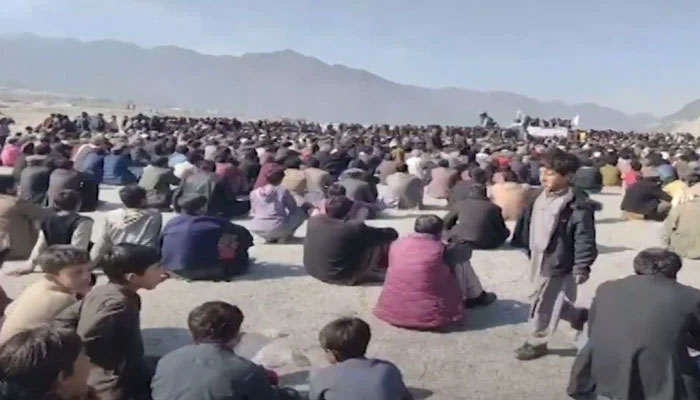
GILGIT: The sit-in by the ‘Haqooq Do, Dam Banao’ movement entered its eighth consecutive day on Sunday, with no headway in negotiations between the government and demonstrators so far.
The movement has been demanding rights for the people affected by the Diamer-Bhasha Dam project.
Following Prime Minister Shehbaz Sharif’s directives, Federal Minister for Kashmir Affairs and Gilgit-Baltistan Engineer Amir Muqam, who headed the government’s negotiation committee, flew to Chilas to lead the discussions.
The meeting, attended by GB Chief Minister Haji Gulbar Khan and several provincial ministers, ended without any breakthrough.
Amir Muqam assured the protestors that their demands would be conveyed to the prime minister. However, the movement leaders rejected his assurances and vowed to continue the sit-in.
Following the talks, Maulana Hazrat Ullah, the movement head, announced that the talks had failed.
Earlier, addressing the Jirga, Chief Minister Haji Gulbar Khan said, “The reality is that those affected by the dam have not been meted out justice.” Amir Muqam, in his address, emphasized that GB was close to his heart and acknowledged the sacrifices made by the people.
He noted that many subsidies had been provided to the region’s people because they had gained independence on their own and unconditionally joined Pakistan in 1947.
GB Assembly Member from Diamer district Engineer Anwar also expressed his disappointment over the outcome of negotiations.
He publicly announced, “I am ready to resign right now if the Ulema committee asks me to do so.” Chilas, the administrative center of Diamer district, is a key town in Gilgit-Baltistan and serves as a gateway to the northern regions of Pakistan.
Its strategic location on the Karakoram Highway makes it significant for trade and transit, but the town has also seen long-standing socio-economic challenges, including lack of infrastructure and limited development initiatives. Disappointed with the government’s approach, the protestors are now considering “Plan B” to escalate their movement.


