
Govt mulls Rs10-12 per unit wheeling charges for private power market
Under new competitive market implementation, bulk electric power consumers will be able to buy electricity from any private supplier
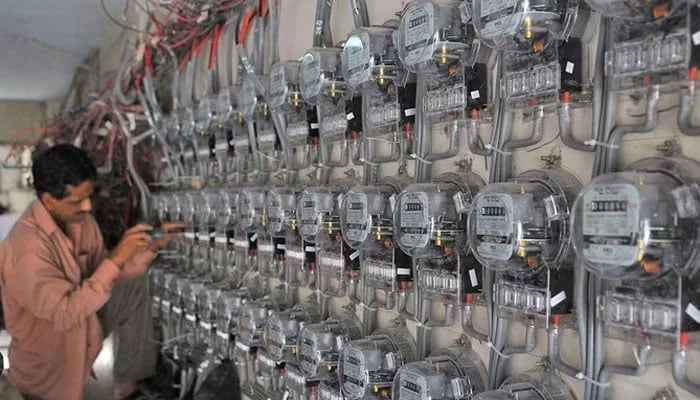
ISLAMABAD: Relevant functionaries are considering scaling down the wheeling charges to Rs10-12 per unit to make the private power market – CTBCM (competitive trading bilateral contract market) — regime a success story but it is possible only when the stranded cost is not included.“The authorities want to establish the wholesale private power market by March-April with wheeling charges acceptable to the buyers and sellers of electricity,” a senior official told this reporter.
Ideally, he said, the wheeling charges should stand at Rs6-7 per unit, but the government wants the cross-subsidy of Rs5-6 per unit as part of the wheeling charges.
However, if the 50 percent burden of the stranded cost is shared by the government and 50 percent by consumers, then the wheeling charges would hover at Rs17-18 per unit from the earlier proposed at Rs27-32 per unit. Here the question arises as to why the consumers under the private power market regime pay for the sins they didn’t commit.
Under the standard cost, the government wants the consumers to pay the capacity payments against 45,888MW knowing the fact that the electricity consumption is down by 2.4 percent. The ironic part of it is that the government is also adding more power generation owing to which the capacity payments would also increase, but the consumers are not responsible for the existing and new additions in power generation.
“We are also working on the creation of wholesale private power market by March-April to be followed by the retail private power market. Once the CTBCM is in place and becomes functional, the government would not purchase electricity from the IPPs which signed the revised contracts on a take and pay basis. They would be free to join the CTBCM.” This could be a paradigm shift in the existing power sector structure.
Under this competitive regime, there will be a system of multi-sellers and multi-buyers of electric power. However, buyers will pay the transmission and distribution use of system charges also for the electricity they will trade bilaterally. Currently, the power sector investments are dominated by the government that also owns the power plants and sells electricity to end consumers under a monopoly structure through its Discos having control on the network and supply business.
The consumers have no choice but to purchase electricity from the government-owned distribution companies.
So, under the new competitive market implementation, the bulk electric power consumers will be able to buy electricity from any private supplier, traders and generation companies at the electric power rates bilaterally agreed by parties with no Nepra determination involved and after including the wheeling charges as determined by Nepra for the use of transmission and distribution.
In addition, the government is in the process of carving out its plan to sell the cheaper surplus electricity to bulk consumers at auctioned prices for 2-3 years.
“Under the plan, we will first fix the reference price of electricity and interested parties would be asked to come up with bids for surplus electricity not less than the reference price.
“The officials of Central Power Purchase Agency (CPPA) and National Transmission Dispatch Company (NTDC) are also currently working on the implementation mechanism and reference price.
“This will also help tackle the monster of capacity payments. The installed capacity of the country has reached 45,888MWs. The peak summer demand stands at 29,000MWs, but the system is not able to transmit the 29,000MWs of electricity, rather it is able to transmit 26,000MWs electric power. However, the average per month demand stands at 11,000-12,000MW. We need to increase the demand for grid electricity in all the months across the country.” The major client can be the industrial sector for getting the surplus power at an auctioned price for 2-3 years.
The country has cheaper electricity in the southern part of the country which cannot be transmitted to the north — Punjab, the load center, mainly because of the transmission constraints, but the government is paying the capacity payments of even cheaper power, which is available but cannot be evacuated. So the surplus power can be offered to the clients at auctioned prices and this is how the government would reduce the burden of capacity payments and the surplus electricity would be brought in use.







-
 'Buffy' Star Nicholas Brendon's Death Case Takes Massive Turn
 -
 FKA Twigs Takes Legal Stand Against Ex Shia LaBeouf
 -
 ‘Progressive’ Kate Middleton Snubs Outdated Royal Etiquette
 -
 Kylie Kelce Explains Why She Avoids Raising Kids With 'silver Spoon'
 -
 Meghan Markle Is Above Royal Family ‘empty Threats,’ Says Insider
 -
 Anne Hathaway Opens Up About 'defeated' Feeling As Working Mom
 -
 Shamed Andrew Should Testify In Epstein Case As ‘act Of Service’
 -
 What Really Happened Before Nicholas Brendon Was Found Dead At Home?
 -
 Sarah Ferguson Branded ‘most Famous Missing Person’ In UK Right Now
 -
 Why King Charles Does Not Need A Driving License? Expert Reveals
 -
 Did Graham Norton Really Sign NDAs For Taylor Swift’s Wedding?
 -
 ‘Polite’ King Charles Treats Staff Better Than ‘boorish’ Andrew
 -
 Princess Beatrice's Husband Raises Eyebrows With Deleted Instagram Post
 -
 Dua Lipa 'snubs' Priyanka Chopra
 -
 Will Taylor Frankie Paul Still Get Her 'Bachelorette' Salary?
 -
 'Harry Potter' Returns: First Glimpse Of HBO's New Series