
Trafficking in persons amendment bill introduced in Senate
Act aims at steps to prevent beggary
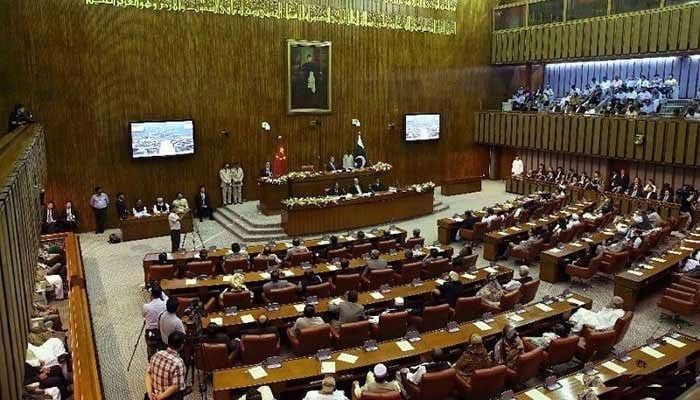
ISLAMABAD: The Prevention of Trafficking in Persons (Amendment) Bill, 2025 was introduced in the Senate and referred to the house standing committee for consideration and report.
The Act aims at steps to prevent beggary.
The bill was moved in the House during the last sitting of the recently prorogued session by the Ministry of Interior. According to the amendment bill, organized begging means begging by fraud, force, or taking alms. In addition, receiving alms by deception, force, enticement, or enticement also falls under the category of begging, organized begging.
The sensitivity of issue demands urgent need of making beggary a crime. Therefore, it has been divulged that amendments to sections 2, 3, 4, 6, 9 and 10 in the Prevention of Trafficking in Persons Act, 2018 are required.
The text of the bill states that asking for or receiving alms in a public place is also called begging. Begging by telling fortunes or performing tricks is also organized begging. Organized begging also means selling goods under pretexts.
The amendment bill also states that knocking at vehicle windows, forcibly cleaning vehicle windows is also organized begging, roaming without employment and giving the impression that one is surviving on begging, this is also organized begging, organized begging means entering a private premises and begging and receiving alms.
The bill also states that receiving alms by showing any wound, injury, illness, disability or defect is also organized begging, allowing oneself to be used as a display to facilitate alms or receiving alms, this is unorganized begging. The amendment bill states that organized begging, recruitment, sheltering or transfer will be punishable by imprisonment for up to seven years and a fine of Rs1 million.
According to the bill, the involved agents and gangs easily escape legal action. The reason for the escape is that begging is not a crime in law which is under the jurisdiction of the FIA. Considering the sensitivity of the issue, it is necessary to declare begging a crime.
The statement of objects and reasons reads: The Prevention of Trafficking in Persons Act 2018 has been enacted to provide for effective measures to prevent and combat the trafficking in persons especially women and children; to promote and facilitate national and international co-operation in this regard. To effectively enforce the provisions of the Act, 2018, and to create further deterrence amongst culprits by enhancing the punishments, and to monitor the activities of the members of the Criminal Organized Group and other connected individuals as a preventive measure and to remove anomalies and. overlapping of the laws between the provisions of the Prevention of Trafficking in Persons Act 2018, Pakistan Penal Code 1860, and Bonded Labour Directive System (Abolition) Act 1992.
Moreover, the Diplomatic Missions of Pakistan at GCC countries, Iraq and Malaysia have highlighted that some Pakistanis who come to these countries for Hajj, Umrah, Ziarat and personal visits are involved in beggary. They have urged Pakistani authorities to take a stern action against those involved in begging and the gangs behind them. The agents and gangs who are involved in this practice easily dodge prosecution as beggary is not a crime in any law entrusted to FIA.







-
 Melissa Jon Hart Explains Rare Reason Behind Not Revisting Old Roles
 -
 Meghan Markle Eyeing On ‘Queen’ As Ultimate Goal
 -
 Japan Elects Takaichi As First Woman Prime Minister After Sweeping Vote
 -
 Kate Middleton Insists She Would Never Undermine Queen Camilla
 -
 King Charles 'terrified' Andrew's Scandal Will End His Reign
 -
 Winter Olympics 2026: Lindsey Vonn’s Olympic Comeback Ends In Devastating Downhill Crash
 -
 Adrien Brody Opens Up About His Football Fandom Amid '2026 Super Bowl'
 -
 Barbra Streisand's Obsession With Cloning Revealed
 -
 What Did Olivia Colman Tell Her Husband About Her Gender?
 -
 'We Were Deceived': Noam Chomsky's Wife Regrets Epstein Association
 -
 Patriots' WAGs Slam Cardi B Amid Plans For Super Bowl Party: She Is 'attention-seeker'
 -
 Martha Stewart On Surviving Rigorous Times Amid Upcoming Memoir Release
 -
 Prince Harry Seen As Crucial To Monarchy’s Future Amid Andrew, Fergie Scandal
 -
 Chris Robinson Spills The Beans On His, Kate Hudson's Son's Career Ambitions
 -
 18-month Old On Life-saving Medication Returned To ICE Detention
 -
 Major Hollywood Stars Descend On 2026 Super Bowl's Exclusive Party