
Business leaders criticise SBP’s ‘insufficient’ 100bps cut
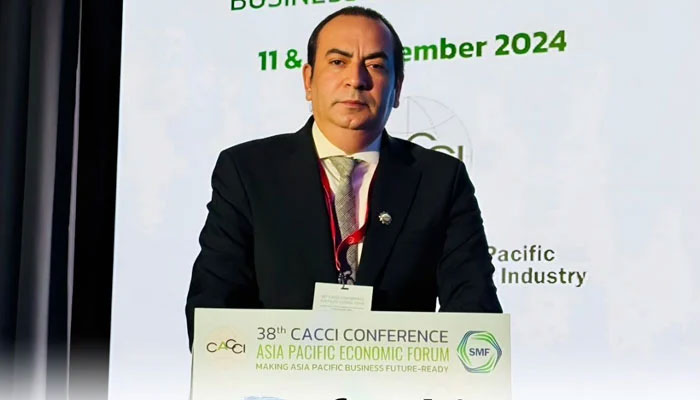
KARACHI: The business community has expressed strong disappointment over the State Bank of Pakistan’s (SBP) decision to reduce the policy rate by just 1 percentage point, calling it “insufficient to address economic challenges or unlock the country’s growth potential.”
President of the Federation of Pakistan Chambers of Commerce & Industry (FPCCI) Atif Ikram Sheikh criticised the monetary policy, stating that it continues to impose an excessively high premium relative to core inflation. “The business, industry and trade community of Pakistan is deeply disappointed with the monetary policy, as the SBP announced a grossly insufficient reduction of 100 basis points (bps) on Monday,” he said.
He pointed out that inflation, according to government data, stood at 4.1 per cent in December 2024, while the policy rate remains at 12 per cent, reflecting a staggering premium of 790 basis points over core inflation. “[The] FPCCI had demanded an immediate and substantial rate cut of 500bps during Monday’s Monetary Policy Committee (MPC) meeting to align the monetary policy with the vision of the Special Investment Facilitation Council (SIFC) and the prime minister’s economic growth and export objectives,” Sheikh added.
He further explained that international oil prices are expected to remain relatively stable, easing inflationary pressures. “Pakistan’s authorities had all the prerequisites to announce a meaningful rate cut but have chosen to persist with their regressive, counterproductive, contractionary, and anti-business monetary policy,” he said.
Muhammad Jawed Bilwani, president of the Karachi Chamber of Commerce & Industry (KCCI), echoed similar sentiments, expressing strong disappointment over the SBP’s nominal 100bps reduction in the policy rate. He argued that the decision demonstrates a lack of urgency in addressing the critical financial and economic challenges faced by businesses, particularly small and medium enterprises (SMEs).
“Despite the prime minister’s assurances of reducing interest rates, the SBP has kept it at 12 per cent, leaving the business community baffled,” Bilwani stated. He noted that businesses are struggling under the weight of unprecedented input costs, including rising energy tariffs, fuel prices, raw material costs and a volatile exchange rate.
Bilwani emphasised that the high interest rate exacerbates the financial burden on businesses, making it nearly impossible for them to access affordable credit for working capital and expansion.
“The nominal cut fails to provide the relief the business community has been advocating for and does little to create a conducive environment for economic recovery,” he said. He added that a meaningful reduction in the policy rate would have sent a strong signal to both domestic and international investors that Pakistan is committed to fostering a business-friendly environment. “Instead, the marginal adjustment reflects an overly cautious approach that falls short of addressing economic stagnation,” Bilwani said.
The KCCI president also highlighted that the country’s policy rate remains significantly higher than those of its regional counterparts, putting local businesses at a competitive disadvantage. High interest rates, he explained, discourage investment in productive sectors and push investors towards speculative markets such as real estate and foreign exchange, further straining the economy.
The lack of affordable credit, he added, has particularly impacted export-oriented industries, which are critical to addressing Pakistan’s balance of payments crisis. Ahmed Azeem Alvi, president of the SITE Association of Industry (SAI), called the 100bps reduction in the interest rate a “major obstacle to economic recovery”.
He expressed concern over the SBP’s failure to introduce a more significant rate cut, despite declining inflation and gradual improvements in the country’s economic indicators.
Similarly, Junaid Naqi, president of the Korangi Association of Trade and Industry (KATI), criticized the SBP’s decision to maintain the policy rate at 12 per cent. He stated that the monetary policy falls short of expectations, particularly given the challenging economic conditions facing the country.






-
 New 'shocking' Details Emerge Over Margaret Qualley, Jack Antonoff's Split
 -
 Hayley Wickenheiser Announces Toronto Maple Leafs Departure In Emotional Statement
 -
 Bunnie XO Opens Up About The Toughest Part Of Her IVF Journey Amid Jelly Roll Divorce
 -
 Air Canada Plane Veers Off Taxiway At Montreal Airport, Causing Major Delays
 -
 Catherine Zeta Jones 'broken' As She Pays Tribute To Late Legend Bonnie Tyler
 -
 Prince Harry Branded ‘hazard’ By Insiders Due To ‘pattern Of Behaviour’
 -
 Tom Hanks Turns 70 As He Receives Sweet Birthday Tribute
 -
 Andrew Mountbatten Windsor Asked Triggering Question To A Female, Memoir Spills
 -
 Michael Bublé Responds To Kevin Jonas' Bedroom Playlist Revelation
 -
 Kevin Bacon Gets Heartbreaking News On His 68th Birthday
 -
 Species Under Threat: Viral 'squeaky Frog' Faces Extinction Risk
 -
 King Charles ‘cannot Come Back’ After Latest Sting From Prince Harry
 -
 Margaret Qualley, Jack Antonoff Harbour ‘kindness’ Towards One Another During Split
 -
 Timothée Chalamet Opens Up About Saying Goodbye To Dune
 -
 Prince Harry Suffers ‘terrible’ Exposé: ‘They Waited Till He Was At His Lowest Point’
 -
 Zuckerberg Breaks 3-year Silence On 'X' With Surprise Return