
Punjab reforms depts to improve governance
Department will also oversee Punjab Food Authority and Punjab Agriculture Marketing Regulatory Authority
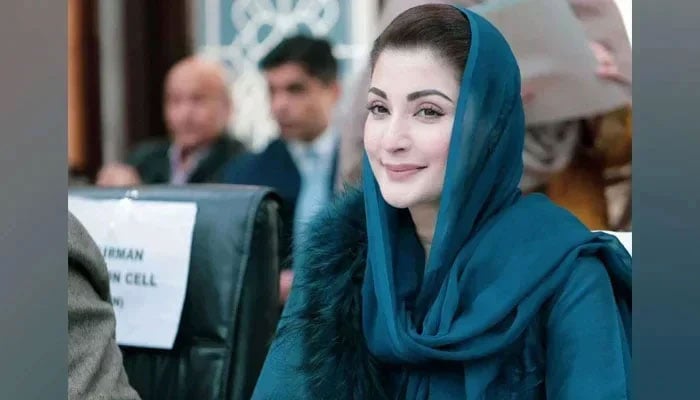
LAHORE: The Punjab government, for the first time, has executed a major restructuring plan in the last four months to improve governance and enhance public service delivery.
The overhaul includes abolition of several departments, creation of new ones, and consolidation of existing functions to ensure more efficient service provision. These changes are designed to tackle persistent challenges and better meet evolving needs of the province’s population.
In a first significant move, the government has abolished the Food Department and established the Price Control and Commodities Management Department. This new department addresses the long-standing issue of price hikes and the inconsistent availability of essential commodities. Previously, various departments—including Food, Agriculture, Industries, Commerce, Investment & Skill Development, and Livestock & Dairy Development—handled commodity management in parallel, leading to inefficiencies. The newly formed department will consolidate these functions, focusing on price determination, supply chain management, production forecasting, demand analysis, and retail price regulation. The department will also oversee the Punjab Food Authority and the Punjab Agriculture Marketing Regulatory Authority. This change aims to provide a more coordinated and effective approach to controlling commodity prices across Punjab.
Recognising the increasing demand for skilled labour in fields such as artificial intelligence, robotics, and IT, the government has created the Skills Development and Entrepreneurship Department. This new body aims to address gaps in technical and vocational training by centralizing efforts that were previously scattered across various entities, including TEVTA and the Punjab Vocational Training Council (PVTC). The department will align vocational training with the province’s socio-economic goals and labour market needs, conduct periodic assessments, and foster entrepreneurship to generate self-employment opportunities. The creation of this department is intended to drive workforce development and support the growth of small businesses.
A critical part of the restructuring involves the creation of the Punjab Enforcement & Regulatory Authority (PERA), aimed at strengthening the enforcement of government policies and local laws. The authority is designed to address significant gaps in law enforcement and improve the conviction rate for violations. This initiative stems from concerns over deteriorating effectiveness in implementing laws, including the Punjab Prevention of Hoarding Act, 2020, the Punjab Price Control of Essential Commodities Act, 2024, and the Punjab Land Revenue Act, 1967, among others. PERA will work to improve the implementation of these laws, as well as others like the Punjab Colonization of Government Lands Act, 1912, and the Punjab Tenancy Act, 1887. Under the Punjab Enforcement & Regulations Act, 2024, the authority will establish 154 enforcement stations across the province, covering every tehsil. These stations will be equipped with modern technology, such as body cams, car-mounted cameras, and IT systems for e-challans and evidence recording, to ensure transparency and effective law enforcement.
In another major restructuring effort, the Population Welfare Department (PWD) was abolished, and its functions merged with the Primary & Secondary Healthcare Department (P&SHC). Despite increased utilization of family planning resources, the PWD struggled to meet its objectives, which were compounded by a lack of infrastructure. This failure to adequately address population growth—evidenced by a rise in Punjab’s average annual population growth rate from 2.13pc in 2017 to 2.53pc in 2023—led to the decision to merge the two departments. The merger aims to eliminate duplication and improve the efficiency of family welfare services. With over 2,500 Basic Health Units, 322 Rural Health Centres, and more than 200 Family Health Clinics across Punjab, the integration will streamline the delivery of reproductive health services, including long-acting reversible contraceptive methods. The restructuring is also expected to reduce costs and enhance the overall quality of care provided to the public.
These changes reflect the Punjab government’s commitment to improving governance and public service delivery. By centralizing functions, eliminating redundancies, and leveraging technology, the government aims to create a more effective, transparent, and responsive administrative framework. The restructuring is a step toward addressing the province’s current challenges and preparing for future needs, ensuring that services meet the expectations of a growing and diverse population.







-
 Alexandra Daddario, Andrew Form Part Ways After 3 Years Of Marriage
 -
 Eric Dane Rejected Sex Symbol Label
 -
 Avan Jogia Says Life With Fiancee Halsey Feels Like 'coming Home'
 -
 Kate Middleton's Role In Handling Prince William And Harry Feud Revealed
 -
 Tucker Carlson Says Passport Seized, Staff Member Questioned At Israel Airport
 -
 Taylor Swift Made Sure Jodie Turner-Smith's Little Girl Had A Special Day On 'Opalite' Music Video Set
 -
 Eric Dane Says Touching Goodbye To Daughters Billie And Georgia In New Netflix Documentary
 -
 Channing Tatum Reveals What He Told Daughter After Violent Incident At School
 -
 King Charles Lands In The Line Of Fire Because Of Andrew Mountbatten-Windsor
 -
 Denise Richards Doubles Down On Abuse Claims Against Ex Husband Aaron Phypers Amid Show Return
 -
 Russia Set To Block Overseas Crypto Exchanges In Sweeping Crackdown
 -
 Gwyneth Paltrow Reveals Deep Personal Connection With Kate Hudson
 -
 Prince Harry, Meghan Markle’s Game Plan For Beatrice, Eugenie: ‘Extra Popcorn For This Disaster’
 -
 OpenAI To Rollout AI Powered Smart Speakers By 2027
 -
 Is Dakota Johnsons Dating Younger Pop Star After Breakup With Coldplay Frontman Chris Martin?
 -
 Hilary Duff Tears Up Talking About Estranged Sister Haylie Duff