H-1B visa: US judge rejects business Group’s challenge to Trump’s $100,000 Visa fee
The H-1B program serves as America’s gateway for attracting the world’s top talent and skilled professionals, which allows US employers to hire foreign professionals
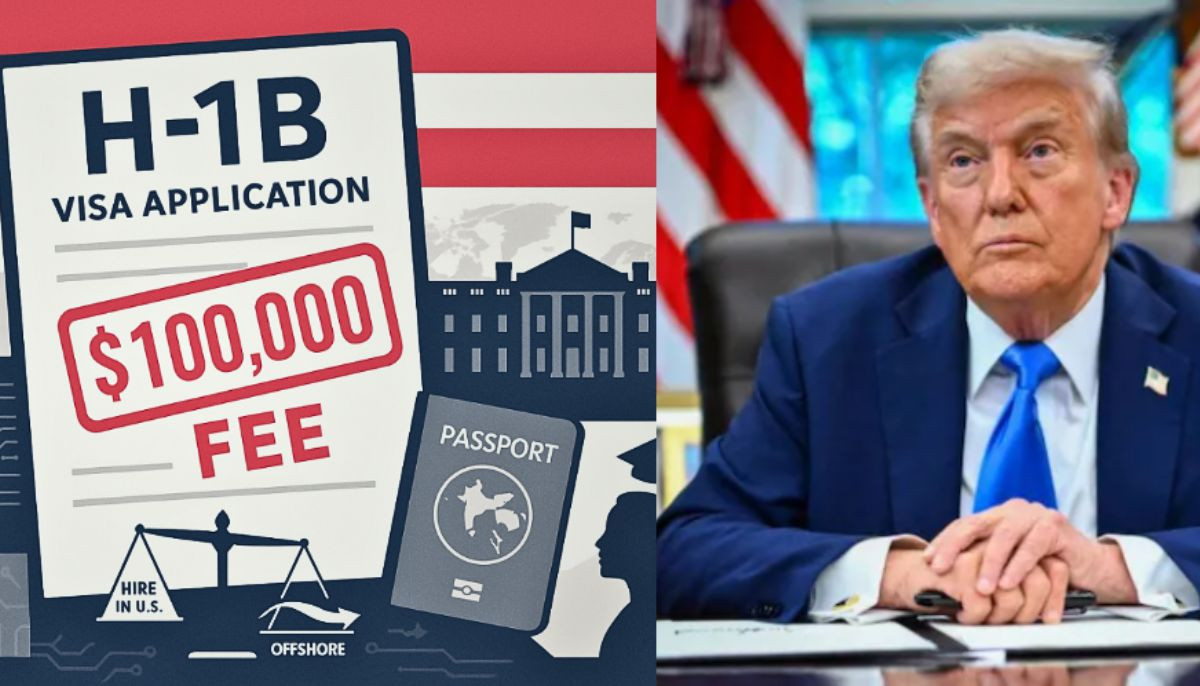
A U.S. federal judge upheld Trump’s administration moving ahead with the proposal to impose a new fee on new H-1B visas, dealing a setback to the American technology companies and business groups challenging the move.
The federal judiciary rejected a challenge by the largest US business lobby group to President Donald Trump’s $100,000 fee for the new H-1B visas for highly skilled international workers, underlining that it fell under the President’s broad powers to regulate immigration.
Judge Beryl Howell (an appointee of former U.S. president Barack Obama) in Washington, DC, on Tuesday, December 23, 2025, rejected a lawsuit filed by the Chamber of Commerce, which argued that the steep fee violated federal immigration law and would force companies, hospitals, and other employers to cut jobs and services.
Beryl ruled that Trump had the legal authority to impose the fee, noting that his proclamation was issued under “an express statutory grant of authority to the president,” reports Reuters.
"The parties' vigorous debate over the ultimate wisdom of this political judgment is not within the province of the courts,” wrote Howell.
"So long as the actions dictated by the policy decision and articulated in the Proclamation fit within the confines of the law, the Proclamation must be upheld," he added.
The H-1B program serves as America’s gateway for attracting the world’s top talent and skilled professionals, which allows US employers to hire foreign professionals in specialty occupations such as technology, engineering, and healthcare.
It provides for 65,000 visas annually, along with an additional 20,000 visas for applicants holding advanced degrees, generally valid for three to six years.
In September, Trump signed a proclamation sharply raising H-1B visa fees and tightening entry norms for high-skilled foreign workers. Earlier, employers typically paid between USD 2,000 and USD 5,000 in fees, depending on various factors.
The critics in the lawsuit claimed that the new H-1B visa fee would force businesses that rely on the H-1B program to choose between dramatically increasing their labor costs or hiring fewer highly skilled foreign workers.
Moreover, the Chamber’s executive vice president and chief counsel, Daryl Joseffer, said many small and medium-sized businesses will be unable to afford the fee.
“We are disappointed in the court’s decision and are considering further legal options to ensure that the H-1B visa program can operate as Congress intended.”
A group of Democratic-led U.S. states and a coalition of employers, nonprofits, and religious organizations have also filed lawsuits challenging the fee.
But Beryl rejected claims that state the fee unlawfully rewrites the H-1B visa program established by Congress.
Trump, in an order imposing the fee, invoked his power under federal immigration law to restrict the entry of certain foreign nationals that would be detrimental to U.S. interests.
Beryl Howell on Tuesday said Trump had adequately backed up his claim that the H-1B program was displacing U.S. workers, including by citing examples of companies that laid off thousands of Americans while simultaneously petitioning for H-1B visas.




-
 Storm Dave: Everything you need to know to stay safe this Easter weekend
 -
 Brazil approves law giving separated couples joint custody of pets
 -
 'Poisoned' Mount Everest climbers expose guides' million-dollar fraud scheme
 -
 NASA Artemis II historic rocket launch: Spacecraft successfully enters Earth orbit
 -
 Vanessa Trump remains loyal to Tiger Woods after DUI arrest: Report
 -
 Pink moon 2026: when to see April’s full moon and why it won’t look pink in the sky
 -
 Reese's Peanut Butter Cups to return to classic chocolate recipe following public backlash
 -
 TDSB vice principal jobs cut as board removes 40 roles amid funding loss, enrolment decline
-
 Earthquakes hit Indonesia off Ternate, triggering tsunami warning that is now lifted
 -
NASA Artemis II rocket launch: Canada’s Jeremy Hansen makes history in first lunar mission in decades
-
Donald Trump claims US is nearing end of its military campaign in Iran
-
Trump on Mount Rushmore? April Fools story tricks readers