
Singh’s India
Singh sealed landmark nuclear deal with US that he said would help India meet its growing energy needs
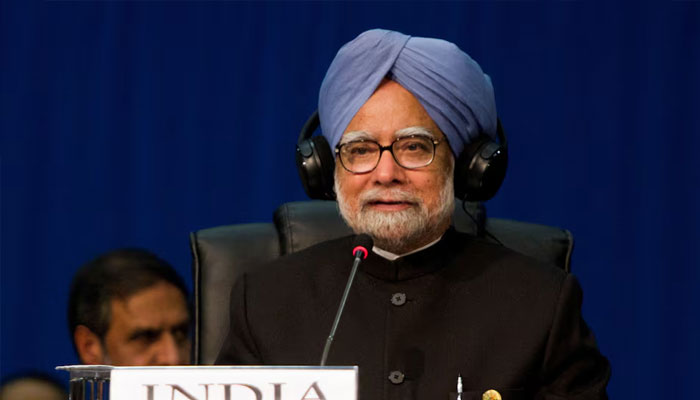
Former Indian Prime Minister (PM) Dr Manmohan Singh passed away at the age of 92 on December 26. Dr Singh was India’s prime minister for a decade from 2004-2014. Singh will be remembered for being one of the main architects of India’s economic liberalisation in the early 1990s, for “shaping India’s economic trajectory” and for being one of the “most distinguished Indian leaders”. Singh was tapped in 1991 by then Congress prime minister PV Narasimha Rao to serve as finance minister and reel India back from the worst financial crisis in its modern history. In his first term as premier, Singh steered the economy through a period of 9.0 per cent growth, lending India the international clout it had long sought. He also sealed a landmark nuclear deal with the US that he said would help India meet its growing energy needs.
As Manmohan Singh was laid to rest, his roots in Pakistan were discussed both here and across the border. Born in 1932 in a mud-house village of Gah near Chakwal, it is said that he never visited his ancestral village despite repeated invitations from the Pakistani government due to ‘bitter memories of partition’. However, Pakistan and India’s relations saw both ups and downs during his premiership. From restarting cricket diplomacy to encouraging more people-to-people contact, Singh’s tenure saw a boom in Indo-Pak relations. It was during his tenure that General (r) Pervez Musharraf proposed a four-point formula to peacefully resolve the Kashmir conflict. However, first the undue delay from the Indian side and then events within Pakistan overtook the moment and it could never materialise. Dr Singh’s tenure also saw the Mumbai attacks. India under Dr Singh showed restraint and still preferred to resolve the tensions diplomatically despite taking a firm stand on cross-border terrorism. Observers say Manmohan Singh was a statesman who did not see war as a solution. Unfortunately, India’s slide towards the right started because Singh was not a believer in jingoism. That India did not declare war on Pakistan following the attacks is seen as one of the reasons for the rise of hawkish Narendra Modi. Ever since Modi came to power, the relations between the two sides have seen a deterioration from which the two sides have not recovered to date. Many wonder what could have been if there was someone like Manmohan in power instead of Modi today.
From Atal Bihari Vajpayee’s BJP to Manmohan Singh’s Congress, we saw two leaders from different spectrums and ideologies behave in a civil way towards Pakistan. Now we have Modi in India who has no desire for peace with Pakistan. In fact, it is under Modi’s rule that most of India’s neighbours are unhappy with their government. People like Manmohan Singh are often not appreciated enough in their lifetimes or while they are in power. When Singh was in power, there was a lot of criticism of him for being Sonia Gandhi’s handpicked man with no will of his own when in fact, it was he who took most of the important decisions. Many in Pakistan also wrongly thought that Manmohan was too weak to take difficult and important decisions related to peace with Pakistan and that a man like Modi would be more ambivalent towards peace. However, we have seen what Modi has done to Occupied Kashmir and the Muslim minority in India. From blocking cricketing ties to wrongly accusing Pakistan of cross-border terrorism, Modi has turned out to be a major obstacle in the roots of peace laid down by Vajpayee and Dr Singh. There may not be another Manmohan Singh but we can only hope that better sense prevails in the Modi camp.







-
 Chris Pratt Reflects On Being Offered 'douche' Roles Early In Career
 -
 Sarah Ferguson Is ‘angry’ And Feels ‘betrayed’ By Royals
 -
 Kate Middleton Was ‘spooked’ During Early Romance With Prince William
 -
 Zendaya Faces Heat Over Controversial 'The Drama' Scene
 -
 Cameron Diaz Reacts To Keanu Reeve's Memory Slip
 -
 Rege Jean Page Shares Why He Enjoys Making Audiences 'swoon'
 -
 Kate Middleton ‘bookish’ Personality Led To Childhood ‘bullying’
 -
 Meghan Markle's Aussie Retreat Struggles To Fill Seats?
 -
 'The Testaments' Follows A New Generation Of Girls Coming Of Age In Gilead
 -
 Dakota Johnson Moves On After Chris Martin: 'Just A Flirt'
 -
 Rebecca Black Makes Rare Comments About Erika Kirk
 -
 Kate Jackson Finally Explains Why She Disappeared From Spotlight
 -
 Ray Stevens Suffers Nasty Fall: Here's What Doctor Reveals About His Condition
 -
 Prince William And Kate Middleton Take Break From Royal Duties
 -
 Sarah Ferguson Feels Entitled To Rant Over Royal Family's Behaviour
 -
 Offset Shooting Controversy Takes New Turn As Lil Tjay Is Arrested