
‘Continuous rollovers made debt increasingly unsustainable’
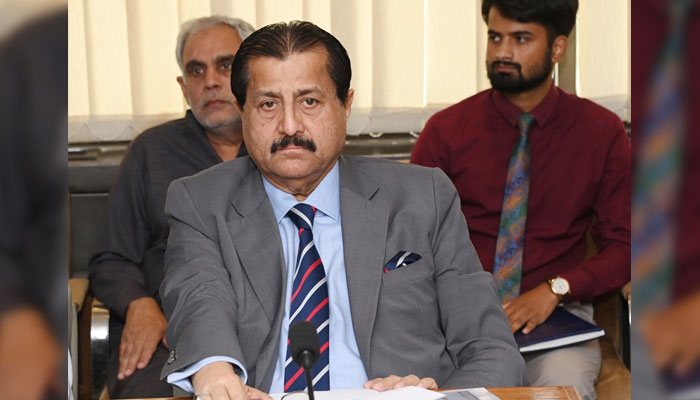
Islamabad:MNA Mirza Ikhtiar Baig, member Standing Committee on Revenue and Finance has said that in Pakistan, continuous rollovers made the debt increasingly unsustainable and now Pakistan borrows debt simply to repay previous loans.
Mr Baig was giving welcoming remarks at 3-day workshop on “Unlocking debt and development: a layman's guide on public debt” organised here by Sustainable Development Policy Institute (SDPI) in collaboration with the Friedrich Ebert Stiftung (FES).
Mr Baig said debt is not inherently negative, particularly when there is a viable plan for repayment and it is directed toward productive investments. He said to boost foreign reserves, efforts are required for raising foreign direct investment (FDI) and exports as remittances are already at a record-high level.
He referred to Fiscal Debt Limitation Act, saying debt-to-GDP ratio must be under 60%. Currently it is 68%, but no one is held accountable as there is not enough conversation around it. The government is being advised to reduce this ratio to 50%, but this target may be challenging to achieve under the current circumstances. He stated that the only way to make debt sustainable is by increasing income and foreign reserves. To boost foreign reserves, efforts should focus on raising FDI and exports, as remittances are already at a record-high level.
Dr. Ali Salman, Executive Director PRIME says both in the short run and in the long run, public external debt has a negative and significant relationship with per capita GDP and investment in Pakistan. The domestic debt also has a negative and significant relationship with investment.
Mohsin Mushtaq Chandana, Director-General, Debt Management, Ministry of Finance, said that GDP increased in proportion with inflation. Pakistan economy stabilised because of reducing interest rates. If the debt of a country exceeds 90%, it drags GDP growth by 1% merely, mainly due to increase in interest expense. Ministry of Finance needs to raise a larger proportion of domestic borrowings through long-term securities with maturities of 10 years or longer to improve its average time to maturity and reduce gross financing needs. He added that domestic debt in Pakistan doubled from 2019 to 2024 whereas high debt to GDP ratio has implications for fiscal sustainability.
Sakib Sherani, CEO, Macro Economic Insights, says Pakistan crossed 700% of debt as compared to revenue which is historically highest. In 2022-2023 the debt borrowed is higher than the last sixteen years together. The debt currently borrowed is not being used in development projects but is only used in day-to-day expenditures. As a percentage of GDP, the debt has deflated in the country but that is not the right metric to look at the issue. He said 66% of Federal revenue goes to interest payment whereas rest of 34% is used for rest of the expenditures.







-
 Winter Olympics 2026: Lindsey Vonn’s Olympic Comeback Ends In Devastating Downhill Crash
 -
 Adrien Brody Opens Up About His Football Fandom Amid '2026 Super Bowl'
 -
 Barbra Streisand's Obsession With Cloning Revealed
 -
 What Did Olivia Colman Tell Her Husband About Her Gender?
 -
 'We Were Deceived': Noam Chomsky's Wife Regrets Epstein Association
 -
 Patriots' WAGs Slam Cardi B Amid Plans For Super Bowl Party: She Is 'attention-seeker'
 -
 Martha Stewart On Surviving Rigorous Times Amid Upcoming Memoir Release
 -
 Prince Harry Seen As Crucial To Monarchy’s Future Amid Andrew, Fergie Scandal
 -
 Chris Robinson Spills The Beans On His, Kate Hudson's Son's Career Ambitions
 -
 18-month Old On Life-saving Medication Returned To ICE Detention
 -
 Major Hollywood Stars Descend On 2026 Super Bowl's Exclusive Party
 -
 Cardi B Says THIS About Bad Bunny's Grammy Statement
 -
 Sarah Ferguson's Silence A 'weakness Or Strategy'
 -
 Garrett Morris Raves About His '2 Broke Girls' Co-star Jennifer Coolidge
 -
 Winter Olympics 2026: When & Where To Watch The Iconic Ice Dance ?
 -
 Melissa Joan Hart Reflects On Social Challenges As A Child Actor