
Afghanistan poppy cultivation grows 19 percent despite ban: UN
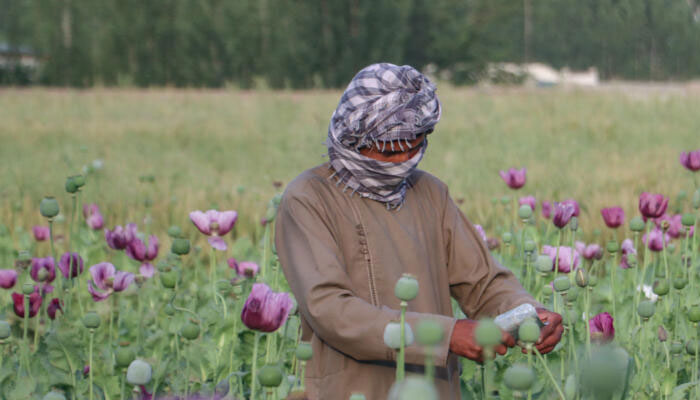
KABUL: Opium cultivation rose by 19 percent in Afghanistan this year, the UN reported on Wednesday, despite a Taliban government ban that almost eradicated the crop.
Currently, 12,800 hectares of poppies are cultivated in Afghanistan -- where up to 80 percent of the population depends on agriculture -- a new survey by the United Nations Office on Drugs and Crime (UNODC) shows, the agency said in a statement.
The 19 percent increase year-on-year remains far below the 232,000 hectares cultivated when Taliban supreme leader Hibatullah Akhundzada banned the crop in April 2022, nearly a year after the Taliban returned to power, UNODC added. The centre of poppy cultivation has also shifted, the agency noted, and is now concentrated in northeastern provinces instead of in the Taliban strongholds of southern Afghanistan.
In May, clashes between farmers and brigades sent to destroy their poppy fields resulted in several deaths in northeastern Badakhshan.
The Taliban government said it “fully rejects” the UNODC report, “considering it far from reality”, according to a statement by interior ministry spokesman, Abdul Mateen Qani.
Qani said the survey findings were “baseless” as it was potentially conducted before a campaign to eradicate poppy crops earlier this year “after which all such fields were destroyed by the police”.
Following the poppy ban, prices soared for the resin from which opium and heroin are made.
During the first half of 2024, prices stabilised around $730 per kilogram, (two pounds) according to the UNODC, compared to about $100 per kg before 2022.
For years Afghanistan was the world´s biggest supplier of opium and heroin.
Many farmers in Afghanistan, one of the poorest countries in the world, were hit hard financially by the ban and have not been able to reap the same profits from alternative crops.
Even legal crops are only a short-term solution, according to the International Crisis Group (ICG), “so the focus should be on job creation in non-farm industries”.
The UNODC and the UN Assistance Mission in Afghanistan (UNAMA) called for international support for farmers to transition to alternative crops and livelihoods, something the Taliban government has requested.
“With opium cultivation remaining at a low level in Afghanistan, we have the opportunity and responsibility to support Afghan farmers to develop sustainable sources of income free from illicit markets,” said UNODC Executive Director Ghada Waly in the statement.







-
 Social Media Addiction ‘like Smoking’: Mumsnet Calls For Under-16s Ban With Cigarette-style Warnings
 -
 Andrew Mountbatten, Virginia Giuffre's Photos Attached To Buckingham Palace Gates
 -
 Everything We Know About Bruce Willis Frontotemporal Dementia
 -
 Singapore's Grab Plans AI-driven Expansion And New Services To Boost Profit By 2028
 -
 Adele Reveals How She 'snapped Out Of' Sever Postpartum Depression
 -
 ‘Chinamaxxing’ Explained: Inside Viral Gen Z Trend Taking Over TikTok And Instagram
 -
 Fears Erupt About Sarah Ferguson Pulling A ‘Harry’ While Sitting On A King’s Ransom: ‘Her Leverage Still Stands’
 -
 Lisa Rinna Slams Andy Cohen For His Below The Belt Move: 'So Shady'
 -
 Stunning New Photos Of The Milky Way Shed Light On How Stars Are Formed
 -
 Prince Harry, Meghan Face Fresh Calls To Lose Royal Titles Over ‘pseudo-royal’ Visit
 -
 Gordon Ramsay On His Basal Cell Carcinoma Diagnosis
 -
 Fukushima Decommissioning: Japan Deploys Snake-like Robot To Remove Nuclear Debris
 -
 Brenda Song Turns Macaulay Culkin's 'Home Alone' Into 'terrible' Lesson: 'Children Have To Be A Little Scared'
 -
 MrBeast Vows To Book Only Starlink-equipped Flights As Global Airline Adoption Surges
 -
 Kim Jong Un Says North Korea Ready To ‘get Along’ With US But Sets Key Condition
 -
 Andrew Fears What Comes Next As Jeffrey Epstein Scandal Deepens