
Historical foundations of the Pakistan Movement: From resolution to independence
Struggle that began on March 23, 1940, reached its zenith on August 14, 1947
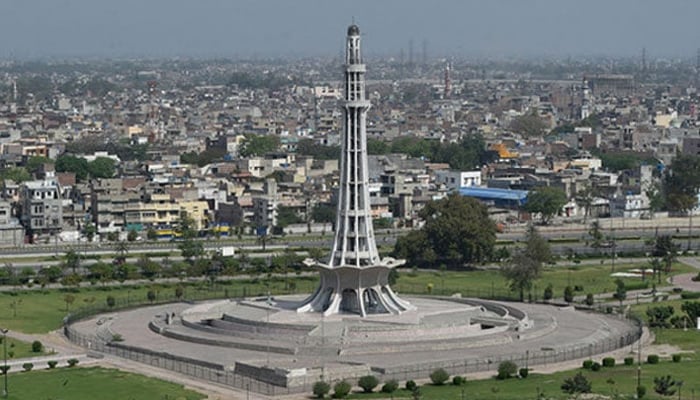
This year, Pakistan celebrates 77 years of independence with great zeal and enthusiasm, a testament to its long and turbulent history. The struggle that began on March 23, 1940, reached its zenith on August 14, 1947. This journey exemplifies the unwavering commitment to independence and the ultimate success in achieving it. Pakistan emerged on the world map as the solution to the communal issues that could not be addressed within a united Indian framework, making the existence of Pakistan inevitable.
The Lahore Resolution, also known as the Pakistan Resolution, was a vital step toward creating a separate homeland for Muslims in the subcontinent. This resolution put forward the demand for a separate state based on the political experience of the Muslim community and the need to protect Muslim identity. It addressed the Muslim question within the political and constitutional context of British India and outlined the Muslim League’s strategy to secure the Muslim identity, rights, and interests.
The resolution emphasised principles relevant to the modern state system. It rejected the federal system of government outlined in the Government of India Act 1935, which was deemed unsuitable and unacceptable to the Muslims of India. The resolution also demanded that territorial units be demarcated to form independent states in Muslim-majority areas in the northwest and eastern zones of India, as autonomous and sovereign constituent units. Additionally, it called for adequate, effective, and mandatory safeguards for religious minorities. The Lahore Resolution offered a new course of action for the Muslims of British India, differing from the Muslim League’s previous decisions on constitutional and political issues.
The demand for a separate homeland gained credibility due to the territorial contiguity of Muslim-majority provinces in the northwest and eastern zones, including Bengal and its adjoining areas. Had these provinces been scattered, the demand for a homeland would not have been viable.
Soon after the Lahore Resolution was passed, Viceroy Linlithgow presented the August Offer on August 8, 1940, to allay Muslim fears of Hindu domination. The offer promised that a future constitution would consider the views of minorities. However, the Muslim League was not satisfied and rejected the offer in September. In 1942, the British government made another attempt through the Cripps Mission, but the Muslim League rejected it as well because it prioritised creating one Indian Union, which the League opposed.
In 1944, Gandhi-Jinnah talks were held, but they failed as Jinnah insisted on the partition of India while Gandhi was strictly opposed to this idea. In 1945, the Viceroy called the First Simla Conference to discuss forming an executive council. The Congress claimed since it represented all communities in India so it had the right to nominate council members. The All India Muslim League rejected this claim, asserting that only the League had the right to nominate Muslim members to the executive council. The conference failed on July 14, 1945, because of the League’s insistence on its exclusive right to nominate Muslim members and Congress’s opposition.
In 1946, Britain made a last attempt to transfer power to a single union through the Cabinet Mission Plan. However, this plan failed because it did not include the establishment of Pakistan. The Muslim League rejected it, and Congress stated they would not abide by it once the British left.
Finally, on June 3, 1947, Lord Mountbatten presented a proposal to divide British India into two independent countries, India and Pakistan. Sir Cyril Radcliffe was appointed to demarcate the boundaries. The Radcliffe Award faced criticism from both sides, as it awarded several Muslim-majority contiguous areas to India without granting even a single non-Muslim majority area to Pakistan. The Quaid-i-Azam termed it an “unjust, incomprehensible, and even perverse award.”
Despite political obstacles and social difficulties, the movement succeeded in culminating in the creation of Pakistan on August 14, 1947, which also resulted in the partition of India and the creation of two independent states. The emergence of Pakistan was no easy task, and it could never have been possible without the leadership of the Quaid-i-Azam, who turned this dream into a reality.
— The author is an M.Phil. student in the Department of History, University of Karachi


